US court grants Coinbase interlocutory appeal in case against the SEC

  • Coinbase can now seek guidance from the Second Circuit Court of Appeals to determine if the SEC’s complaints against it are valid
  • The SEC first filed a complaint against Coinbase in 2023, arguing that it operated as an unregistered brokerage in violation of federal securities laws

Coinbase has been granted an interlocutory appeal, temporarily pausing its ongoing court case against the US Securities and Exchange Commission (SEC).

According to a filing, Judge Katherine Polk Failla of the Southern District of New York granted the crypto exchange’s motion.

Filing a complaint on June 6, 2023, the SEC argued that Coinbase amounted “to the operation of an unregistered brokerage, exchange, and clearing agency in violation of federal securities laws.”

This latest filing means Coinbase can now proceed to the Second Circuit Court of Appeals to receive guidance and to determine if the SEC’s complaints against it are valid.

Taking to X, Paul Grewal, Coinbase’s chief legal officer, wrote: “Over the strenuous objection of @SECGov, Judge Failla has GRANTED our motion for leave to pursue an interlocutory appeal and STAYED the district court litigation. We appreciate the Court’s careful consideration. On to the Second Circuit we go.”

The SEC vs. Coinbase

With this latest motion, it seems the back and forth between the two may finally be coming to an end.

Following the 2023 SEC complaint, Coinbase filed its answer in late June seeking to dismiss the lawsuit for lack of merit.

In a 177-page report, Coinbase argued that the SEC’s accusations were based on claims that 12 of the listed crypto tokens trading on the exchange were securities. However, when the SEC authorized Coinbase to go public, six of the 12 crypto assets were already trading.

As a result, Coinbase claimed that the lawsuit should be dismissed because the agency didn’t classify any of the crypto assets as securities.

In December 2023, the SEC denied a rulemaking petition by Coinbase. According to SEC Chair Gary Gensler, “existing laws and regulations apply to the crypto securities markets.” However, SEC Commissioners Hester Peirce and Mark Uyeda said they “disagree with the Commission’s decision.”

This was followed by a March report that Judge Failla ruled that the SEC’s case against Coinbase would move forward on most of the claims against it, denying the exchange’s motion to dismiss the case.

In September, the SEC then filed a motion for an extension from the court giving it more time to provide Coinbase with key documents. More recently, Coinbase pushed for court intervention to obtain SEC documents on how securities laws apply to cryptocurrencies.

Now, with the latest judge ruling, this is a “big legal win” for Coinbase, according to Fox Business News reporter Eleanor Terrett.

The post US court grants Coinbase interlocutory appeal in case against the SEC appeared first on CoinJournal.

Ripple and Chainlink team up to further RLUSD adoption

  • Ripple and Chainlink partner to bolster RLUSD adoption.
  • RLUSD will leverage Chainlink’s standard to enhance the stablecoin’s utility and accessibility across DeFi.

Ripple is teaming up with Chainlink to bring its recently unveiled stablecoin RLUSD to more users across the decentralized finance ecosystem.

The RLUSD issuer, which is also behind the XRP cryptocurrency, announced this collaboration with Chainlink on Jan. 7.

Ripple and Chainlink partner

Ripple said its tapping into Chainlink’s price feeds to enable high-quality pricing data for RLUSD, with this standard providing verifiable data on Ethereum. This means enhanced utility and accessibility for RLUSD across DeFi, support that broadens the stablecoin’s adoption across an ecosystem expected to grow rapidly.

Stablecoin adoption, currently dominated by Tether’s USDT and Circle’s USDC as the top two USD-pegged tokens, is also poised to see significant traction.

“The adoption of tokenized assets such as stablecoins will continue to accelerate in the coming years and having access to critical onchain data will accelerate the process,” – Johann Eid, chief business officer at Chainlink Labs, noted.

The integration will see RLUSD used to power DeFi applications across trading, lending and other key segments of the market. DeFi developers will easily integrate the stablecoin into applications as the Chainlink standard offers a unified solution.

“As RLUSD scales across DeFi ecosystems, reliable and transparent pricing is essential to maintaining stability and building trust in its utility within decentralized markets. By leveraging the Chainlink standard, we bring trusted data onchain, further strengthening RLUSD’s utility across both institutional and decentralized applications,” Ripple SVP, stablecoin, Jack McDonald, said.

Ripple launched its stablecoin, pegged 1:1 to the US dollar, in December 2024.

Initial issuance is on the XRP Ledger and Ethereum blockchains, and currently has a market cap of $53.09 million, with about $21.8 million in daily volume in the past 24 hours.

The post Ripple and Chainlink team up to further RLUSD adoption appeared first on CoinJournal.
Hong Kong-based crypto exchange HashKey secures VASP license in Ireland

  • HashKey has secured a VASP license in Ireland.
  • The license allows crypto trading and custody services.
  • The licensing aligns with the EU’s MiCA regulations requirement.

In a move towards global expansion, Hong Kong-based cryptocurrency exchange HashKey has successfully obtained a Virtual Asset Service Provider (VASP) license from the Central Bank of Ireland.

This milestone was announced on January 7, 2025, through HashKey Europe Limited, a subsidiary under the HashKey Group umbrella.

This new license allows HashKey to engage in a variety of cryptocurrency-related activities within Ireland, including the facilitation of fiat-to-crypto and crypto-to-crypto trading. Additionally, the company can now provide custodial wallet services and manage the transfer of virtual assets on behalf of its clients.

This regulatory approval marks HashKey’s entry into the European market, expanding its operational reach beyond its established bases in Hong Kong, Singapore, Japan, and Bermuda.

HashKey’s VASP license in Ireland aligns with the EU’s MiCA regulations

The acquisition of the VASP license aligns with the European Union’s Markets in Crypto-Assets (MiCA) Regulation, which mandates that all crypto service providers operating within the EU must secure such licenses by December 30, 2024. This regulatory framework aims to ensure a standardized approach to crypto operations across the EU, focusing on consumer protection, market integrity, and financial stability.

HashKey’s strategic move into Ireland is viewed by the company as a “critical step toward strengthening its presence in key international markets.” This expansion not only signifies HashKey’s commitment to compliance with international standards but also positions it alongside other notable entities like Ripple, Paysafe, MoonPay, Gemini, and Coinbase, which have also been approved by the Irish Central Bank.

Under MiCA, VASPs are subjected to rigorous checks, including Anti-Money Laundering (AML) and Countering the Financing of Terrorism (CFT) requirements. They must also demonstrate robust operational resilience, secure protocols, and the integrity of their management teams. Furthermore, exchanges are bound by enhanced reporting obligations, particularly concerning large transactions, to promote transparency and adherence to regulatory norms.

Notably, HashKey’s licensing comes after Irish Central Bank Governor Derville Rowland emphasized Ireland’s dedication to fostering innovation while ensuring security within the crypto sector. Her comments, made in September of the previous year, highlighted Ireland’s ambition to maintain its status as a secure and innovative financial hub in the era of digital assets.

With this license, HashKey not only broadens its service offerings but also strengthens its position as a key player in the global cryptocurrency market, ready to navigate the complexities of the European regulatory landscape.

The post Hong Kong-based crypto exchange HashKey secures VASP license in Ireland appeared first on CoinJournal.
Fed’s vice chair for supervision Michael Barr to step down in February

  • Michael Barr’s resignation is effective from February 28, 2025, but he will continue as governor of the Federal Reserve Board
  • A Reuters report indicated in December that Barr was seeking legal advice regarding his options should Trump attempt to remove him

Michael Barr, the US Federal Reserve’s vice chair for supervision, who warned banks about increased liquidity risks regarding accepting crypto deposits, will step down next month.

In a January 6 letter to US President Joe Biden, Barr’s resignation is effective from February 28, 2025 “or such earlier time as a successor is confirmed.” Barr will continue serving as governor of the Federal Reserve Board, which lasts until his term ends in 2026.

There has been some speculation that President-elect Donald Trump will replace Barr once he takes office again on January 20. A Reuters report in late December indicated that Barr was consulting with a law firm over his options against attempts from Trump should he try to remove him.

While nothing was mentioned in his resignation letter, Barr noted in a statement that “the risk of a dispute over the position could be a distraction from our mission. In the current environment, I’ve determined that I would be more effective in serving the American people from my role as governor.”

Taking to X, Caitlin Long, founder and CEO of Custodia Bank, wrote: “THE FED’S DEBANKER-IN-CHIEF IS OUT! Michael Barr, the last remaining Biden/Warren appointee who architected #OperationChokePoint2.0 at a federal financial agency, will resign as vice chair for supervision in Feb.”

Other people within the Operation Choke Point 2.0 diagram Long posted include outgoing US Securities and Exchange Commission (SEC) Chair Gary Gensler, US Massachusetts Senator Elizabeth Warren, Federal Reserve board member Michael Gibson, and Nellie Lang, Under Secretary of the Treasury for Domestic Finance, among others.

Barr’s departure comes weeks after Gensler and Commissioner Jaime Lizárraga announced their resignations in November. Both will step down later this month when Trump takes office.

Wyoming Senator Cynthia Lummis said on X that “Michael Barr has completely failed to fulfill his duties as Vice Chair for Supervision at every turn, enabling Operation Chokepoint 2.0 and illegally increasing his power at the cost of Wyoming’s digital asset industry.”

The post Fed’s vice chair for supervision Michael Barr to step down in February appeared first on CoinJournal.
Weekly Price Analysis: Bitcoin Remains Rangebound while Altcoins Fly

  • Prices rose over the first week of the year as open interest in the CME improved.
  • Altcoins outperformed Bitcoin as the largest crypto remained rangebound.
  • Meanwhile, ETF flows remained net negative.

Bitcoin

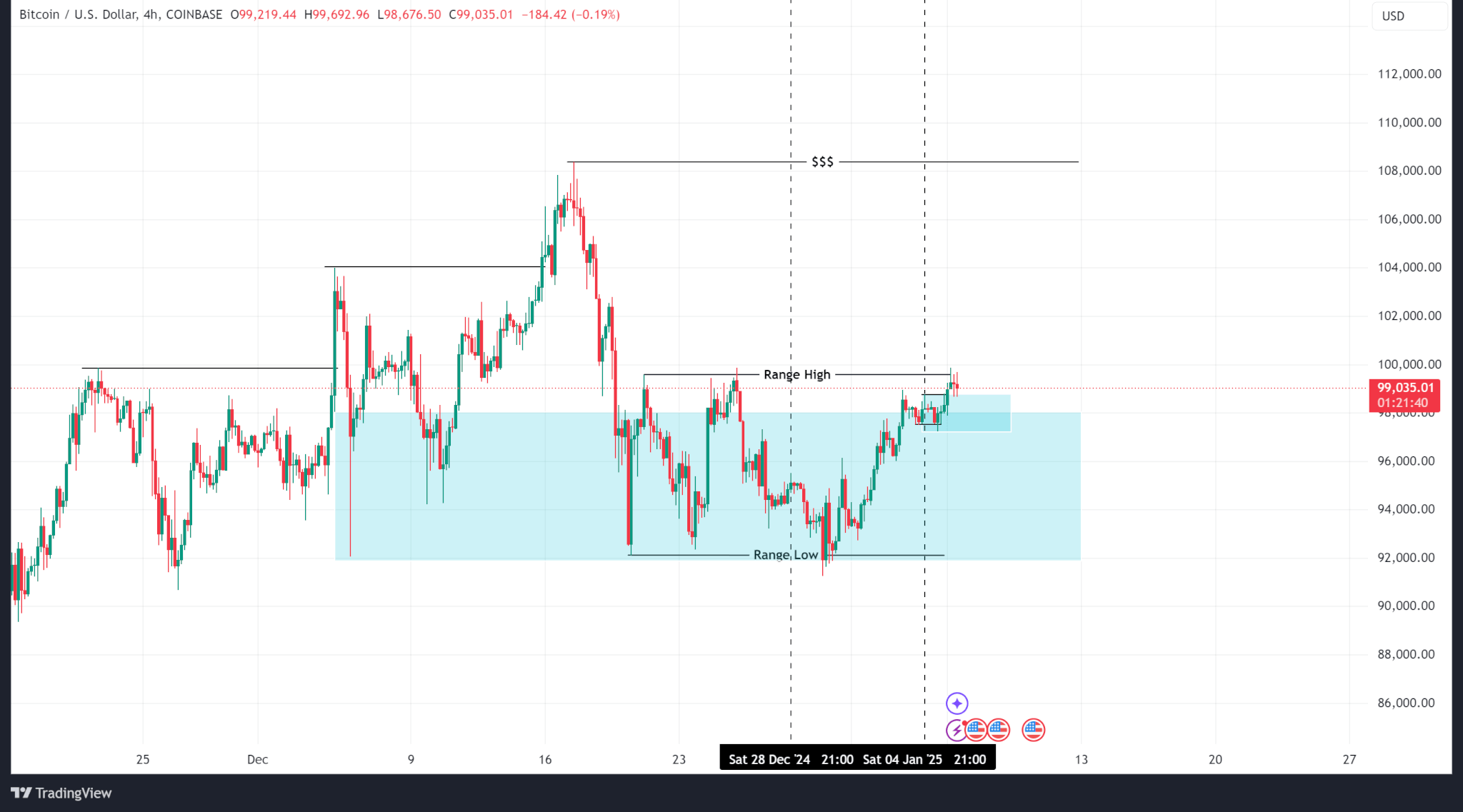
Bitcoin’s price improved last week but remained within the range established in previous trading sessions. BTC logged a weekly low of 91,271.19 and a high of $98,972.29. Bitcoin closed last week at $98,198.52.

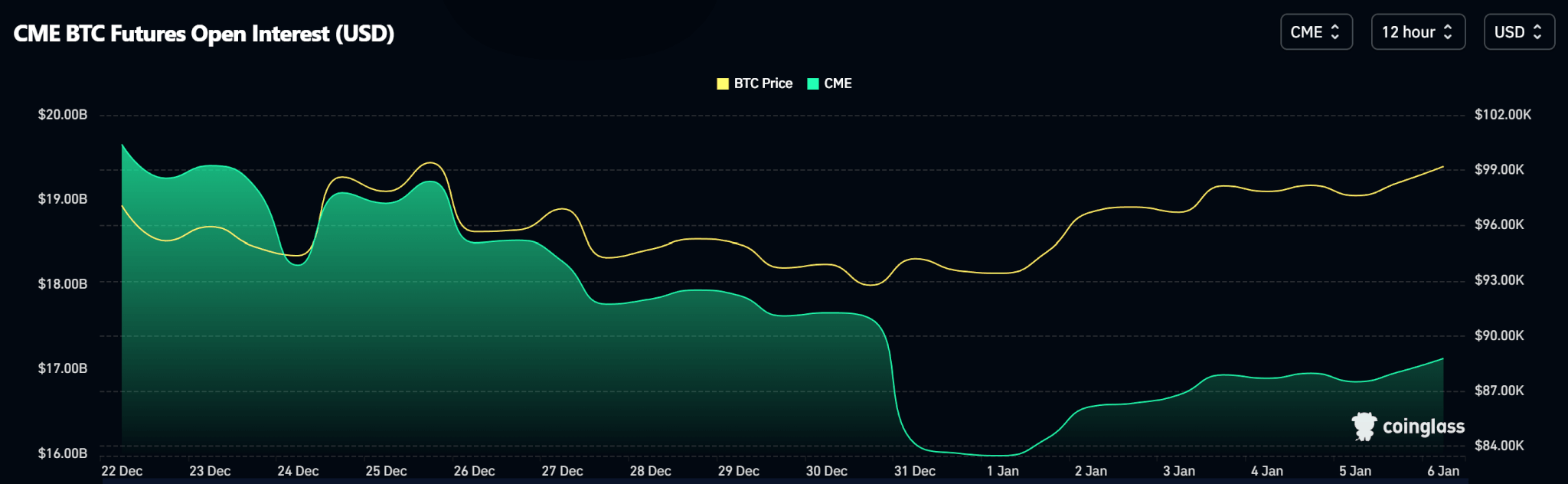
Open interest in the CME improved over the last week as more contracts were added. Comparing that with price movement suggests that more long contracts were opened.

Meanwhile, BTC ETF flows were net negative next week as outflows totalled $652.10Mn.

Outlook

BTC found support within the demand zone on the H4 time frame and has begun a rise (supported by new futures longs). BTC will need to first break above the range high at $99,596.57.

BTC trades at $101,978.76 as of publishing.

Ethereum

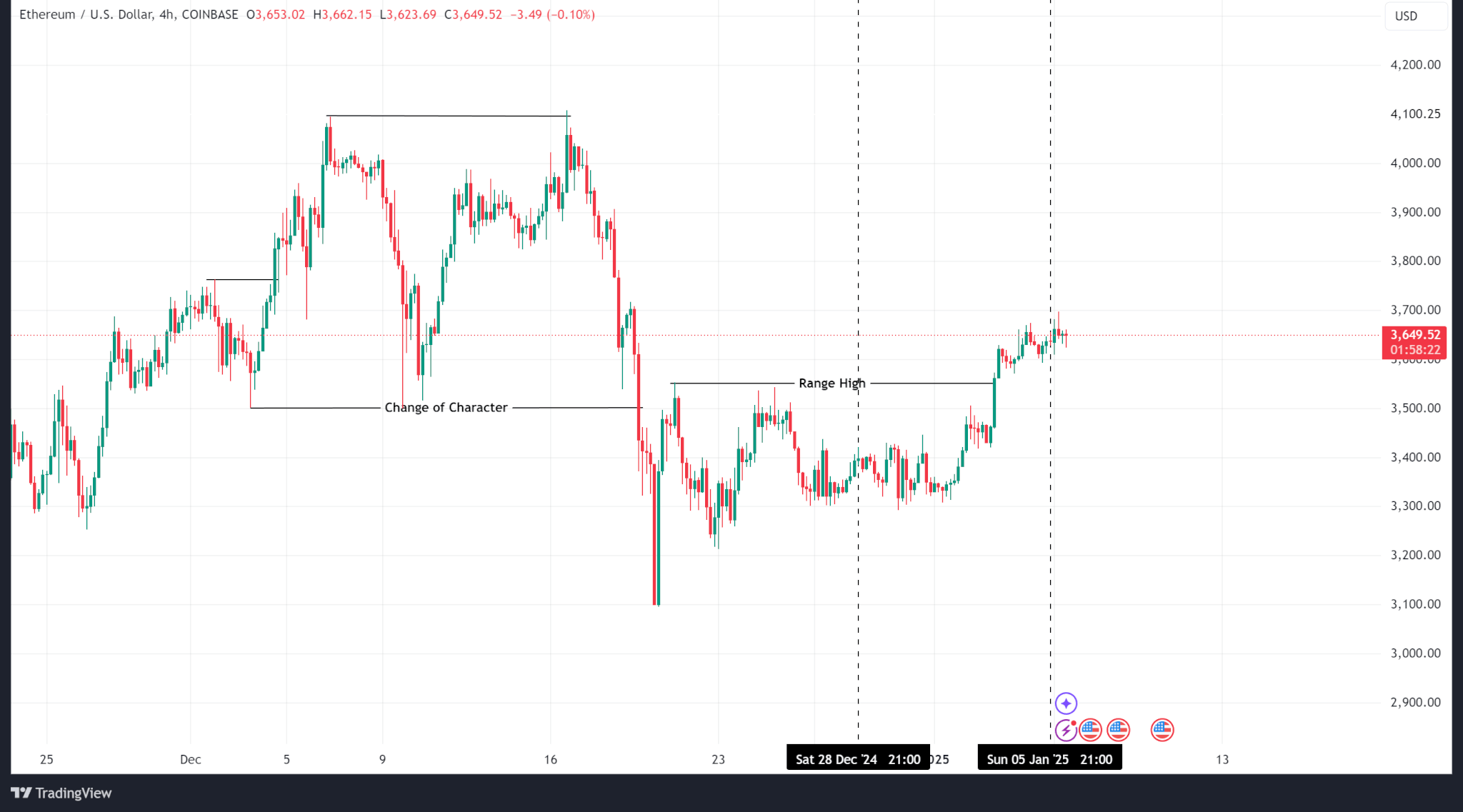
Ethereum’s price action was more bullish as it broke above the range formed in the previous week’s trading session. The weekly low and high were $3,293.19 and $3,675.77, respectively. ETH closed last week at $3,637.39.

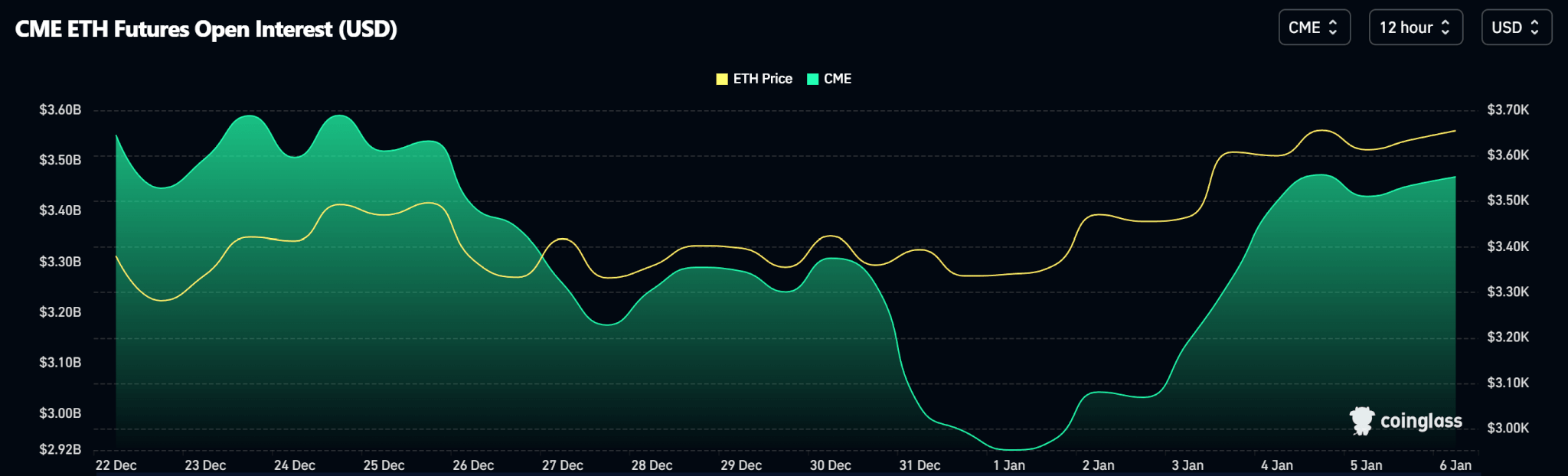
Similar to Bitcoin’s open interest charts, Ethereum OI reached a weekly low on Jan. 1 and has been rising since as new longs enter the derivatives market.

Meanwhile, spot ETH ETF inflows logged a negative week as $97.00Mn flowed out of ETFs in the US.

Outlook

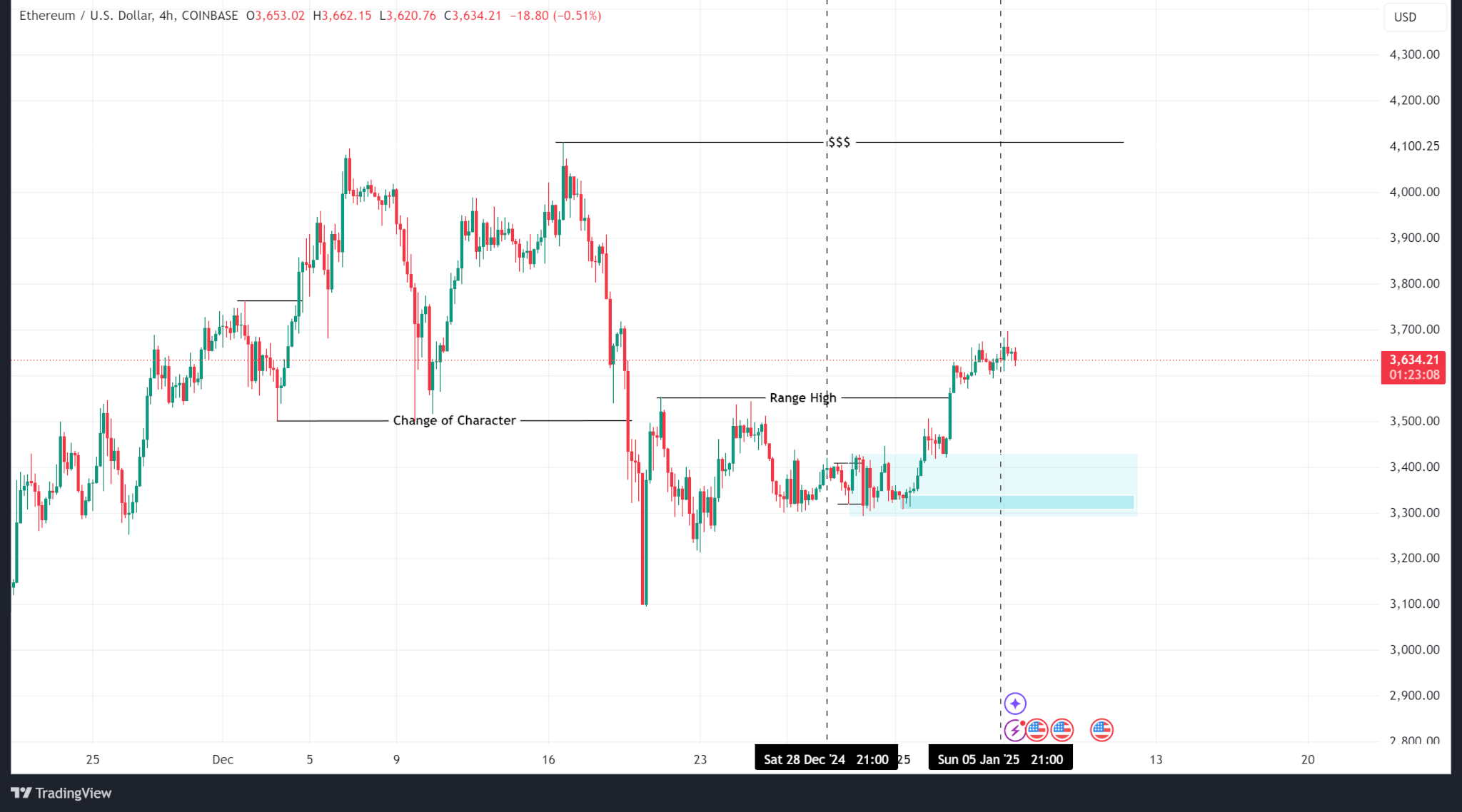
While the price has broken through the last range high, it must clear the recent high, which is at the $4,096.44 level, to resume a bullish trend. In the interim, a demand level at the $3,500.00 level could serve as liquidity for an upward.

ETH trades at $3,679.36 as of publishing.

Solana

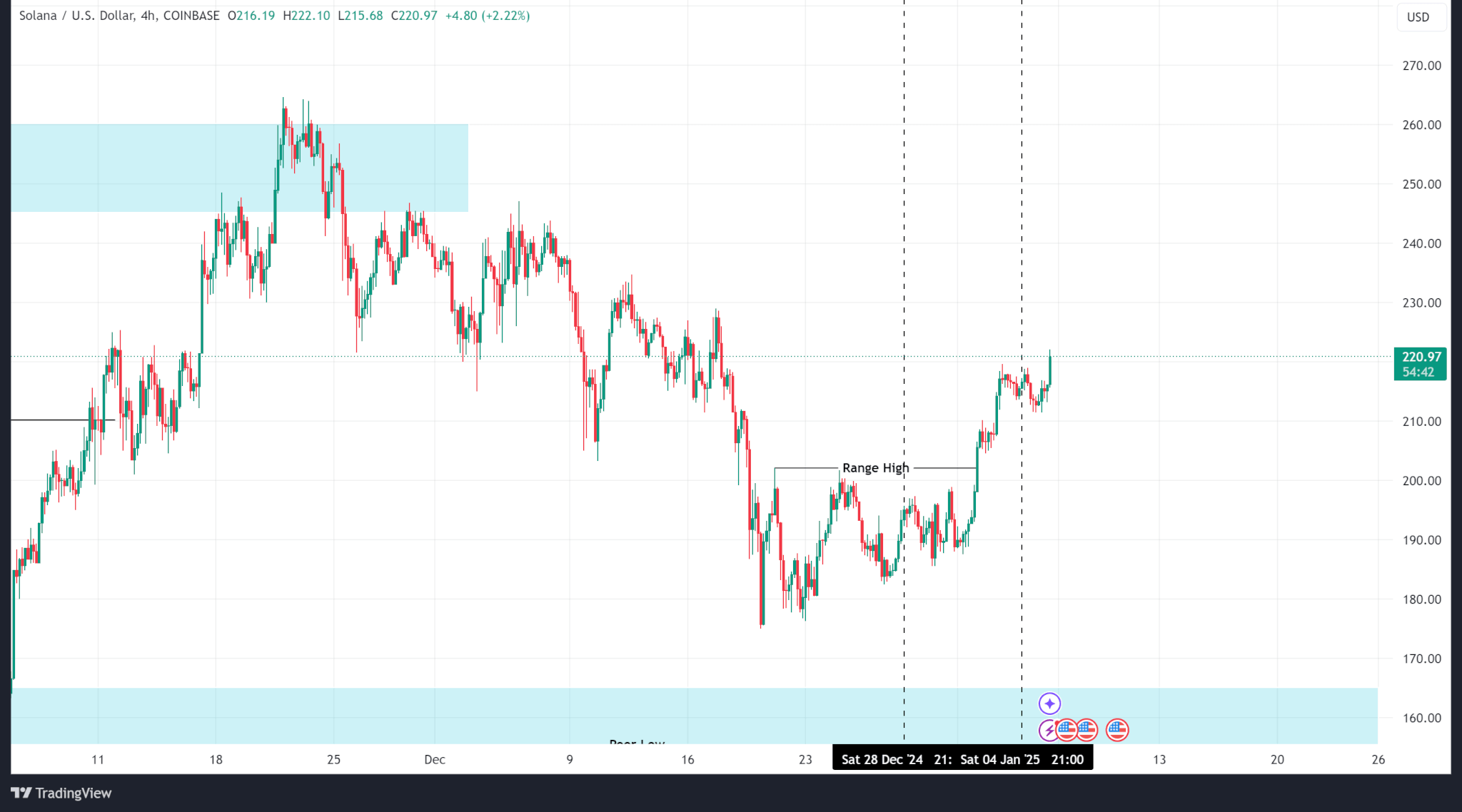
Solana’s price action was bullish last week as it broke above the local range high from the previous week’s trading session. Weekly low and high formed were $185.55 and $219.67.

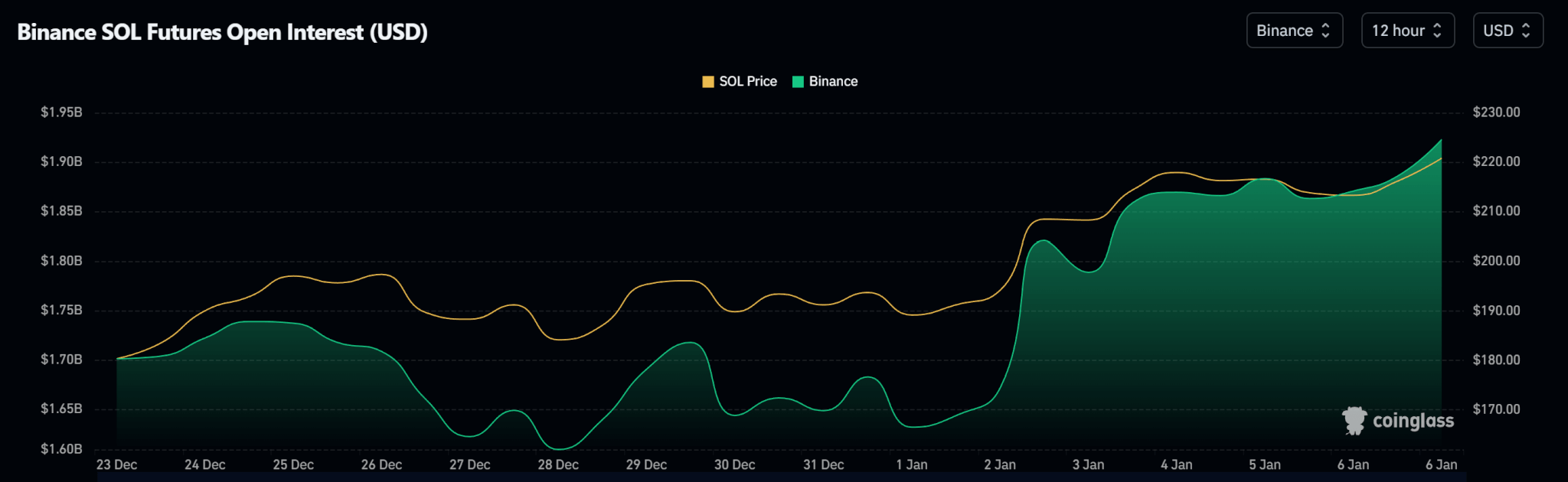
Open interest in Solana followed a similar pattern as that of Bitcoin and Ethereum, picking up from Jan. 1.

Outlook

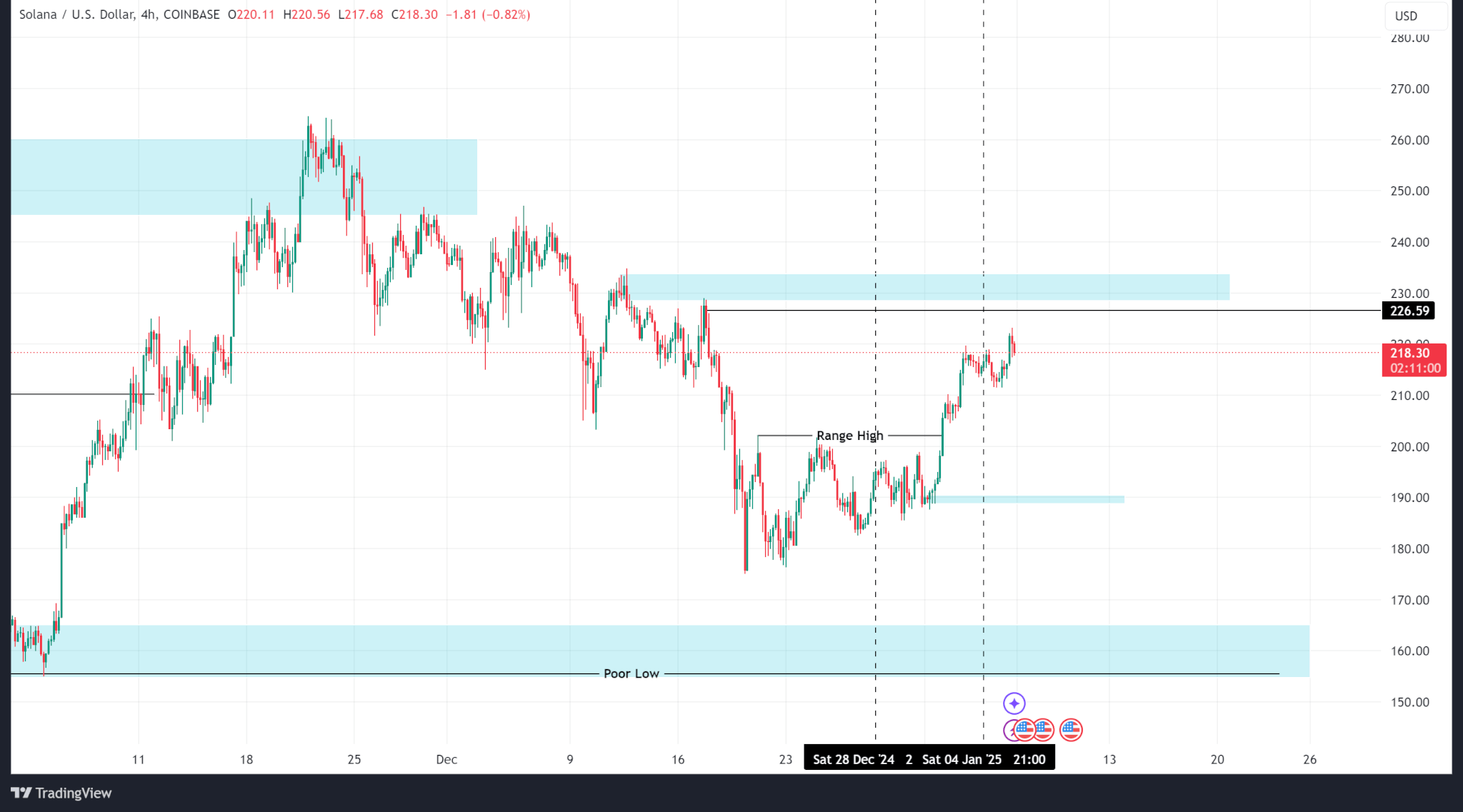
Despite failing to break its all-time high, Solana’s trend is bullish. However, the price has logged consecutive lower lows on the H4 time frame and must break the $230 level and then the $260 level to continue its bullish trend.

SOL trades at $218.28 as of publishing.

Ripple

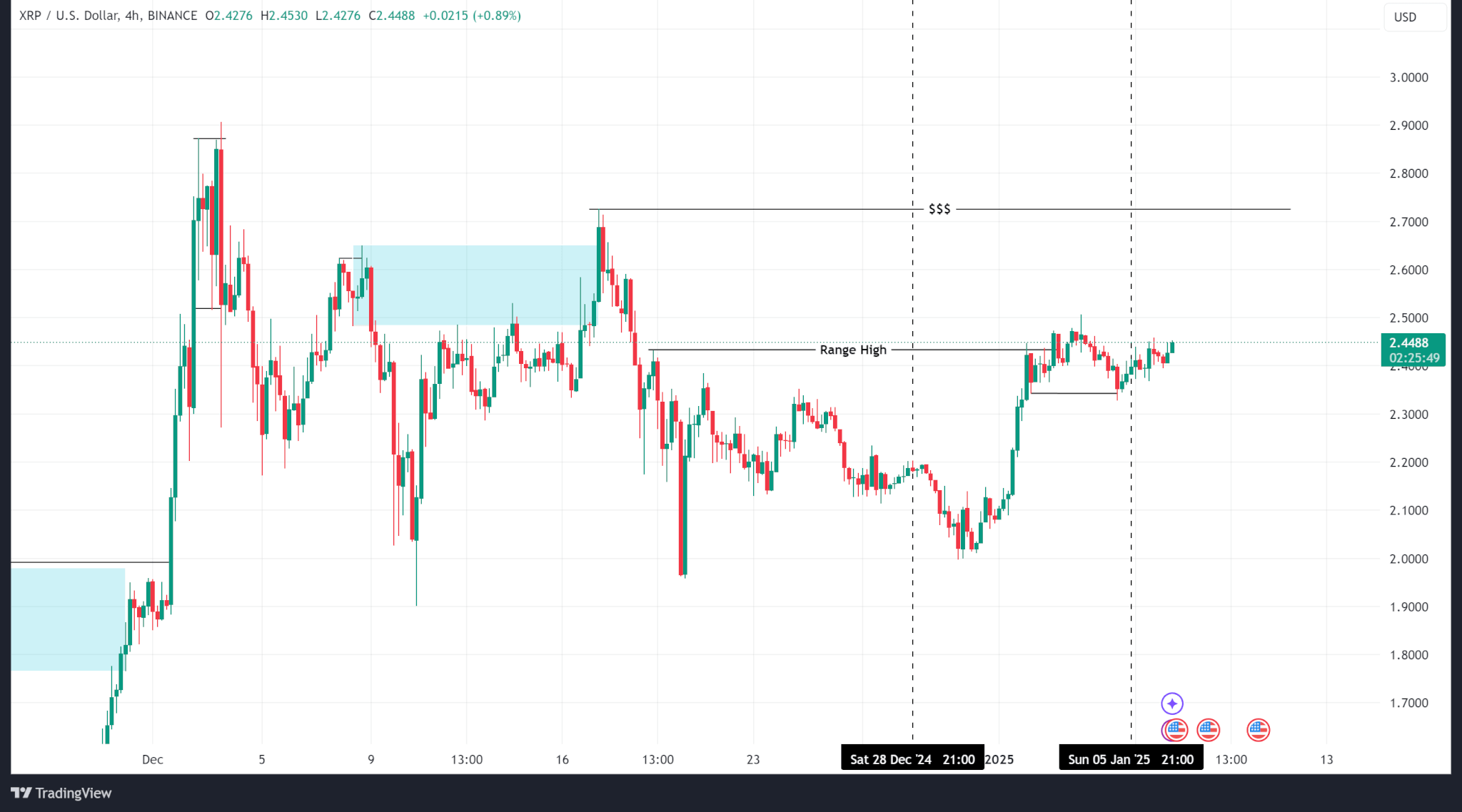
Ripple’s price action improved last week after logging a low of $1.99 and a high of $2.50.

However, price was incongruent with open interest as an increase in long contracts did not buoy the price.

Outlook

Since breaking above the range high and pulling back for liquidity at the last higher low at $2.34, XRP’s price has logged higher highs and lows, climbing towards the next supply zone around $2.72.

XRP trades at  $2.44 as of publishing.

The post Weekly Price Analysis: Bitcoin Remains Rangebound while Altcoins Fly appeared first on CoinJournal.