BlackRock and Brevan Howard tokenized funds launch on Sei: check SEI price outlook

  • BlackRock and Brevan Howard launch tokenized funds on Sei via Kaios, enhancing institutional trust and driving network usage.
  • SEI trades at $0.28 with a 9.3% weekly gain; analysts project $0.40-$0.50.
  • Sei’s sub-second finality, EVM compatibility, and Kaios’s compliance infrastructure 

Global investment giants BlackRock and Brevan Howard have announced the launch of their tokenized funds on the Sei network, leveraging Kaios’s advanced infrastructure. 

Announced on October 8, 2025, the move highlights an accelerating institutional adoption of decentralized finance (DeFi) and real-world asset (RWA) tokenization.

BlackRock milestone on Sei network

The debut introduces BlackRock’s BUIDL and Brevan Howard’s BH Digital Liquidity Fund to the Sei ecosystem, facilitated by Kaios’s institutional-grade platform. 

Conventional funds under this initiative are transformed into on-chain digital assets, enabling 24/7 compliance with DeFi protocols. 

Sei’s architecture ensures robust handling of high-volume transactions while maintaining enterprise-level security.

Mr. Olivier Dang, COO of KAIO, commenting on the announcement 

“This launch marks another major milestone in institutional blockchain adoption. By using the Sei Network, we’re bringing composable access to leading fund strategies entirely onchain. It’s the foundation for real-time, programmable, financial infrastructure built for the next era of capital markets.”

Justin Barlow, Executive Director at the Sei Development Foundation, in his statement, also stated,

 “The integration of KAIO’s onchain infrastructure with the Sei Network is another important step toward the goal for Sei to become the institutional settlement layer for all digital assets. Sei’s high-performance rails enable a seamless experience for trading money market funds onchain–one that is superior to the experience of trading those funds in the real world.”

This collaboration addresses longstanding pain points in asset management, such as settlement delays and high costs. 

By embedding KYC/AML protocols and secure custody solutions, Kaios ensures regulatory alignment, paving the way for broader institutional inflows into tokenized RWAs.

Implications for SEI token and market outlook

The debut of these high-profile funds is poised to catalyze demand for the SEI token.

As institutional activity surges, network usage is expected to rise, enhancing SEI’s deflationary mechanics and staking yields.  

SEI is trading at near $0.28, with a 4% weekly loss amid broader crypto market profit taking.

Short-term forecasts anticipate modest recovery, targeting $0.40-$0.50, bolstered by Sei’s growing network, partnerships.

Medium-term outlooks predict SEI reaching $1, with the all-time high of $1.14 allowing for further upside.

The price trajectory hinges on sustained partnerships and regulatory tailwinds like potential SEC approvals for staking yields. 

An $18 million token unlock is a challenge that could introduce supply pressure. Sei’s staking ratio and recent 50% weekly surges suggest resilience. 

This launch cements Sei’s role in institutional blockchain innovation, with SEI’s price outlook tilting positive amid heightened utility and capital inflows.

The post BlackRock and Brevan Howard tokenized funds launch on Sei: check SEI price outlook appeared first on CoinJournal.
Uniswap (UNI) introduces “The Compact” to power seamless cross-chain interoperability

  • Uniswap Labs has unveiled a new system to make cross-chain interactions secure and frictionless.
  • The Compact introduces a shared mechanism to inhibit fragmentation across decentralized platforms.
  • The new feature could change how assets and projects interact in the blockchain industry.

Uniswap Labs has revealed a key move towards solving one of the main challenges in decentralized finance (DeFi) – interoperability – which means communications or interactions between different blockchains.

The decentralized trading protocol has announced The Compact, an open-source contract system aiming to make applications and digital assets interoperable.

That means users can move apps and assets from across various chains without risky or complicated workarounds.

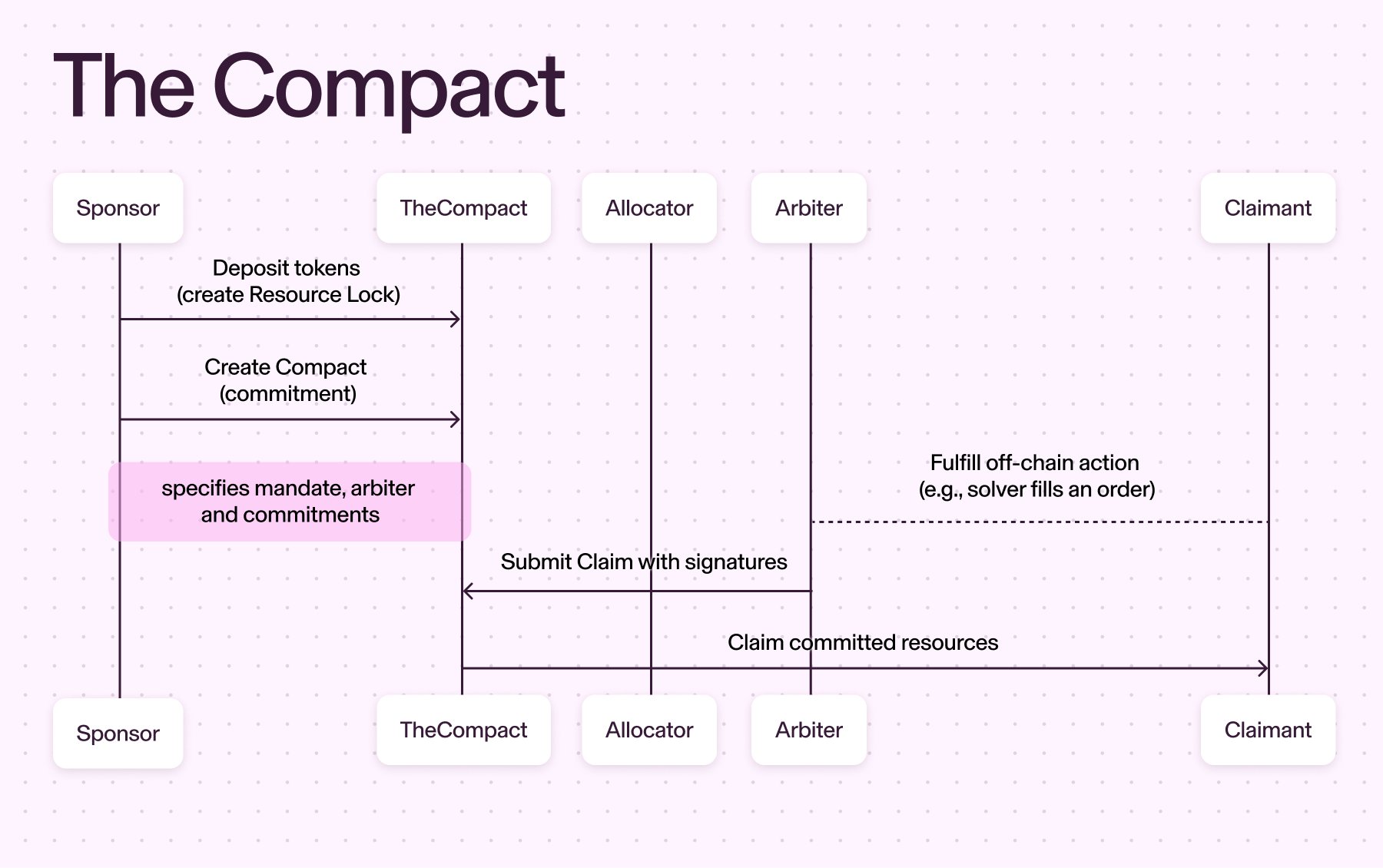
Generally, The Compact allows users to “commit” tokens for specified actions, like cross-chain operations or swaps, while retaining control.

It is an innovative way of locking assets securely while allowing them to move credibly and freely across different platforms.

The official blog indicated:

The Compact enables secure cross-chain settlement through a system of reusable Resource Locks and programmable commitments. When sponsors deposit assets, they create ERC6909 tokens representing those locked assets, which remain under the sponsors’ control.

Meanwhile, Uniswap’s new release might transform how decentralized applications interact with each other.

Rather than each project creating its escrow solution or bridge, The Compact offers a shared platform that all developers can utilize, adapt, and trust.

Fixing a fragmented space

The current DeFi landscape comprises hundreds of blockchains, sidechains, and rollups, each boasting its own standards and tools.

These fractures create substantial challenges.

For instance, developers might find themselves rebuilding similar infrastructure.

Also, users have to juggle several wallets, while others deal with trapped tokens after using incompatible systems.

Uniswap Labs seeks to fix that using The Compact.

With this framework, individuals can access a common set of tools when managing value across chains.

That means protocols can offer cross-chain functionalities without surrendering decentralization or security.

Why does The Compact matter?

DeFi projects have struggled to communicate without a collective framework.

Each protocol has had to create a bridging system or escrow, which leads to user friction, rigid trust models, and fragmented liquidity.

The Compact introduces the missing piece in the puzzle.

Image

With the new system, developers on the Uniswap blockchain can remove the complexity of an asynchronous environment.

Users can enjoy simple and declarative compatibility without bridges or wallets.

The team declared:

With The Compact, developers can finally offer simple, declarative interactions where users never have to navigate the underlying complexity without building new infrastructure that risks ecosystem fragmentation.

UNI price outlook

Uniswap’s token has struggled in the past few sessions, despite broader market rallies.

UNI is trading at $7.88 after losing nearly 20% of its value the previous month.

The coin has consolidated the previous week, and prevailing sentiments suggest a possible breakout to the upside.

Overcoming the resistance around $8.40 could support UNI recoveries to $12 and $18 amid extended broad-based surges.

The post Uniswap (UNI) introduces “The Compact” to power seamless cross-chain interoperability appeared first on CoinJournal.

PEPE price falls 6% to key support level amid memecoin weakness

  • PEPE price dropped 6% to lows of $0.0000088, testing critical support at $0.0000090.
  • The broader memecoin market fell 5%, with DOGE, SHIB, and others hit by macroeconomic pressures and reduced liquidity.
  • PEPE’s recovery depends on holding support and renewed social momentum, amid ongoing sector volatility and regulatory risks.

PEPE, the Ethereum-based memecoin, experienced a 6% decline in 24 hours as bears emerged.

The losses, coming amid overall market sell-off, saw Pepe test a critical support threshold.

Memecoin weakness means other tokens in the sector also witnessed dips.

PEPE declines to test key technical zone

As highlighted, the price of PEPE dipped 6% over the past 24 hours to reach almost $0.0000088.

This meant bulls brushed against a key support level below which more pain could follow.

Interestingly, the downward action came with a dip in intraday trading volume to $658 million.

The 12% decrease from the previous day aligned with bulls’ resilience as buyers sought accumulation.

The token nonetheless is near the oversold territory, with the Relative Strength Index at 36.

Such an outlook is always a signal for a potential bounce if buying interest resurfaces.

Pepe chart by TradingView

Support at $0.0000090 remains and aligns with prior consolidation zones.

The area now serves as a psychological bulwark.

On the upside, a bounce from the lows occasioned by profit-taking will awaken social media buzz.

Meantime, investors will keenly monitor whale activity, as large holders offloading or buying points to a potential uptick or downturn.

Broader memecoin sector grapples with persistent weakness

PEPE sentiment is a result of a wider weakness affecting the memecoin sector, which has shed nearly 5% in aggregate value this week.

The total meme coin market capitalization is now below $82 billion.

Dogecoin (DOGE) and Shiba Inu (SHIB) also experienced a decline, albeit a minor one in the context of the past 24 hours.

Bonk (BONK) and Popcat also pared some gains amid widespread profit-taking.

This collective retreat stems from a confluence of macroeconomic headwinds, including the US Federal Reserve’s signals on interest rates.

Government shutdown is also a factor. Bitcoin, which shot to an all-time high above $126,000 this week, dropped to $122,000 before seeing a slight uptick ahead of the FOMC minutes on Wednesday, Oct. 8.

The memecoin sector’s inherent volatility could increase if markets see a fresh downturn.

Notably, trading volumes for top memecoins have contracted by an average of 3.4% on the day.

But despite the diminished liquidity, analysts are upbeat amid calls for an altcoin season.

The memecoin arena remains robust, with viral whims likely to swiftly turn underperforming tokens into overall outperformers.

The post PEPE price falls 6% to key support level amid memecoin weakness appeared first on CoinJournal.