Laut CoinShares waren Onchain-Investoren hinsichtlich der Liquiditätskaskade auf Binance eher pessimistisch, während Krypto-ETP-Händler den Crash am Freitag weitgehend ignorierten.

Krypto minen, NFT minten, Gold schürfen und Geld drucken
Laut CoinShares waren Onchain-Investoren hinsichtlich der Liquiditätskaskade auf Binance eher pessimistisch, während Krypto-ETP-Händler den Crash am Freitag weitgehend ignorierten.
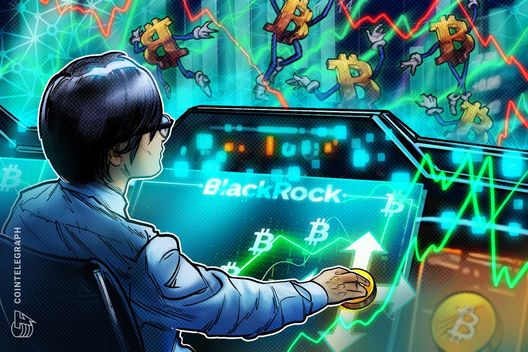
Der iShares Bitcoin ETP von BlackRock debütiert an der Londoner Börse, nachdem die britischen Aufsichtsbehörden die Vorschriften für kryptobasierte Anlageprodukte gelockert haben.

Langfristige Bitcoin-Inhaber erzielten Rekordgewinne, wobei die realisierten Gewinne täglich 1,7 Milliarden US-Dollar erreichten. Besonders Veteranen sind unter den Verkäufern.
Coinbase CEO Brian Armstrong has confirmed the $25 million purchase of the “UpOnly” NFT from renowned trader and podcaster Jordan “Cobie” Fish.
The purchase not only marks a major foray by Coinbase into NFT-driven media but also sets the stage for the long-awaited revival of the UpOnly podcast after a three-year hiatus.
Armstrong announced the acquisition in a post on X, writing, “The rumours are true, we bought the NFT. UpOnlyTV is coming back.”
The transaction, recorded on-chain, shows Coinbase paying 25 million USDC to Cobie for the token — a sum that astonished many in the crypto community given the NFT’s tongue-in-cheek origins.
The UpOnly NFT was never meant to sell. When Cobie minted it in May 2025, he framed it as part of a humorous challenge, declaring that the show would only return if someone bought and burned the NFT.
“The power is now stored within this NFT,” Cobie wrote at the time. “When it’s burned, the podcast will restart.”
To make sure no one actually purchased it, Cobie set an absurdly high price, adding zero after zero until it looked impossible to buy — even as a joke.
However, Coinbase not only bought the NFT but reportedly paid more than its listed price.
In doing so, the exchange inadvertently activated the “burn-to-revive” condition, forcing Cobie and his co-host Ledger to return to the microphones for eight new episodes of UpOnlyTV.
The NFT’s description, written in Cobie’s trademark humour, grants its holder the right to “compel Cobie and Ledger Status into performing, like monkeys, 8 episodes of UpOnlyTV.”
It even allows them to “call the buyer idiots” or ignore them completely during production.
What began as a parody of NFT culture has now become a high-value contract tied to one of the largest crypto exchanges in the world.
For Coinbase, the deal signals more than a meme purchase.
The company has framed the acquisition as part of its growing content and media strategy — an effort to engage audiences beyond trading and exchange services.
By tying the revival of a well-loved podcast to blockchain technology, Coinbase is experimenting with how NFTs can blend digital ownership, creator incentives, and entertainment.
UpOnly first launched during the 2021 bull market, hosted by Cobie and Ledger.
The podcast became a fixture of crypto culture for its honest conversations with traders, fund managers, and project founders.
Guests often discussed market trends with a mix of sharp insight and irreverent humour, helping the show stand out in an increasingly noisy media landscape.
However, the show went silent in 2022, following the collapse of FTX and the broader crypto downturn.
For three years, fans wondered if UpOnly would ever return. Cobie repeatedly said no until the playful NFT idea changed everything.
Now, with Coinbase’s purchase, the show’s comeback is officially underway.
According to the NFT terms, Cobie and Ledger will produce an eight-episode season beginning on October 21, 2025 — nearly three years to the day after the podcast went dark.
In true Cobie fashion, the trader responded to the $25 million windfall with dry humour. “It’s been three years since UpOnly ended,” he wrote on X.
“I was in my 20s when it started, now I have grey hair.” He joked that he might rename the show “Unc Only” and spend the NFT proceeds on cosmetic surgery before the first episode.
Behind the jokes, though, lies one of the most unusual media transactions in crypto history — a deal that transformed a meme into a multimillion-dollar media contract.
The post Coinbase CEO confirms purchase of $25M ‘UpOnly’ NFT from Cobie appeared first on CoinJournal.
The cryptocurrency market remains weak as Bitcoin’s fundamentals continue to weaken.
Amid the uncertainty, Vitalik Buterin has taken it to X to publicly praise Polygon and its founder, Sandeep Nailwal, for their remarkable contributions to scaling Ethereum.
Buterin commented on Polygon’s technical breakthroughs, especially its early investment in zero-knowledge EVM (Ethereum Virtual Machine) development.
He further respected Nailwal’s humanitarian efforts that merged health initiatives with blockchain development.
I really appreciate both Sandeep Nailwal’s personal contributions and Polygon’s immensely valuable role in the Ethereum ecosystem.
I really appreciate both @sandeepnailwal’s personal contributions and @0xPolygon’s immensely valuable role in the ethereum ecosystem.
To recap:
* Polygon hosts @Polymarket, which is probably the single most successful example of a „not just boring finance“ app that has actually…
— vitalik.eth (@VitalikButerin) October 21, 2025
Buterin’s post emphasized Polygon as a cornerstone of Ethereum’s scalability, crediting the blockchain for hosting innovative applications.
For instance, Polymarket has seen remarkable traction as a non-monetary blockchain offering real-world value.
Moreover, Polygon has hosted multiple high-throughput.
It has also prioritized ZK-EVM development and research.
Vitalik applauded the project’s early collaboration with Jording Bayliba’s team, who helped the Ethereum ZK ecosystem thrive during its experimental phase.
Polygon put a lot of resources into ZK-EVM proving early on, both by bringing in Jordi Baylina’s team and through other efforts, and greatly helped in moving the space forward.
The Ethereum co-founder also praised Polygon for creating AggLayer, which aids proof aggregation.
Buterin believes these efforts reflect Polygon’s dedication to building innovative tools that strengthen the Ethereum ecosystem.
Besides Polygon’s technical success, Buterin also spotlighted Sandeep Nailwal’s humanitarian drive and personal integrity.
For instance, his CryptoRelief initiative donated crypto assets to support India’s biomedical infrastructure.
In a gesture that demonstrated Nailwal’s integrity, the Polygon co-founder refunded SHIB tokens worth $190 million that Buterin had sent to the relief fund.
Buterin later channeled these funds to launch Balvi, an anti-pandemic project focused on indoor air safety and refining global health.
He voluntarily returned $190M of the proceeds from the SHIB token that I donated, which made the whole Balvi open-source anti-airborne-disease biotech program possible and possibly accelerated our understanding of important anti-pandemic topics like clean indoor air by years.
Besides his appreciation, Buterin reflected on Polygon’s current advancement crossroads.
While the POL ecosystem pioneered ZK tech, the landscape has matured.
For instance, ZK-centric teams like Risc Zero, Brevis, and Succinct Labs now work independently from L2 networks.
Buterin trusts that such separations boost specialization as each team showcases its full capabilities.
Furthermore, Buterin urged Polygon to adopt “off-the-shelf ZK tech for enhanced security within its proof-of-security chain to align with Ethereum’s vision for L2 scalability.
Indeed, ZK has adopted a user-friendly approach, with each transaction costing $0.0001 to prove.
Altcoins Ethereum and Polygon’s POL underperformed today as selling activities dominate the broader cryptocurrency landscape, losing up to 5% of their value in the past day.
The post Ethereum’s Vitalik Buterin applauds Polygon for pioneering ZK technology appeared first on CoinJournal.