Fed’s vice chair for supervision Michael Barr to step down in February

  • Michael Barr’s resignation is effective from February 28, 2025, but he will continue as governor of the Federal Reserve Board
  • A Reuters report indicated in December that Barr was seeking legal advice regarding his options should Trump attempt to remove him

Michael Barr, the US Federal Reserve’s vice chair for supervision, who warned banks about increased liquidity risks regarding accepting crypto deposits, will step down next month.

In a January 6 letter to US President Joe Biden, Barr’s resignation is effective from February 28, 2025 “or such earlier time as a successor is confirmed.” Barr will continue serving as governor of the Federal Reserve Board, which lasts until his term ends in 2026.

There has been some speculation that President-elect Donald Trump will replace Barr once he takes office again on January 20. A Reuters report in late December indicated that Barr was consulting with a law firm over his options against attempts from Trump should he try to remove him.

While nothing was mentioned in his resignation letter, Barr noted in a statement that “the risk of a dispute over the position could be a distraction from our mission. In the current environment, I’ve determined that I would be more effective in serving the American people from my role as governor.”

Taking to X, Caitlin Long, founder and CEO of Custodia Bank, wrote: “THE FED’S DEBANKER-IN-CHIEF IS OUT! Michael Barr, the last remaining Biden/Warren appointee who architected #OperationChokePoint2.0 at a federal financial agency, will resign as vice chair for supervision in Feb.”

Other people within the Operation Choke Point 2.0 diagram Long posted include outgoing US Securities and Exchange Commission (SEC) Chair Gary Gensler, US Massachusetts Senator Elizabeth Warren, Federal Reserve board member Michael Gibson, and Nellie Lang, Under Secretary of the Treasury for Domestic Finance, among others.

Barr’s departure comes weeks after Gensler and Commissioner Jaime Lizárraga announced their resignations in November. Both will step down later this month when Trump takes office.

Wyoming Senator Cynthia Lummis said on X that “Michael Barr has completely failed to fulfill his duties as Vice Chair for Supervision at every turn, enabling Operation Chokepoint 2.0 and illegally increasing his power at the cost of Wyoming’s digital asset industry.”

The post Fed’s vice chair for supervision Michael Barr to step down in February appeared first on CoinJournal.

Weekly Price Analysis: Bitcoin Remains Rangebound while Altcoins Fly

  • Prices rose over the first week of the year as open interest in the CME improved.
  • Altcoins outperformed Bitcoin as the largest crypto remained rangebound.
  • Meanwhile, ETF flows remained net negative.

Bitcoin

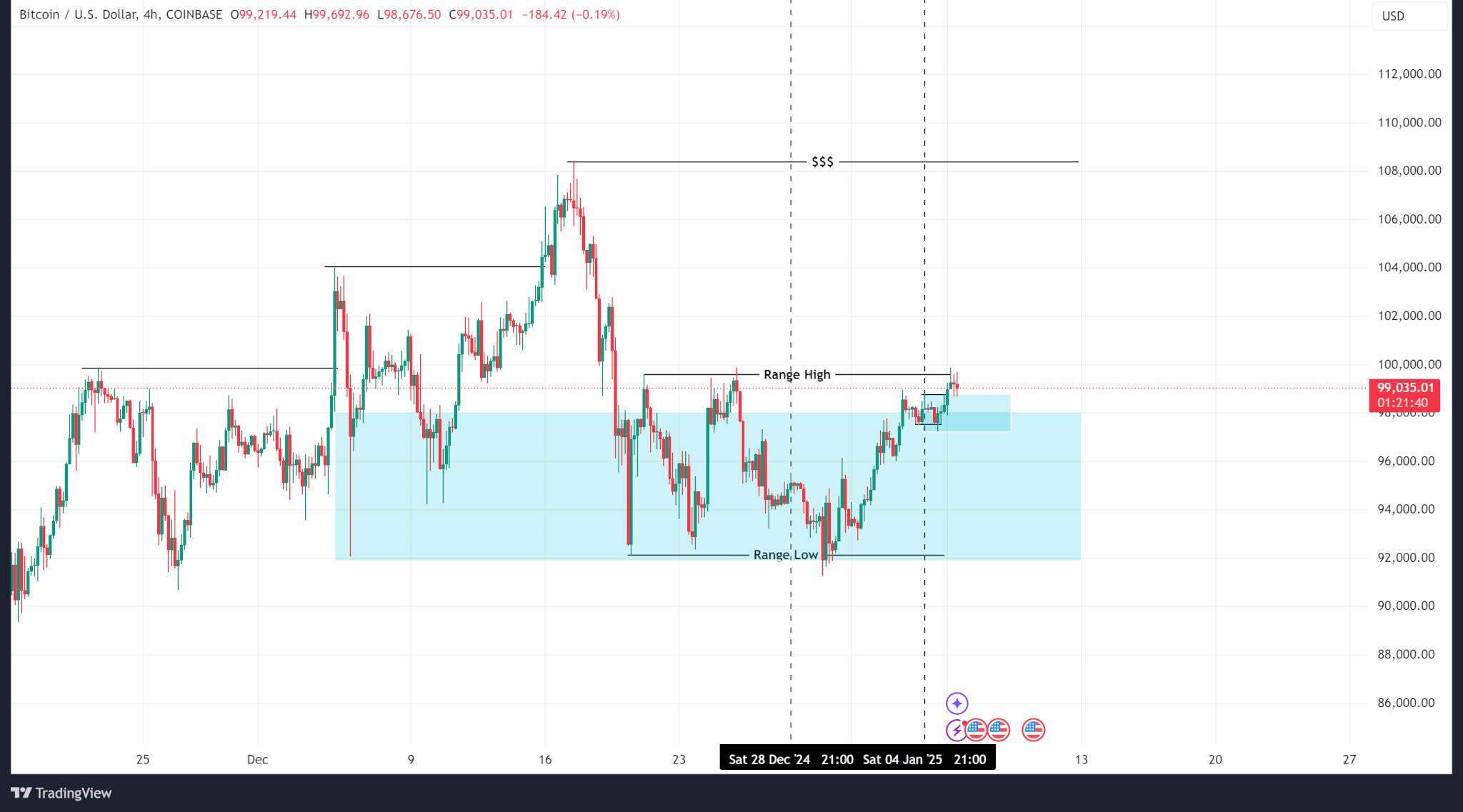
Bitcoin’s price improved last week but remained within the range established in previous trading sessions. BTC logged a weekly low of 91,271.19 and a high of $98,972.29. Bitcoin closed last week at $98,198.52.

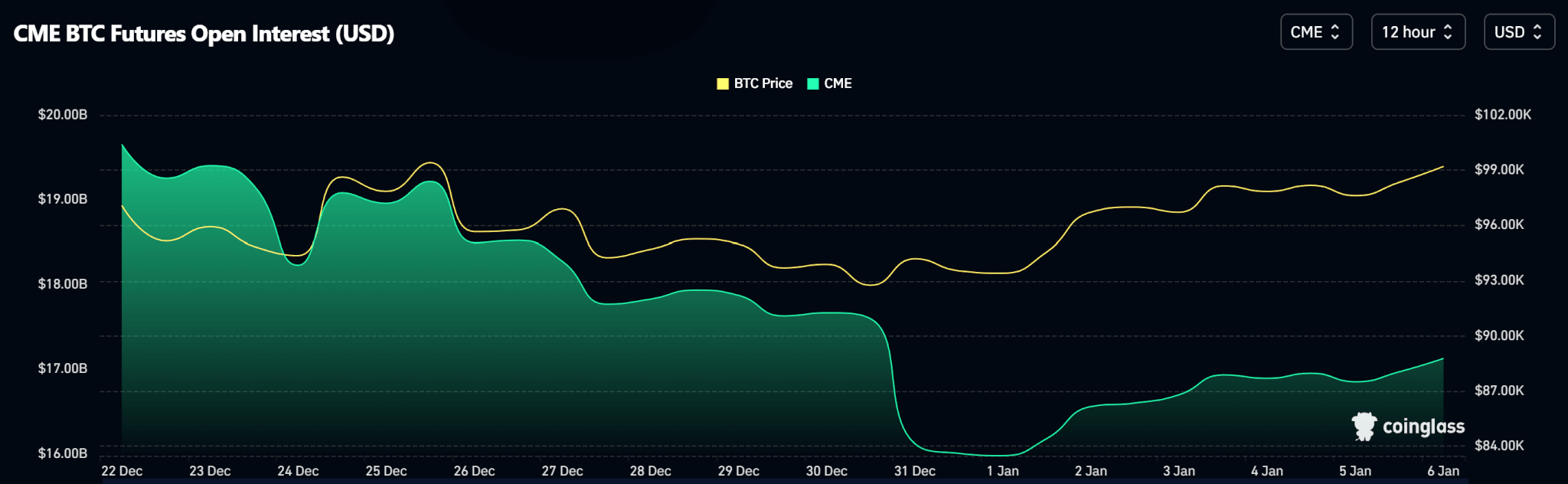
Open interest in the CME improved over the last week as more contracts were added. Comparing that with price movement suggests that more long contracts were opened.

Meanwhile, BTC ETF flows were net negative next week as outflows totalled $652.10Mn.

Outlook

BTC found support within the demand zone on the H4 time frame and has begun a rise (supported by new futures longs). BTC will need to first break above the range high at $99,596.57.

BTC trades at $101,978.76 as of publishing.

Ethereum

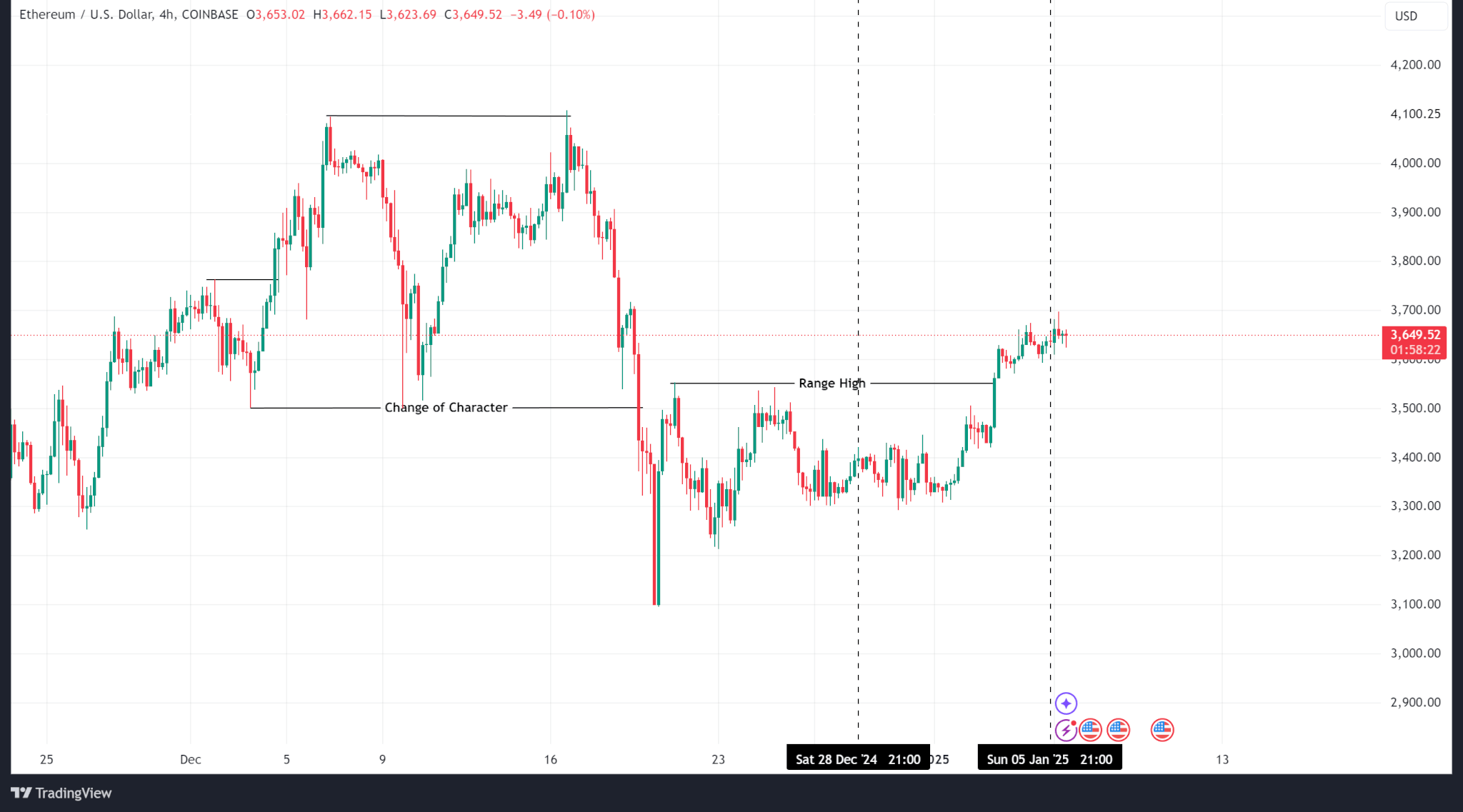
Ethereum’s price action was more bullish as it broke above the range formed in the previous week’s trading session. The weekly low and high were $3,293.19 and $3,675.77, respectively. ETH closed last week at $3,637.39.

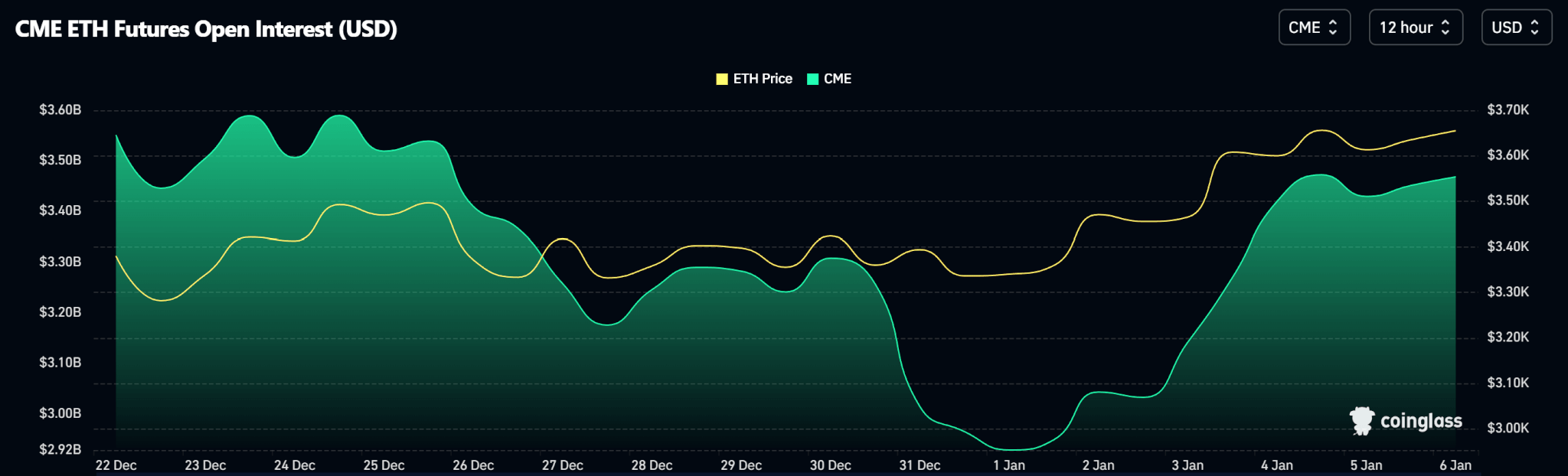
Similar to Bitcoin’s open interest charts, Ethereum OI reached a weekly low on Jan. 1 and has been rising since as new longs enter the derivatives market.

Meanwhile, spot ETH ETF inflows logged a negative week as $97.00Mn flowed out of ETFs in the US.

Outlook

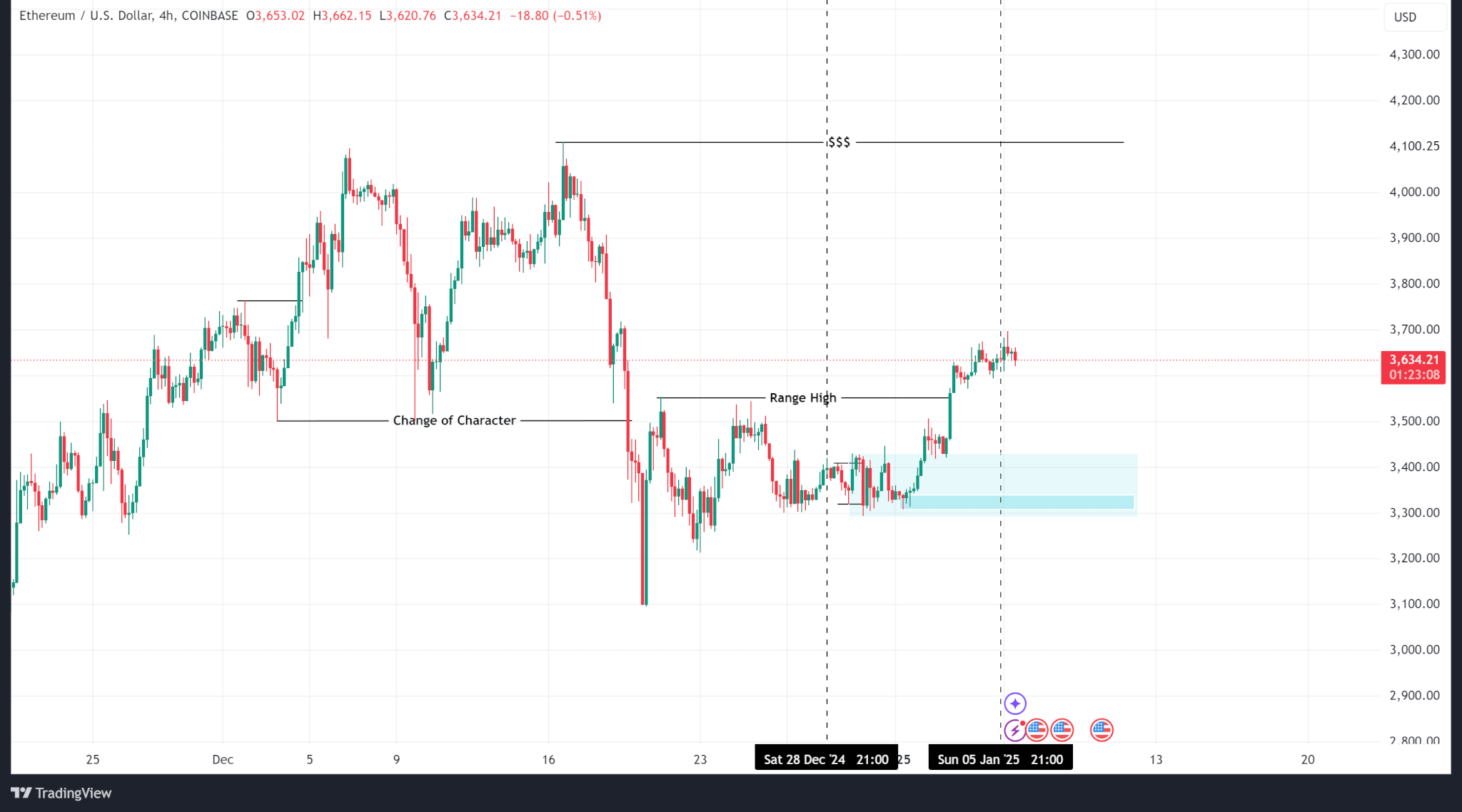
While the price has broken through the last range high, it must clear the recent high, which is at the $4,096.44 level, to resume a bullish trend. In the interim, a demand level at the $3,500.00 level could serve as liquidity for an upward.

ETH trades at $3,679.36 as of publishing.

Solana

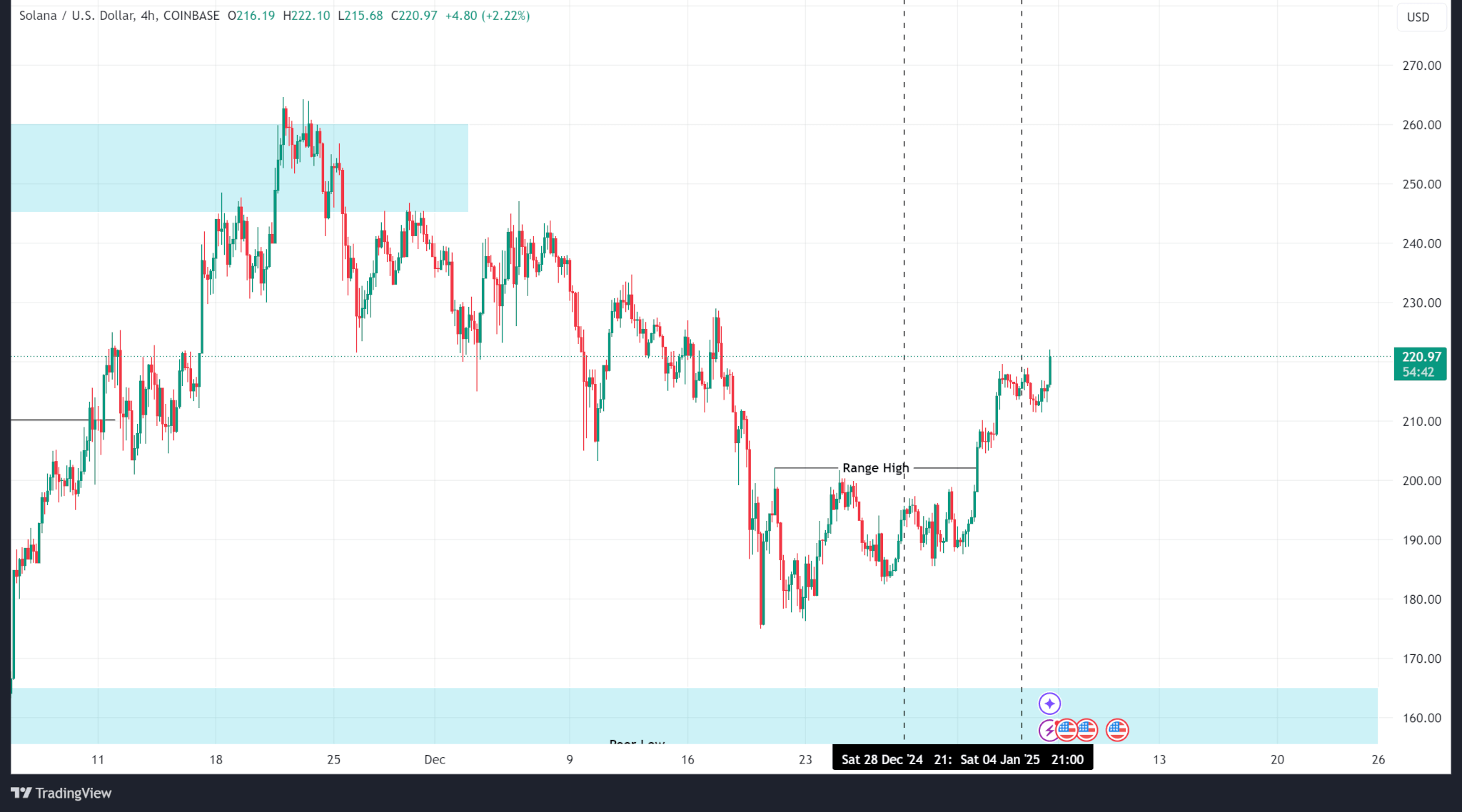
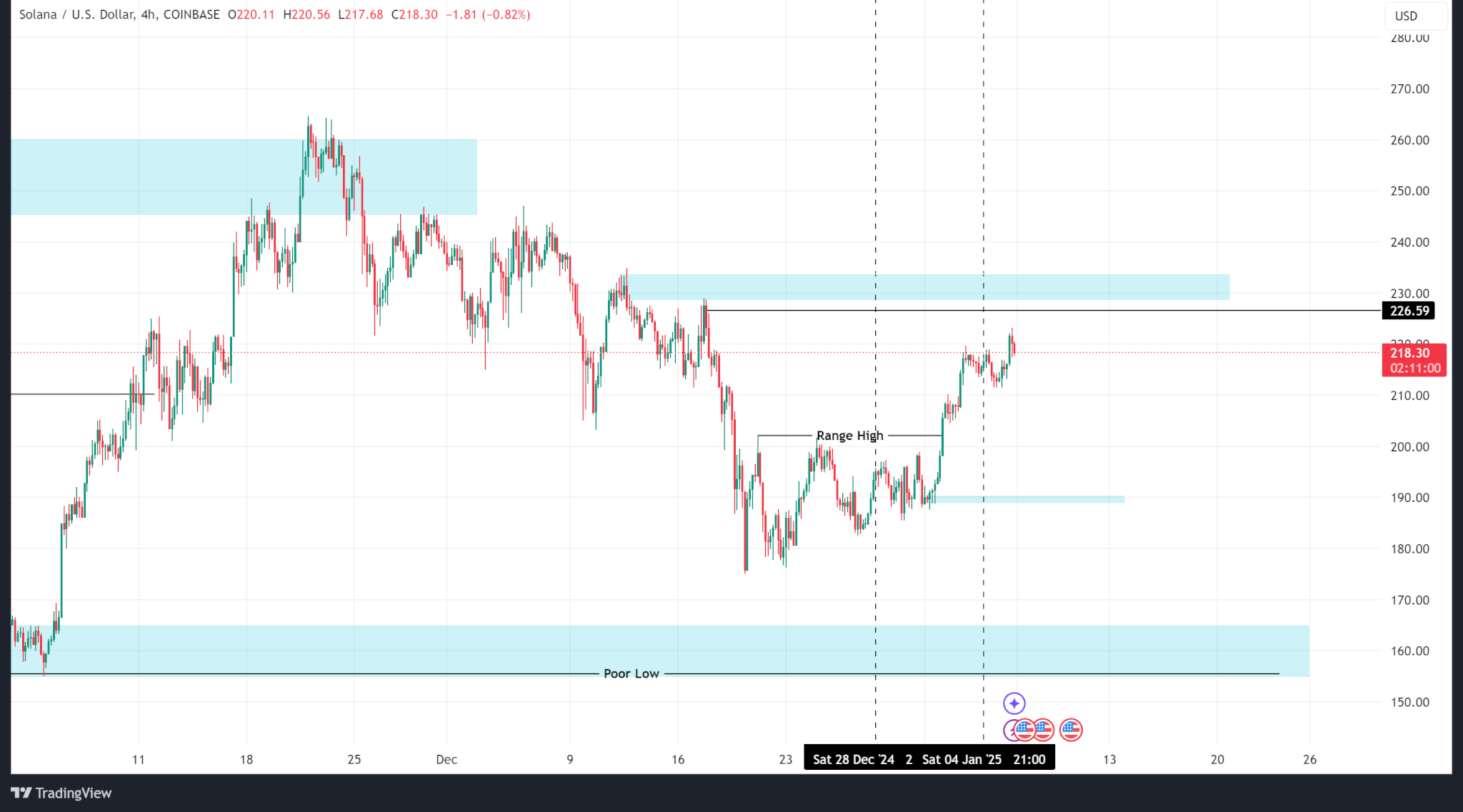
Solana’s price action was bullish last week as it broke above the local range high from the previous week’s trading session. Weekly low and high formed were $185.55 and $219.67.

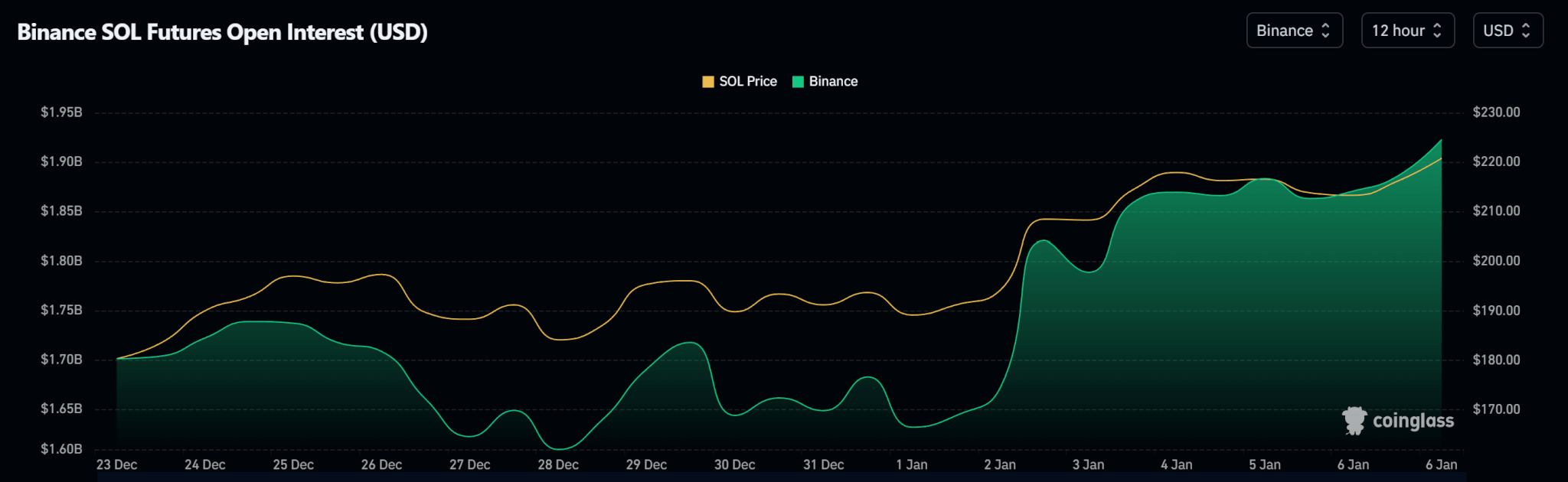
Open interest in Solana followed a similar pattern as that of Bitcoin and Ethereum, picking up from Jan. 1.

Outlook

Despite failing to break its all-time high, Solana’s trend is bullish. However, the price has logged consecutive lower lows on the H4 time frame and must break the $230 level and then the $260 level to continue its bullish trend.

SOL trades at $218.28 as of publishing.

Ripple

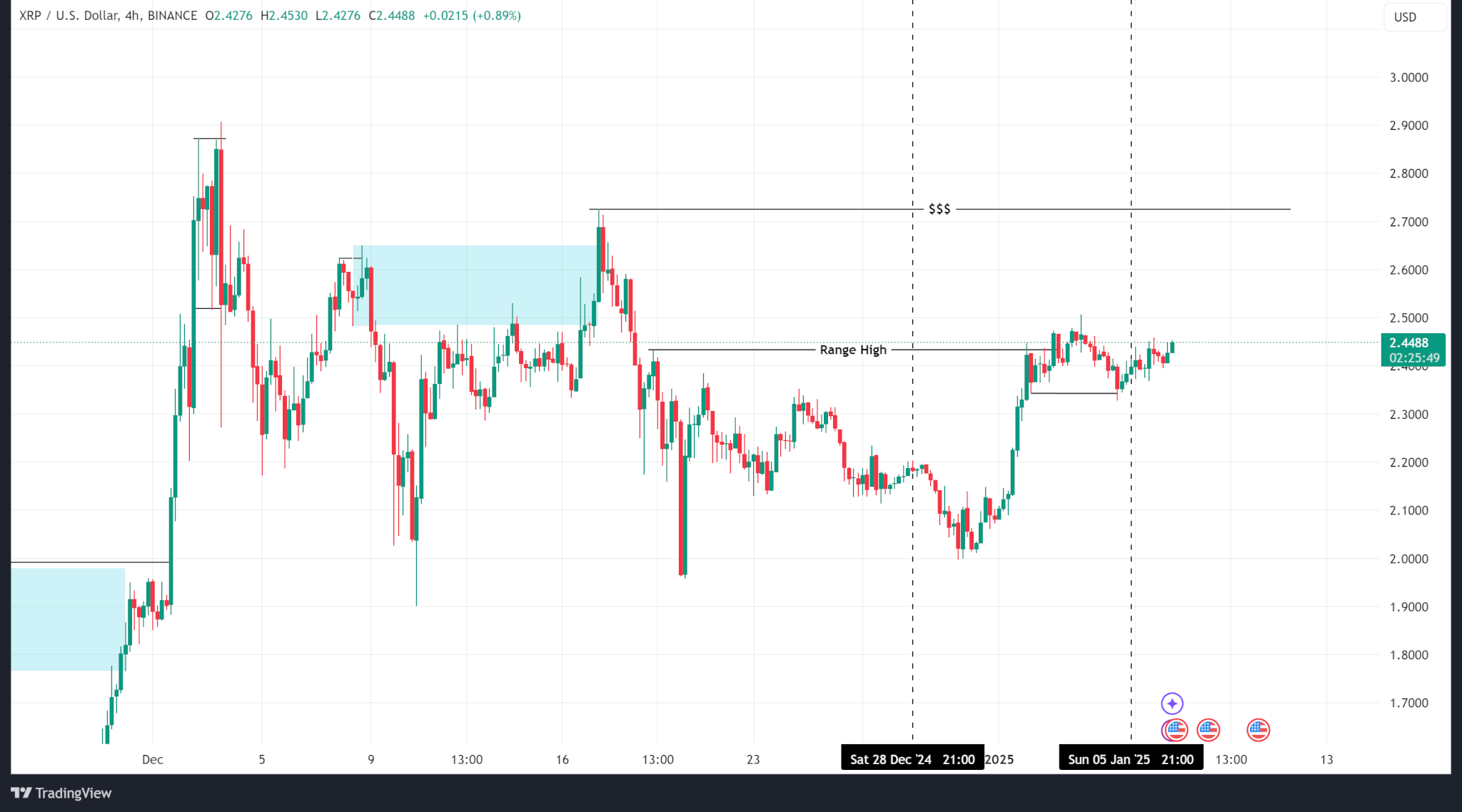
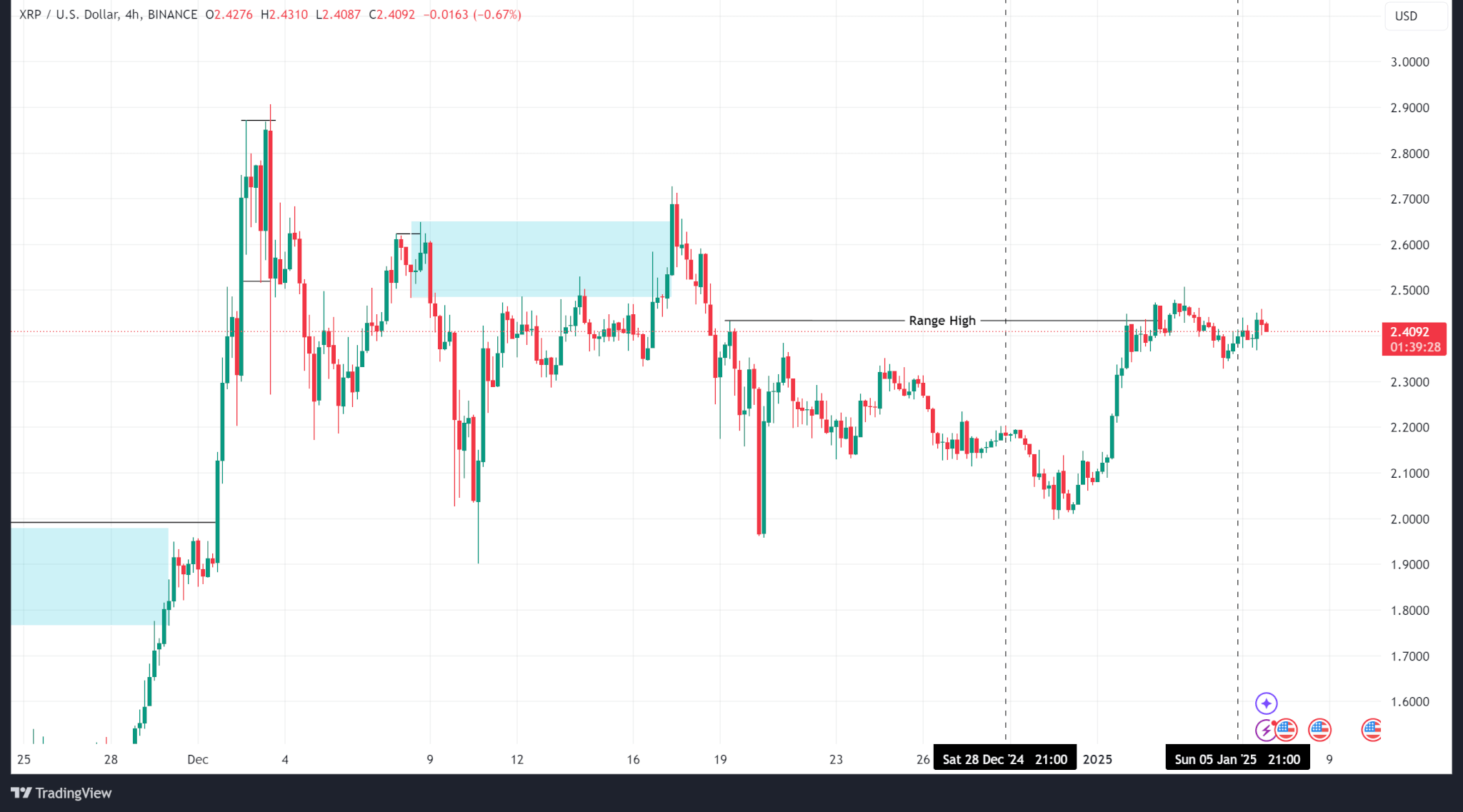
Ripple’s price action improved last week after logging a low of $1.99 and a high of $2.50.

However, price was incongruent with open interest as an increase in long contracts did not buoy the price.

Outlook

Since breaking above the range high and pulling back for liquidity at the last higher low at $2.34, XRP’s price has logged higher highs and lows, climbing towards the next supply zone around $2.72.

XRP trades at  $2.44 as of publishing.

The post Weekly Price Analysis: Bitcoin Remains Rangebound while Altcoins Fly appeared first on CoinJournal.
Metaplanet wants to boost its Bitcoin holdings to 10,000 in 2025

  • Metaplanet started buying Bitcoin in May 2024 as a strategic treasury reserve
  • The Tokyo-listed company currently holds 1,761.98 Bitcoin
  • It saw its Bitcoin yield reach 310% between October 1, 2024 to December 23, 2024 compared to 41% between July 1, 2024 to September 2024

Metaplanet is on a mission to boost its Bitcoin holdings to 10,000 in 2025 while leveraging its partnerships to boost Bitcoin adoption worldwide.

In a post on X, Simon Gerovich, CEO of Metaplanet, said that the Tokyo-listed company is aiming to “expand our Bitcoin holdings to 10,000 BTC by utilizing the most accretive capital market tools available to us.”

Reflecting on its 2024 performance, Gerovich highlighted that the company “broke records, expanded our Bitcoin treasury, and reinforced our position as Asia’s leading Bitcoin treasury company.”

Purchasing Bitcoin

Since May 2024, Metaplanet has been acquiring Bitcoin at a steady rate as a strategic treasury reserve. In June, it purchased $6.2 million worth of Bitcoin. This was followed by a $2.5 million purchase in July, a $7 million Bitcoin purchase in October, and an additional $11.7 million in November.

Its latest Bitcoin purchase was in late December totaling 620 Bitcoin for $60 million. To date, Metaplanet currently holds 1,761.98. In comparison, MicroStrategy holds 447,470 Bitcoin with its most recent purchase of $101 million taking place at the end of December 2024.

According to a December 23 notice from Metaplanet, it saw its Bitcoin yield reach nearly 310% between October 1, 2024 to December 23, 2024. This is compared to a 41% Bitcoin yield reached between July 1, 2024 to September 30, 2024.

On top of building its Bitcoin holdings, Gerovich added on X, among other things, that Metaplanet is focusing on building partnerships to “advance Bitcoin adoption in Japan and globally” while exploring “innovative opportunities to grow Metaplanet’s impact in Japan and the Bitcoin ecosystem.”

The post Metaplanet wants to boost its Bitcoin holdings to 10,000 in 2025 appeared first on CoinJournal.
Injective (INJ) soars after INJ 3.0 governance proposal approval

  • Injective (INJ) up 13% post-INJ 3.0 governance proposal (IIP-392) approval.
  • The IIP-392 proposal cuts INJ’s token supply, boosting its value.
  • Injective’s rise is further supported by the growing interest in AI crypto.

Injective (INJ) has emerged as one of the standout crypto performers today, witnessing a significant price surge following the approval of its INJ 3.0 governance proposal.

The cryptocurrency has soared by around 13%, reaching a 24-hour high of $26.62, with a weekly gain of 27%, reflecting robust investor confidence in its prospects.

INJ 3.0 governance proposal approval

Today’s Injective price rally lies in the successful passage of the INJ 3.0 governance proposal, known as IIP-392, which was overwhelmingly supported by the Injective community with a 99.99% approval rate.

The IIP-392 proposal is set to dramatically reduce the circulating supply of INJ tokens, positioning it to become one of the most deflationary assets in the crypto space. The deflationary mechanism is expected to enhance the token’s value over time by reducing supply while demand potentially rises, a strategy that has historically buoyed asset prices in cryptocurrencies.

This governance move is not happening in isolation. It coincides with a broader market trend, particularly the enthusiasm around Bitcoin’s halving event, which often catalyzes interest in other cryptocurrencies, especially those with significant updates or innovations. Injective’s alignment with this event could be seen as strategic timing to capitalize on the market’s focus on deflationary tokens.

The market’s response has been overwhelmingly positive, with trading volumes for INJ jumping by 198% to $312.13 million, and a +17.67% increase in futures open interest to $200.32 million according to data from Coinglass, signalling not just short-term speculation but a belief in the long-term value proposition of Injective (INJ).

Injective’s commitment to reducing token supply through governance, coupled with its focus on AI, places it at the intersection of two highly sought-after trends in the crypto world.

While the outlook for INJ remains bullish, the volatile nature of cryptocurrency markets necessitates caution.

Investors should watch for the successful execution of the INJ 3.0 plans, alongside monitoring broader market sentiment, which can be swayed by global economic shifts or political events, such as the potential impact of a Donald Trump election win on tech stocks and cryptocurrencies.

The post Injective (INJ) soars after INJ 3.0 governance proposal approval appeared first on CoinJournal.
Poilievre’s PM odds on Polymarket surge to 93% after Justin Trudeau’s resignation

  • Polymarket gives Poilievre an 87% chance of succeeding Justin Trudeau as Canada’s PM.
  • Trudeau has announced his resignation, citing internal struggles; parliament prorogued till March 24.
  • Poilievre’s anti-CBDC stance boosts popularity, pushing for crypto and cash freedom.

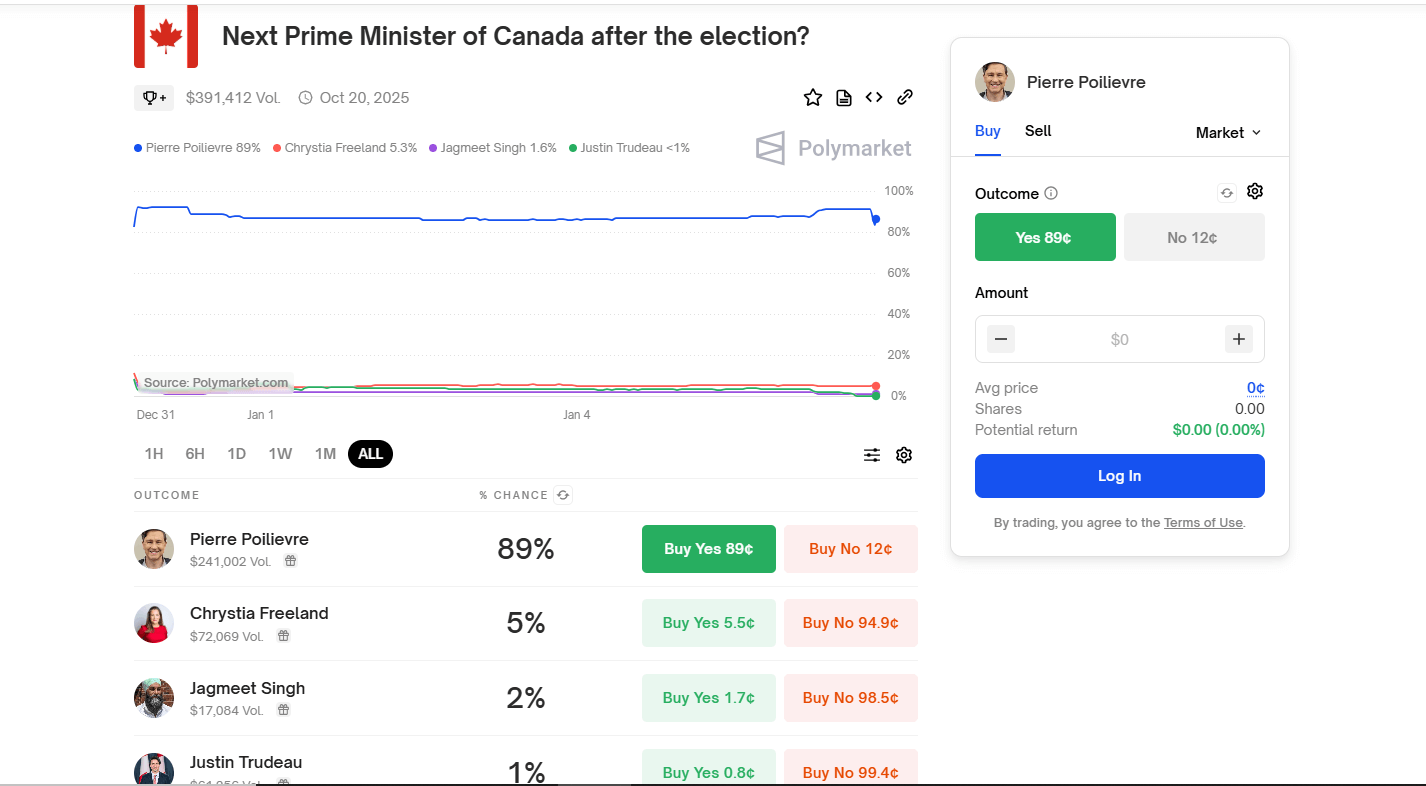
In a dramatic shift in Canadian politics, the odds of Pierre Poilievre becoming the country’s next prime minister soared to 93% on the Polymarket prediction platform, before slightly dropping to 87% at press time.

This surge follows the announcement by Justin Trudeau, Canada’s prime minister for nearly a decade, that he will step down as leader of the Liberal Party and resign as prime minister, leaving office once a new party leader is chosen.

Justin Trudeau resignation

Justin Trudeau announced his resignation on January 6, 2025, outside Rideau Cottage in Ottawa, citing internal party struggles and a desire for Canadians to have a clear choice in the upcoming election. While he will remain in a caretaker role until a new Liberal leader is selected, Trudeau acknowledged the challenges his government faced, including criticism of his cabinet and prolonged parliamentary gridlock.

The House of Commons will be prorogued until March 24, allowing time for the Liberal Party to elect a new leader.

Reflecting on his time in office, Trudeau highlighted key achievements such as supporting Ukraine, managing the COVID-19 pandemic, addressing climate change, and preparing the economy for future challenges. However, he expressed regret over his failure to reform Canada’s electoral system, which he believes would have allowed voters to rank multiple preferences on a single ballot.

Will Pierre Poilievre succeed Justin Trudeau as the next Canadian PM?

The top three contenders for the Canada PM post are Pierre Poilievre, Chrystia Freeland, and Jagmeet Singh.

However, Pierre Poilievre, The Conservative Party leader, is emerging as the most probable choice. His policies emphasize preserving Canadians’ financial privacy and freedom by opposing the creation of a government-controlled digital currency.

Poilievre, known for his staunch opposition to central bank digital currencies (CBDCs) and advocacy for cash and cryptocurrency freedoms, has gained significant traction among voters.

Poilievre’s advocacy for cryptocurrency and blockchain innovation has garnered attention, with the Conservative leader expected to position Canada as a potential global hub for digital assets.

The Polymarket prediction, based on a contract titled “Next Prime Minister of Canada,” also reflects growing confidence in Poilievre’s chances.

The Polymarket contract has seen a trading volume exceeding $391,400, underscoring widespread interest in Canada’s political future.

Poilievre's PM odds on Polymarket surge to 93% after Justin Trudeau’s resignation

As Canada braces for a political transition, Polymarket’s data highlights the electorate’s shifting priorities. Poilievre’s rising popularity underscores a growing appetite for change, as voters consider his vision for the nation’s economic and technological future.

With the next federal election required to occur before October 2025, the political landscape is poised for significant transformation.

The post Poilievre’s PM odds on Polymarket surge to 93% after Justin Trudeau’s resignation appeared first on CoinJournal.