Crypto futures exchange CoinFLEX has filed for restructuring in Seychelles

CoinFLEX, a renowned crypto futures exchange, has filed for restructuring in a Seychelles court.

This comes two months after the exchange temporarily halted withdrawals before allowing a limited withdrawal mid-last month.

The recent move with filing for restructuring is part of the exchange’s efforts to address a shortfall caused by a counterparty that failed to make a margin call.

The exchange has however said that it intends to get approval from depositors and the court on a proposal to give recovery value USD (rvUSD) tokens, equity, and locked FLEX coins to depositors.

Portraying optimism, the Chief Executive Officer of CoinFlex, Mark Lamb, said:

“We look forward to welcoming a new group of shareholders to CoinFLEX and are glad to be in a jurisdiction where we can quickly resolve this situation and return maximum value to depositors.”

Previous events

On June 23, CoinFLEX suspended withdrawals citing the harsh crypto market conditions and uncertainty involving a counterparty. The exchange then went ahead to suspend the trading of its native token, FLEX Coin (FLEX), Spot trading, and perpetual contract trading.

On July 22, the exchange proposed a plan to compensate depositors amid its efforts to recover the over $84 million debt owed by a “large individual customer.”

Mid-July, CoinFLEX partly reopened withdrawals allowing customers to withdraw 10% of their assets for a week. It also went ahead to cut down its workforce in order to lower the cost of running its business.

The crypto exchange has also outlined its focus on recovery plans that would enable it to regain insolvency. The firm said it was open to new acquisitions, and equity investors.

The post Crypto futures exchange CoinFLEX has filed for restructuring in Seychelles appeared first on CoinJournal.


You can sell Bitcoin and still be bullish, says Cypherpunk CEO

The cryptocurrency market has lost more than 60% of its value over the past few months.

Cypherpunk CEO Jeffrey Gao believes that people can sell Bitcoin and be bullish about the cryptocurrency. 

Bitcoin is down by more than 65% of its value since the start of the year. Bitcoin hit an all-time high of $69k in November 2021 but is currently trading around $23k per coin.

The bear market has seen some investors, including Tesla, sold off some of their bitcoins. Gao said investors can be bullish about Bitcoin and still sell their coins. He said;

“Going forward, that mentality towards risk management while still being bullish over the long term is very important. […] You can be bullish on crypto, but you can still sell out of the market.

Over the longer term, at least at this point in time, I would be more bullish on Bitcoin conservatively than those other tokens. But over the next two or three months, I’m probably more partial towards Ethereum and Solana.”

Gao said although he is bullish about Bitcoin, he is more optimistic about certain altcoins like Ether and Solana (SOL). 

The CEO revealed that Cypherpunk started the liquidation process in early May, prior to the Terra network collapse. He said; 

“By the time that it happened, we probably offloaded about 30% or 40% of the risk. We sold another portion when BTC briefly traded above $30,000 in late May. The final one-third we probably got rid of was sometime in June.”

Gao pointed out that the broader cryptocurrency market has witnessed forced liquidations, with some of the leading institutions like Voyager, Three Arrows Capital and Celsius getting involved in operations that lacked risk management. 

The Cypherpunk CEO lamented that the absence or near absence of risk management is what really separates the crypto industry from the other mature financial markets. 

The total cryptocurrency market cap remains above $1 trillion, down from the all-time high of $3 trillion recorded in November 2021.

The post You can sell Bitcoin and still be bullish, says Cypherpunk CEO appeared first on CoinJournal.

German crypto bank Nuri files for insolvency citing a “lasting strain”

Nuri, a German startup crypto bank, yesterday evening announced that it had filed for insolvency after what it calls a “lasting strain” on its business liquidity due to “significant macroeconomic headwinds and the cooling down of public and private capital markets.”

The startup bank said that 2022 has been a difficult year coming from the Corona pandemic and current political market uncertainties following the ongoing Russian invasion of Ukraine.

The crypto bank which has about 500,000 customers also cited other factors including major crypto sell-offs and the insolvency of Celsius and other crypto funds.

In a tweet, Nuri however assured its customers the move will not affect their services and customer funds and investments. The tweet reads:

“Nuri filed for insolvency on Tuesday, August 9th, 2022. This does not affect our services, customer funds or investments.”

Seeking the safest path forward

Nuri has maintained that the insolvency does not affect the funds of their users’ accounts saying that all funds are safe because of a partnership with Solarisbank AG.

Customers will still have access to their accounts and they can deposit and withdraw all funds freely at any time. The bank also stated that its services will remain unchanged and its app, product, and services will continue to run normally.

Nuri crypto bank

Nuri, formerly named Bitwala, is headquartered in Berlin and was founded in 2015.

It offers crypto savings accounts, portfolio investment portfolios called Nuri Pots, and crypto trading services. Most notably, Nuri charges 1% trading fees on crypto trading.

The post German crypto bank Nuri files for insolvency citing a “lasting strain” appeared first on CoinJournal.

Nas Academy partners with Invisible College to launch a crypto academy for web3

Nas Academy is going deeper into the web3 ecosystem thanks to its partnership with Invisible College.

Creator tech platform Nas Academy announced on Tuesday, August 9th, that it has partnered with Invisible College to launch a cryptocurrency academy for web3.

According to the press release shared with Coinjournal, the partnership will lead to the launch of the world’s first bundle of courses that can be unlocked with an NFT collection. 

The team revealed that more than $2,000 worth of courses would be made available initially, covering topics like NFT investing, Community Building, Video Editing, and Crypto fundamentals.

The press release added that starting on September 1st, Invisible College members who hold a Decentralien NFT will be able to unlock more than 18 web3 and creator courses on Nas Academy for free.

Invisible College is a school focused on helping people learn, invest, and build in web3.

The library includes courses from some of the world’s top creators and investors, including Zeneca, Nuseir Yassin, and Ben Yu.

While commenting on this latest development, Nas Academy CEO Nuseir Yassin said;

“Web3 is more than just a compelling topic for courses. We believe NFTs can reinvent the way students consume online education and allow people to own a piece of the internet. That’s why we wanted to partner with a visionary community in the form of Invisible College. We are excited to build together to help educate and bring the next wave of users into web3.”

The Nas Academy said this catalog of courses would empower students to build, influence, and invest in the future of the internet.

Invisible College Co-Founder Nick deWilde commented that;

“Lately, there’s been lots of debate about web3 use cases. The way we see it, combining a catalog of high-quality courses with an NFT collection is a fundamentally new way to empower students to own their education. And there’s no way we could have pulled it off without web3 technology. 

We also needed a forward-thinking partner who was willing to innovate with us. Fortunately, the Nas Academy team are just the type of crazy dreamers who could help us expand our vision and make it a reality.

Finally, we’d like to thank all of the creators who have joined this historic collaboration. They’ve produced some incredible classes that we’re excited to share with a brand new audience.”

Invisible College said it would also be working with Nas Academy to onboard leading web3 instructors to teach courses on the platform, with the goal of becoming the largest web3 learning library on the internet. 

Nas Academy is a technology platform that empowers creators to build communities through education.

The post Nas Academy partners with Invisible College to launch a crypto academy for web3 appeared first on CoinJournal.

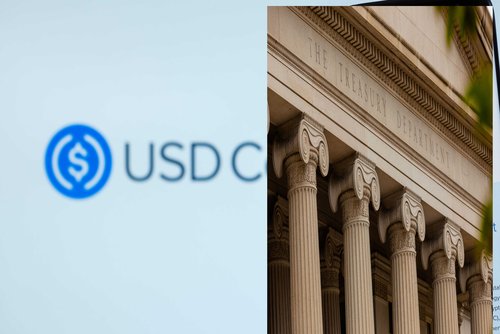
USDC’s blacklist of Tornado dApp shows the danger of centralisation

Circle is blocking USDC transactions connected to the Tornado Cash decentralised application, a move that is seen by many as a clear danger of centralisation.

Earlier this week, the United States Treasury Department added more than 40 cryptocurrency addresses allegedly connected to controversial mixer Tornado Cash to the Specially Designated Nationals list of the Office of Foreign Asset Control, or OFAC.

Following this latest development, Circle, the issuer of the USDC stablecoin, reportedly froze over 75,000 USDC worth of funds linked to the 44 Tornado Cash addresses sanctioned by OFAC. 

Marius Ciubotariu, the co-founder of Hubble Protocol, commented that Circle’s move shows the danger of centralisation. Ciubotariu said;

“Circle’s decision to follow along with the US Treasury and ban users of Tornado from buying or selling USDC tokens is an extremely worrying development that threatens the integrity of cryptocurrency, and decentralized finance in particular.

An estimated $437 million of assets have been blocked as a result of this decision, one that will surely impact all manner of users of the cryptocurrency mixing service. More importantly, though, it underlines how dangerous it is to have one centralized company managing over $54 billion of assets in crypto.”

Ciubotariu pointed out that the precedent that this could set for the future of Ethereum Virtual Machine (EVM) smart contracts is also alarming. In the future, it could be possible to see these contracts written with an opt-in clause that would allow node validators to decide not to process a transaction due to a black/watchlist. 

Circle’s move is a wake-up call to the crypto industry

Stefan Rust, CEO of Laguna, pointed out that Circle’s action is a wake-up call to the cryptocurrency industry as it shows the danger of centralisation. Rust said;

“Circle’s move to ban users of the Tornado cryptocurrency mixing service from trading USDC sets an extremely dangerous precedent and should be a wake-up call for everybody working in the cryptocurrency industry. While much is being said of Tornado’s links to the North Korean state-backed hacking group Lazarus, the likelihood that North Korean users make up anything more than a tiny fraction of a percent of Tornado’s users is small.”

Rust added that the blacklist capability could be (and is) written into Ethereum Virtual Machine (EVM) token contracts is a huge vulnerability and point of coercion for the industry. 

He added that people warned about the consequences of this feature being added to the USDC contract from day one. Rust added that;

“Now we have a centralized company at the mercy of US regulation running the fourth largest cryptocurrency in the world – and over $55 billion of market cap is on the line. This is truly a scary move. Imagine having a business where your closest competitor could shut you down by adding one row to a database it has complete control over?”

The CEO of Lugana added that while the US Treasury claims their move is due to Tornado Cash allegedly helping to launder $7 billion of money gained from cybercrimes, there are no doubt innocent users caught up in this that have used Tornado for totally legitimate privacy reasons.

Some of the biggest stablecoins, including Tether (USDT), USDC, and BUSD, are issued by centralised entities. 

The post USDC’s blacklist of Tornado dApp shows the danger of centralisation appeared first on CoinJournal.