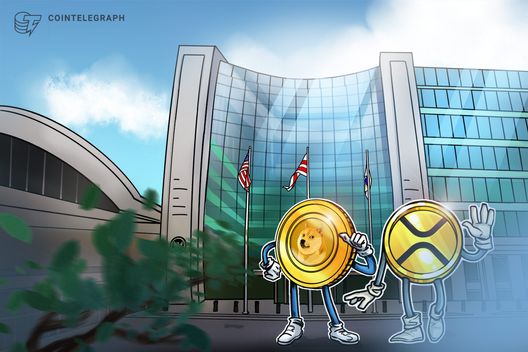
Die NYSE Arca und Cboe BZX Exchange haben im März die Notierung von ETFs von Bitwise und Franklin Templeton beantragt.

Finanzmittel Info + Krypto + Geld + Gold
Krypto minen, NFT minten, Gold schürfen und Geld drucken
Die NYSE Arca und Cboe BZX Exchange haben im März die Notierung von ETFs von Bitwise und Franklin Templeton beantragt.
The first 100 days of US President Donald Trump’s second term have reshaped the cryptocurrency and blockchain landscape through sweeping policy moves, regulatory changes, and controversial personal involvement.
From the launch of a new meme coin ahead of the Inauguration Day to the creation of a US Bitcoin reserve, President Trump has pushed an aggressively pro-crypto stance, while simultaneously sparking regulatory concern, geopolitical tension, and significant market volatility.
A series of tariffs, executive orders, and personnel appointments have created both opportunity and uncertainty across digital asset markets.
On 20 January, as Trump took the oath of office, his family’s investment firm World Liberty Financial (WLFI) launched the second phase of its token sale.
The non-transferable WLFI token was followed by a wave of crypto-friendly appointments.
Paul Atkins was named as SEC Chair on day one, replacing Gary Gensler, while Brian Quintenz was nominated to lead the CFTC.
David Sacks, a vocal supporter of crypto, was appointed to chair the President’s Council of Advisors on Science and Technology, positioning him as a central figure in both blockchain and AI policymaking.
The WLFI token, initially marketed as a patriotic memecoin aligned with Trump’s return to power, gained traction on platforms like X and Telegram.
The token’s branding heavily featured themes tied to American exceptionalism and conservative values.
Despite being non-tradable and unavailable on major exchanges, the project drew attention from retail investors hoping for eventual utility.
WLFI’s promotional material also teased exclusive access perks for top holders, culminating in a controversial event later in the quarter.
Just weeks into the new administration, Trump’s economic nationalism began to impact the crypto industry.
On 1 February, broad tariffs were imposed on Mexico, China, and Canada, citing security and fentanyl concerns.
Markets dipped in response, with Bitcoin miners particularly affected due to higher import costs for essential hardware.
The situation escalated on 2 April when Trump introduced a 10% minimum tariff on all countries that tax US goods, branding it “Liberation Day.”
Meanwhile, on March 7, the president signed an executive order establishing a Strategic Bitcoin Reserve.
Though the move was intended to formalise the US’s stake in crypto markets, it disappointed many investors by not initiating fresh purchases.
Donald Trump’s $TRUMP meme coin surged over 50% in value to reach a $2.7 billion market cap after the project announced that the top 220 token holders would be invited to a black-tie dinner with the former US president on 22 May.
The event, hosted at his private club in Washington, also includes a VIP White House tour for the top 25 holders.
According to Chainalysis, Trump and his allies earned nearly $900,000 in trading fees from the token in just two days following the announcement.
Since its January launch, the token has generated $324.5 million in trading fees through a mechanism that redirects a portion of each transaction to insider wallets.
The Trump Organisation and affiliates reportedly control around 80% of the token supply, which is locked under a three-year vesting schedule.
The dinner offer has triggered backlash from lawmakers and watchdogs, with Senators Elizabeth Warren and Adam Schiff calling for a federal ethics probe, alleging it may constitute “pay to play” behaviour.
Meanwhile, Trump’s broader crypto ventures, including the $MELANIA token and World Liberty Financial, have raised $550 million, with Trump-affiliated entities entitled to 75% of net revenue.
The shift comes amid weakened regulatory oversight of the crypto sector under Trump’s administration.
The post First 100 days under President Trump: crypto industry faces new challenges and opportunities appeared first on CoinJournal.
XRP has rallied 8.63% over the past week, trading at $2.22 as of 30 April 2025, according to CoinMarketCap.
The token’s latest market capitalisation stands at $130.09 billion, with 58.44 billion XRP in circulation and $2.89 billion in 24-hour trading volume.

While XRP is down 3.04% in the past 24 hours, it remains up sharply from its April lows.
The recent momentum is largely attributed to optimism surrounding the launch of XRP futures exchange-traded funds (ETFs), despite the delay of ProShares Trust’s product to 2025.
Analysts say XRP’s recent breakout above its 21-day and 50-day moving averages—combined with the end of a multi-week downtrend—suggests continued strength in the short term.
The current focus is whether XRP can retest 2025 highs and potentially reach $3.40, although macroeconomic uncertainties remain a limiting factor.
Ripple’s March 2025 legal victory against the US Securities and Exchange Commission (SEC) has revived investor confidence.
The ruling cleared the path for XRP-based futures ETFs, providing institutional investors with new avenues for exposure.
The surge in XRP follows a similar pattern seen with Bitcoin’s reaction to its spot ETF approvals in early 2024.
Market observers believe XRP could mirror Bitcoin’s post-ETF rally, especially as investor sentiment continues to improve.
XRP’s price strength, even amid broader volatility, reinforces its position as a leading altcoin heading into the second half of 2025.
Despite positive momentum, economic risks could cap near-term gains. President Trump’s expanded tariff programme and renewed trade disputes have fuelled concerns of stubborn inflation.
This, in turn, may keep the US Federal Reserve in a hawkish stance longer than markets would prefer.
These factors increase the likelihood of risk-off behaviour among investors, which could impact high-volatility assets like XRP.
As a result, while some traders have speculated about XRP surging toward $10, this scenario appears unlikely unless broader market conditions shift significantly.
Beyond price action, Ripple’s ecosystem continues to grow. The December 2024 launch of the RLUSD stablecoin has enhanced on-chain liquidity and transaction flexibility.
Upgrades to the XRP Ledger have also boosted transaction speeds, now capable of handling more than 3,400 transactions per second, improving its appeal for institutional use.
The Trump administration’s pro-crypto stance—including the appointment of Paul Atkins as SEC Chair—suggests that regulatory clarity may continue to improve.
In March, Trump identified XRP as a key digital asset that could be included in the US government’s digital stockpile initiative.
The post XRP price rises 8.6% this week as ETF momentum builds appeared first on CoinJournal.
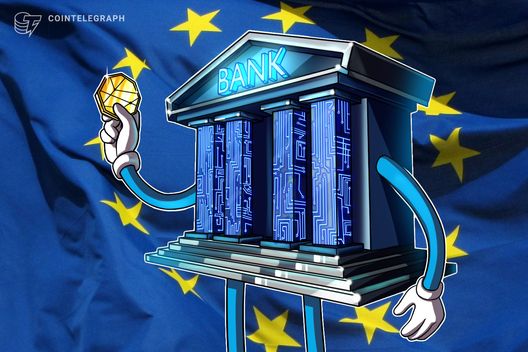
Schätzungsweise 65 % der europäischen Bürger wünschen sich eine einzige Anwendung, um ihre Bankgeschäfte, Ersparnisse und Kryptowährungsinvestitionen zu verwalten, so die Untersuchung von Bunq.
Libre and the TON Foundation are collaborating to create a $500 million Telegram Bond Fund ($TBF) on the TON blockchain, marking one of the largest tokenised corporate debt ventures in history.
The RWA narrative just got a huge push as @librecap & TON Foundation are tokenizing $500M of Telegram bonds on TON Blockchain via the Telegram Bond Fund ($TBF)! 🔥
Key points:
💼$500M in Telegram bonds on TON
🏦Access for institutional & accredited investors
⚡Powered by Libre… pic.twitter.com/nXOdSsatKN— TON 💎 (@ton_blockchain) April 30, 2025
In a blog on TON’s website, Max Crown, the CEO of the TON Foundation, underscores that this collaboration “unlocks powerful new opportunities for TON’s community to engage with real-world assets in a secure and accessible way,” solidifying TON’s leadership in regulated asset tokenisation.
By digitising a slice of Telegram’s $2.35 billion in outstanding bonds, $TBF offers accredited investors an unprecedented on-chain gateway to institutional-grade fixed-income products with yields reaching up to 9.4%.
The new fund introduces seamless subscription, redemption, and transfer capabilities through its multi-phase Libre Gateway infrastructure, leveraging Libre’s proven track record, which has tokenised over $200 million in assets alongside titans like BlackRock and Brevan Howard.
With TON’s deep integration into Telegram’s ecosystem of over 950 million users, investors can now access and manage their tokenised bond holdings directly from TON-native wallets, bridging the gap between fiat, stablecoins, and decentralised finance.
Through $TBF, tokenised bonds can serve not only as yield-bearing instruments but also as on-chain collateral for borrowing, yield farming, and a growing array of decentralised finance (DeFi) products built on TON’s scalable network.
Dr. Jez Mohideen, Chairman of Libre and CEO of Laser Digital, emphasises that TON’s unique symbiosis of mass-market usability and institutional infrastructure creates “a seamless bridge between TradFi and DeFi for a global, digitally native audience.”
The launch arrives amid an $18.9 billion surge in real-world asset tokenisation, where corporate debt has historically lagged behind commodities and real estate, positioning $TBF as a catalyst for broader market adoption.
By enabling future issuances of Telegram bonds to flow through the same compliant, on-chain framework, Libre and the TON Foundation are laying the groundwork for an enduring ecosystem of digital debt markets.
Institutional participants can now tap into a fully on-chain issuance stack that promises transparency, efficiency, and regulatory compliance, while retail users stand to benefit from a new frontier of yield and utility seamlessly embedded in their favourite messaging app.
The post Libre and the TON Foundation to launch a $500M Telegram Bond Fund appeared first on CoinJournal.