
Mit der BCAM will der Krypto-Dienstleister eine umfassende Handelsplattform für institutionelle Investoren schaffen.

Finanzmittel Info + Krypto + Geld + Gold
Krypto minen, NFT minten, Gold schürfen und Geld drucken
Mit der BCAM will der Krypto-Dienstleister eine umfassende Handelsplattform für institutionelle Investoren schaffen.
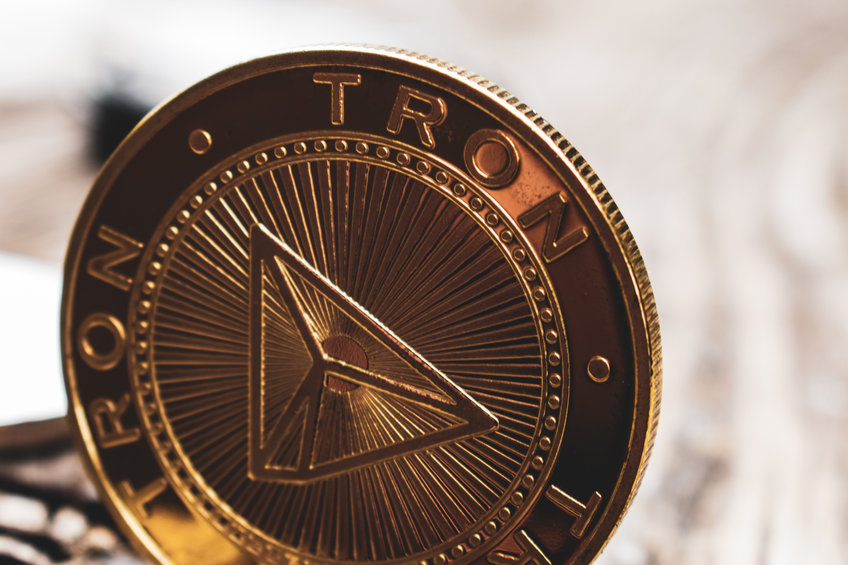
Tron’s USDD will be more like Terra’s UST, and targets $10 billion in reserves, founder Justin Sun said.
Tron will launch its decentralized algorithmic stablecoin called USDD (Decentralized USD) on May 5, 2022. Tron founder Justin Sun announced the development in an open letter.
The new stablecoin will also be available on Ethereum and the BNB Chain, with this possible via Tron’s BTTC cross-chain solution.
USDD as an algorithmic stablecoin is unlike the traditional stablecoin such as Tether (USDT) or USD Coin (USDC). As such, it’s not backed by cash or other financial assets, but by cryptocurrencies.
The USDD stablecoin will be pegged to TRX as the underlying asset and will feature the “mint-and-burn” mechanism similar to that used by Terra’s UST. The mechanism should see TRX burned to allow for the minting of USDD.
Terra CEO Do Kwon has commented on the ‘mint-and-burn’ functionality and Tron’s move to launch USDD as a signal of what’s ahead in terms of the future of decentralised economies. And it’s a scenario critics fail to understand, he added.
“Decentralized economies deserve decentralized money – every blockchain will run on dect stables soon”
Algorithmic stablecoins are fast becoming the norm – protocol-issued dollars coming to every blockchain.
Detractors cannot see – currencies are ultimately backed by the economies that use them, and the future is clearly opting to use decentralized and self sovereign stablecoin💰
— Do Kwon 🌕 (@stablekwon) April 22, 2022
“As the most decentralized stablecoin in human history, USDD will make finance accessible to all by applying mathematics and algorithms. It will exist permanently without relying on any centralized entity,” TRON DAO tweeted.
Support for USDD falls initially on TRON DAO Reserve, a decentralised autonomous organisation that is set to handle custody service of a massive $10 billion worth of reserve. The reserve, according to Sun, will comprise “highly liquid assets raised from initiators of the blockchain industry.”
The stablecoin’s early management will also involve major blockchain institutions, which together with TRON DAO, will manage the collateral and ensure full convertibility.
Terra’s UST reserves include a Bitcoin (BTC)-denominated holding set to grow to $10 billion. Currently, the reserves amount to about $1.63 billion worth of BTC. Terra also recently bought $100 million worth of Avalanche (AVAX).
Sun’s announcement stirred interest among investors, with the price of the native TRX jumping more than 7% on Friday as the news hit the market.
The TRX/USD pair, which hit its all-time high of $0.23 on 5 January 2018, rose to an intraday high of $0.074. However, with widespread weakness across the market, it has since pared some of the gains to currently trade around $0.067.
The post Tron to launch a decentralized algorithmic stablecoin called USDD appeared first on Coin Journal.

Für den Bitcoin-Kurs könnte das schlechte Ende einer schwachen Woche bevorstehen, wobei die weiteren Aussichten womöglich deutlich weniger positiv sind als erwartet.

Über das neue Zahlungsprogramm sollen Influencer in dem sozialen Netzwerk eine neue Einnahmequelle bekommen.
The Ronin Network exploit happened in March and saw $600 million worth of Ethereum (ETH) and $25 million in USDC stolen.
The US Treasury’s Office of Foreign Asset Control (OFAC) has sanctioned three more Ethereum wallets linked to the recent hack on Ronin Network.
The new addresses have been connected to the North Korea hacking group Lazarus, OFAC said on Friday.
The OFAC revealed the addition of the three virtual currency addresses via an update to its Specially Designated Nationals (SDN) List published on 22 April. All three have ties to the activities of the North Korean state-sponsored hacker group Lazarus Group.
Notably, recent funds movement linked to the three wallets involves proceeds of the exploit on the Ronin blockchain.
“The DPRK has relied on illicit activities like cybercrime to generate revenue while trying to evade US and UN sanctions,” US Treasury tweeted.
The agency has warned that transacting with the designated wallet addresses “risks exposure to US sanctions.”
The addition of the three wallets comes just days after the department linked Lazarus Group to the $625 million heist.
On Friday, the original address used in the attack moved funds to various addresses using Tornado Cash – a mixing service that helps make transactions difficult to trace. The decentralised protocol, which helps make Ethereum transactions private, announced on 15 April that it would block any crypto wallets added to OFAC’s list.
Tornado Cash has reiterated that financial privacy remains “essential to preserving” financial freedom. However, privacy should not be pursued at the “cost of non-compliance,” it added.
In related developments, Binance reportedly recovered $5.8 million worth of funds stolen during the hack. According to Binance CEO Changpeng Zhao, the hackers had sent the funds to 86 accounts.
The post US Treasury links three more Ethereum wallets to the $625M Ronin hack appeared first on Coin Journal.