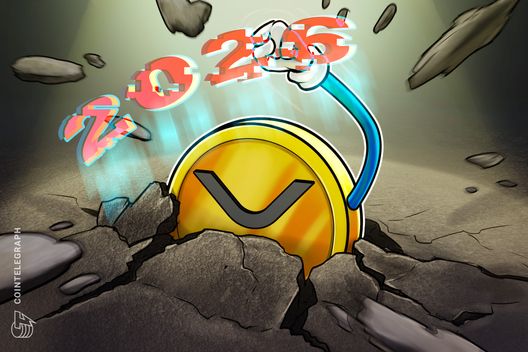
Das Angebot an XRP-Börsen hat ein Achtjahrestief erreicht, wodurch sich das verfügbare Angebot zum Verkauf verknappt hat. Dadurch wird eine Rallye im Jahr 2026 möglich.

Finanzmittel Info + Krypto + Geld + Gold
Krypto minen, NFT minten, Gold schürfen und Geld drucken
Das Angebot an XRP-Börsen hat ein Achtjahrestief erreicht, wodurch sich das verfügbare Angebot zum Verkauf verknappt hat. Dadurch wird eine Rallye im Jahr 2026 möglich.

Ein Bitcoin-Großinvestor mit einem Vermögen von 11 Milliarden US-Dollar setzt Hunderte Millionen US-Dollar auf Kursanstiege von Bitcoin, Ether und Solana, während „Smart Money”-Händler weiterhin Netto-Short-Positionen halten.
Pi Network has temporarily disabled its wallet payment request feature in response to a surge of sophisticated scam activity that has led to the loss of millions of PI tokens from user wallets.
The move, announced by the Pi Core Team on social platform X, comes as attackers increasingly exploit the platform’s payment request function to trick users into approving fraudulent transfers.
According to on‑chain data shared by community observers and reporting outlets, scammers have siphoned off more than 4.4 million PI by sending deceptive payment requests to holders with large balances.
One single scammer address reportedly received hundreds of thousands of tokens each month throughout 2025.
Tokens approved through these requests are moved instantly to the attacker’s wallet and cannot be reversed, meaning victims have no recourse once a transfer is authorised.
The Pi Core Team stressed that this issue stems from social engineering rather than a flaw in the network’s protocol.
Because wallet balances and addresses are publicly visible on Pi’s blockchain, bad actors can identify high‑value wallets and impersonate trusted contacts, friends, moderators, or even official accounts, to convince users to authorise transfers.
To curb further losses, the network has disabled the payment request feature across its ecosystem while assessing potential safeguards.
The suspension is intended to be temporary, but the team has not yet announced a specific timeline for restoring the function.
In the meantime, community moderators and safety advocates are urging users to refuse all unsolicited payment requests.
Experts and user reports indicate that the scams are part of a broader uptick in deceptive schemes targeting Pi users.
Fraudsters cast a wide net, from phishing links claiming fake airdrops or price promotions to counterfeit portals that ask for wallet credentials or private keys, which can lead to full account takeovers.
Pi Network’s core team has repeatedly warned against sharing sensitive information or engaging with unverified links circulating on social media and messaging platforms.
While Pi Network itself is not widely regarded as an outright scam project by independent analysts, its rapid growth, mobile‑centric model, and referral‑based incentives have drawn scrutiny and made its large user base a target for scammers.
Users are advised to stick strictly to official communication channels and exercise heightened caution when interacting with unverifiable contacts.
The payment request suspension arrives amid mixed sentiment around the PI token’s market performance.
While Pi token’s price forecast remains optimistic, it currently trades near the $0.20 level, up only 1% in two weeks.
Notably, the PI coin price has been weighed down by low liquidity and ongoing token unlocks, with significant amounts entering circulation in recent months.
The token has struggled to absorb the added supply, and daily trading volumes remain moderate.
The post Pi Network suspends wallet payment requests after scammers drain millions appeared first on CoinJournal.

Metaplanet kaufte 4.279 BTC und brachte seinen Bestand auf 35.102 BTC, da sein Geschäft zur Generierung von Bitcoin-Einnahmen die Prognosen übertraf.
A hacker who recently exploited Unleash Protocol has begun laundering stolen funds through the Ethereum-based privacy service Tornado Cash, according to on-chain data and blockchain security firms.
The attacker is attempting to obscure the trail of roughly 1,337 ETH, valued at close to $4 million, drained from Unleash earlier this week.
Security companies PeckShield and CertiK have reported that the funds were transferred to Ethereum and broken into multiple batches, often around 100 ETH each, before being deposited into Tornado Cash, a well-known crypto mixing protocol.
Unleash confirmed on Tuesday that it had suffered a significant security breach, resulting in approximately $3.9 million in losses.
The protocol has paused operations and launched a forensic investigation into the incident.
According to Unleash, preliminary findings indicate that an externally owned wallet gained unauthorised administrative control over the protocol via its multisignature (multisig) governance system.
The attacker then executed an unauthorised contract upgrade that enabled withdrawals of user funds without proper approvals.
“This upgrade enabled asset withdrawals that were not approved by the Unleash team and occurred outside our intended governance and operational procedures,” the team said in a statement posted on X.
Security analysts suggest the compromise may have been the result of phishing or another form of social engineering that allowed the attacker to gain control over governance keys, effectively bypassing standard safeguards.
The stolen assets reportedly included Wrapped IP (WIP), USDC, Wrapped Ether (WETH), stIP, and vIP tokens.
On-chain analysis shows that most of these assets were first bridged to Ethereum, then consolidated into ETH and routed through Tornado Cash, an approach commonly used by hackers to hinder tracking and recovery efforts.
CertiK said it initially detected suspicious withdrawals of WETH and IP-related tokens that were sent to an externally owned address created using Safe’s SafeProxyFactory, a popular smart contract framework for multisig wallets.
We have detected deposits of 1337.1 ETH (~$3.9M) into Tornado Cash from 0xc946981F5dFBFA10cf858B95d51Fc06DCD15BfE3.
The fund traces to suspicious withdrawals of Wrapped ETH and Story tokens from a multisig that may have been compromised.… pic.twitter.com/YIFEAEwilc
— CertiK Alert (@CertiKAlert) December 30, 2025
Unleash emphasised that the breach was confined to its own governance and administrative contracts.
The Unleash team stated there is currently no evidence that Story Protocol, the Layer 1 blockchain Unleash is built on, was compromised.
“The impact appears limited to Unleash-specific contracts and administrative controls,” the Unleash team said, adding that Story Protocol’s validators, core infrastructure, and contracts remain unaffected.
Unleash is one of the higher-profile applications in the Story Protocol ecosystem, which focuses on tokenised intellectual property and on-chain IP management.
PIP Labs, the company behind Story Protocol, has raised around $140 million in funding from prominent investors.
The Unleash team has urged users not to interact with the protocol while the investigation is ongoing and said it will provide updates on the incident and potential remediation measures as more verified information becomes available.
As of the time of writing, Unleash had not disclosed whether it plans to pursue fund recovery efforts or compensation for affected users, and the use of Tornado Cash by the hacker may significantly complicate any attempts to trace or reclaim the stolen assets.
The post Unleash Protocol hacker moves stolen funds through Tornado Cash appeared first on CoinJournal.