
CBDCs are ‘a strong validation of blockchain technology,” says Binance CEO

  • Changpeng “CZ” Zhao also says CBDCs may have positives and an option, but governments shouldn’t seek to regulate them independently.

Binance CEO Changpeng Zhao, one of the most prominent figures in crypto, has cautioned that governments should not seek separate regulatory oversight for cryptocurrencies and for central bank digital currencies (CBDCs).

He also says that while CBDCs have several positives, there are “few caveats.”

Notably, the Binance chief says he sees central bank-issued digital currencies as the biggest validation of blockchain technology.

Changpeng “CZ” Zhao believes central banks digital currencies (CBDCs) have the potential to benefit the broader crypto ecosystem but says governments should not look to oversight the sector in its usual “walled-garden nature.”

The Binance chief made the comments in a blog post published Tuesday, where he responded to the question of CBDCs as part of his CZ’s FAQs Series.

He says there are positives and negatives to the issue of central bank digital currencies, but one of the most obvious things to note about the continued focus on and issuance of these by governments is that it provides a “strong validation of the blockchain technology” underpinning cryptocurrencies.

As recently as 2 years ago, we heard newcomers worry that the technology may be a fad. Now with central banks adopting it, we don’t hear those concerns anymore,” he wrote.

CBDCs can help educate people about Bitcoin

He also sees CBDCs as key to the crypto industry as through them, the masses can learn about blockchain and crypto. He notes that educating the masses about blockchain also educates them about Bitcoin.

According to him, learning about Bitcoin exposes people to the “valuable fundamental properties of money – scarcity, freedom to transact, and low fees.

Among risks he associates with CBDC developments, the Binance CEO highlights a possibility that some governments “ban[s] Bitcoin” in order to promote their own CBDC.” CZ, however, clarifies that so far no country has banned Bitcoin and that so far, bans have only affected crypto exchanges in those countries.

Several countries are aggressively pursuing CBDCs, while at the same time seeking to introduce regulations that might hinder the broader crypto industry.

Zhao says governments should not put forth different regulatory environments for CBDCs and for cryptocurrencies. According to him, adopting “restrictions and barriers” will likely stifle the very innovation and technology governments rely upon for the development of the national digital currencies.

The post CBDCs are ‘a strong validation of blockchain technology,” says Binance CEO appeared first on Coin Journal.
FTX CEO says crypto doesn’t need oversight that ‘gums’ the industry

  • FTX chief executive officer, 29-year old Sam Bankman-Fried says that the US would do well as one of the major crypto markets if authorities aimed at regulatory clarity.

  • He also commented on the existing regulatory environment, noting that crypto doesn’t need oversight that ‘gums’ up the industry.

FTX CEO Sam Bankman-Fried says markets regulation by the Commodity Futures Trading Commission (CFTC) and asset issuance regulation by the US Securities and Exchange Commission (SEC) already “makes a ton of sense.”

But there are lots of “nasty points” within the regulatory framework and that is something that needs to be worked on, he added.

Bankman-Fried, one of the several crypto exchange executives to recently testify before Congress, said this during an interview on CNBC’s “Mad Money” show on Monday.

Asked whether it would be better to have just the CFTC regulate the crypto industry, the FTX chief offered:

I think it will make a ton of sense for some combination of the CFTC and the SEC to regulate the crypto industry.”

But at its core, the FTX boss noted, markets regulation by the commodities watchdog and asset issuance regulation by the securities agency is okay. He says this approach makes a lot of sense and is clearer to the crypto industry.

Crypto doesn’t need oversight that ends up ‚gumming‘ sector

According to Bankman-Fried, while the regulators already work within given frameworks, there are lots of aspects of regulation that need a lot more clarity to make sense when applied to the crypto ecosystem.

He also believes that proper regulation is what will bring cryptocurrencies to the mainstream and help the industry achieve global adoption, with consumer protection a key component.

Let’s make sure that the regulatory oversight that needs to be there is there and oversight that doesn’t make sense isn’t gumming the industry,” he noted.

Regarding the last part of the above observation, Bankman-Fried says the solution lies in the removal of regulatory uncertainty; especially the back and forth regarding what is a security and what’s not. He also wants to see clarity for the stablecoin market.

There has been a lot of action (and talk) around crypto regulation, with some countries looking to ban aspects of the industry as part of a regulatory crackdown as did China earlier in the year.

In the US, the Federal Reserve and the SEC have indicated that they would not ban crypto, but regulatory oversight is high on the administration’s agenda. This week a Bank of International Settlements said 2022 is likely to see a global crypto regulation framework.

The post FTX CEO says crypto doesn’t need oversight that ‘gums’ the industry appeared first on Coin Journal.

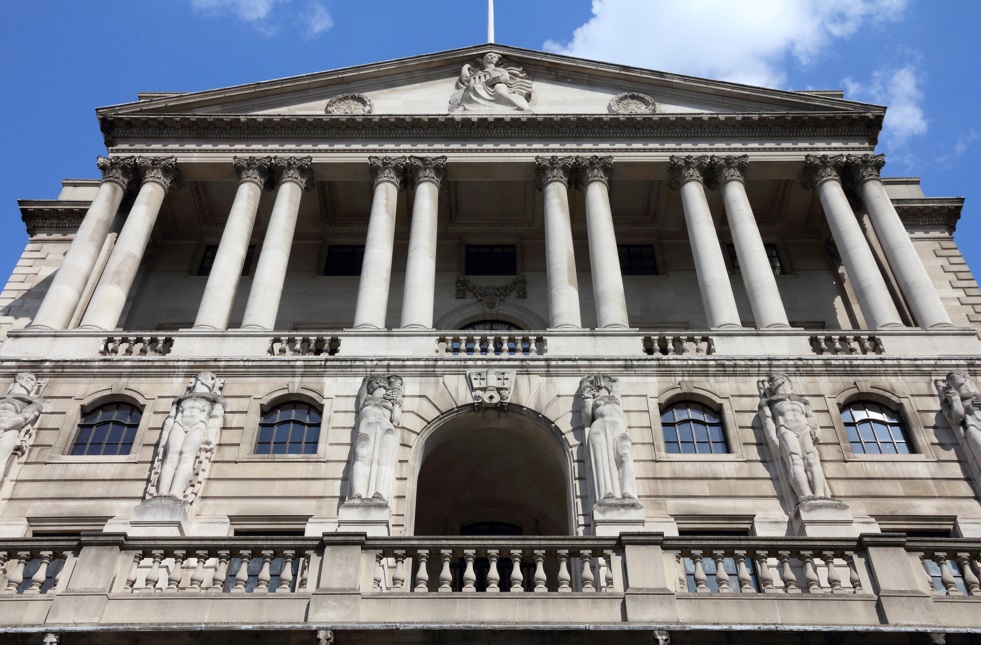
BoE calls for strict crypto regulation on an international level

The Bank of England is pressing for more stringent global policies to regulate the cryptocurrency sector

As per a report featured in the Sunday Times, the Bank of England intends to step up its efforts in setting up more crypto regulations. The bank highlighted slackness in the current pace towards realising this goal and wants global talks on the same to progress faster. The Times reported that apex UK bank was looking to hasten discussions on a regulatory regime for crypto assets.

Sarah Breeden, the bank’s director for financial stability strategy and risk explained that the need to protect the global economy was necessitated by the proliferation of financial institutions providing crypto trading and custodial services. The Central Bank official further revealed that the bank had encountered hitches in securing the relevant data it needed on the adoption of digital assets by institutional investors.

The bank asks for assistance from international bodies

Breeden told the outlet that the UK wasn’t in no position to collect the requisite data unaided and needed external help from international counterparts. She specifically noted that the country was counting on the Financial Stability Board to lend a hand. The board is responsible for making proposals affecting the stability of the global financial system.

„The ability to get data on what institutional investors are [holding] is a challenge. This is not something the UK can solve all on its own,“ she said.

Although the bank has in the past categorically said that it doesn’t consider digital assets a threat to its financial system, it is still wary of them. Earlier this month, the Central Bank held that the rate of growth of the cryptocurrency market was alarming and digital assets could morph into a concern if the sector remains not checked.

„We don’t have a regulatory framework that’s fit for crypto-coins yet, but what we are doing is rolling our sleeves up and getting ready to build it,“ Breeden stated.

The director for financial stability strategy & risk and deputy governor are of one mind

This is not the first time an executive from the bank has warned about cryptocurrencies being a potential trigger for instability. The bank’s Governor for financial stability Jon Cunliffe shares the same view. Cunliffe recently argued that it was imperative to have regulations, especially now that many financial institutions are getting more involved in the market.

As per a statement from Cunliffe to the BBC’s Today program, the proportion of UK household wealth said to be in crypto is only 0.1%. At least 2 million UK residents have an average of £300 in digital assets – a sector whose valuation is currently approaching $3 trillion.  The bank’s Deputy Governor holds that this exponential growth needs to be reviewed as it could harm the world’s economic stability.

„The point, I think, at which one worries is when it becomes integrated into the financial system, when a big price correction could really affect other markets and affect established financial market players,” he remarked.

The post BoE calls for strict crypto regulation on an international level appeared first on Coin Journal.

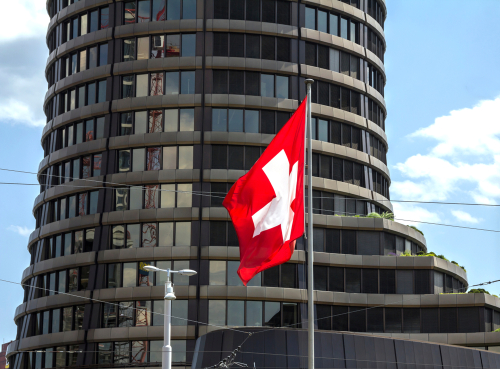
BIS Exec Benoît Cœuré says global crypto regulation likely in 2022

  • Benoît Cœuré told Financial Times that exponential growth within the decentralised finance (DeFi) space is a ‚wake-up call‘ to regulators

Bank of International Settlements (BIS) innovation hub executive Benoît Cœuré has said the crypto sector is likely to see a global regulatory framework in place in 2022.

Cœuré says that the last year has provided a “wake-up call” to regulators across the world and that action is needed in the coming year. The BIS innovation hub boss notes that the last few months have seen talk among global regulatory agencies focus more on the need for action.

The ex-European Central Bank council member notes that the cryptocurrency sector has seen significant growth over the past few years and that time has come for a framework that’ll provide the needed regulatory guidelines and oversight of the industry.

Now’s the time for crypto principles framework

The exec says allowing the DeFi to grow as it has done doesn’t mean regulators were wrong. Rather, he believes this is what has provided ‘a wake call’ and how regulatory authorities have been able to understand crypto assets and how they work.

According to him, the fast growth and increasing mainstream adoption of crypto across various sectors of the global economy mean that now is the time for “consistent regulation.”

He said that DeFi offers “interconnectedness with traditional finance” and that this could pose a systemic risk. It’s a scenario that makes for a compelling case for a global crypto regulation framework, he added. 

But the problem, according to the French economist, is that countries and jurisdictions have been slow to take action and that puts regulators on different paths.

Regulation pace ‘slow’ and countries acting on different paths

This year, China has banned crypto trading and mining, while India has a bill looking to regulate the crypto space in the country. In the US, lawmakers recently met several crypto executives with the intention of getting insight into how to best regulate the burgeoning industry.

Cœuré believes a united global approach to the matter will prevent bad actors from exploiting loopholes likely to exist if different approaches are adopted.

The risk in 2022 is that large jurisdictions like Europe, the UK, the US, China, keep moving on but along different tracks and produce a system which is globally inconsistent,” he told the Financial Times.

The post BIS Exec Benoît Cœuré says global crypto regulation likely in 2022 appeared first on Coin Journal.

Grayscale says SEC’s rejection of spot Bitcoin ETF has ‘no basis’

  • The SEC recently approved three Bitcoin Futures ETFs, but is yet to allow one that tracks the cryptocurrency’s spot market price.
  • A spot ETF would allow direct exposure to BTC, with investors tracking the current spot market price of the cryptocurrency.
  • For its rejection of past spot ETF applications, the SEC has maintained the crypto sector is not ready given the potential for consumers to be exposed to fraud and price manipulation.

Grayscale has told the US Securities and Exchanges Commission (SEC) that its decisions against spot Bitcoin exchange-traded funds (ETFs) is incongruous with the regulator’s other actions related to Bitcoin futures ETFs.

In a letter the investment management firm sent to Vanessa Countryman, the SEC’s secretary, Grayscale points out some of the reasons it says explains why the securities watchdog has “no basis” to keep rejecting Bitcoin spot ETFs.

Grayscale’s letter comes days after the SEC once again rejected another physically-settled BTC exchange-traded fund, adding the proposal by VanEck to a long list of applications thrown in the dustbin.

According to the firm, which has applied to have its flagship Bitcoin Trust (GBTC) approved as a spot-based exchange-traded product (ETP), questions why the regulator has seen it fit to approve futures-based bitcoin ETFs and not one that tracks the actual cryptocurrency’s spot price.

Over the past few weeks, the SEC has allowed investments in the ProShares, Valkyrie, and VanEck futures-based ETFs. Incidentally, the approvals came on the back of comments from SEC Chair Gary Gensler that appeared to favour futures-based over spot-based Bitcoin ETFs.

The Commission has no basis for the position that investing in the derivatives market for an asset is acceptable for investors while investing in the asset itself is not,” the firm’s letter reads.

Per Grayscale, and in reference to its NYSE Arca BTC filing, the regulator would be taking exactly the above position if it goes ahead to deny the application having already greenlighted the three Bitcoin futures products.

Grayscale believes approving the futures-based products and rejecting the spot-based applications violates the Administrative Protections Act (APA).

On 12 November, the Commission rejected the VanEck spot Bitcoin ETF, with reasons largely premised on the failure of the listing exchange to comply with the rules and requirements set out in Securities Exchange Act of 1934 (Exchange Act). Specifically, the SEC holds the view that the crypto market still cannot “prevent fraudulent and manipulative acts and practices.”

The letter states that the SEC’s grounds for rejecting Bitcoin spot ETFs follow a rationale that fails to “take account of significant regulatory and competitive developments since 2017” the first time the Commission rejected a spot BTC exchange-traded fund.

Grayscale wants the regulator to approve its application to list and trade BTC on the NYSE, noting that despite the cryptocurrency becoming extremely popular as an investment asset, US investors have no access to a product that closely reflects its spot prices.

The SEC is expected to give its initial verdict on the Grayscale BTC product before the end of the year.

The post Grayscale says SEC’s rejection of spot Bitcoin ETF has ‘no basis’ appeared first on Coin Journal.