
FCA warns crypto businesses about mergers shortly after Bitpanda deal

  • The UK regulator says it has powers to cancel the registration of a crypto business if it’s found not to be compliant with set requirements.

  • Bitpanda announced the acquisition of DeFi custodian firm Trustology on Tuesday morning.

UK’s financial regulator, the Financial Conduct Authority (FCA), has warned crypto-asset businesses about mergers, citing the lack of a regulatory environment to assess the new owner’s compliance.

The FCA’s statement came shortly after crypto exchange Bitpand announced the acquisition of UK-registered DeFi custodian platform Trustology.

Regulated businesses to comply with requirements

According to the financial regulator, Trustology is a regulated business under the country’s Money Laundering Regulations (MLRs) provisions. 

The acquisition is thus beneficial to the acquiring company under the MLR rules. However, the said provisions do not provide for access to regulatory aspects touching on the new owners, it added in a statement.

The MLRs do not include any provisions that allow the FCA to assess the fitness and propriety of beneficial owners or changes in control before a transaction is completed,” the agency said.

In this case, the regulatory purview of the MLRs differs from other regulatory provisions, the statement added. With these in place, the watchdog has supervisory, authorisation, and enforcement powers on all businesses operating in the United Kingdom.

The FCA can take steps to suspend or cancel the registration of a crypto asset business if it is not satisfied the firm or its beneficial owner is fit and proper,” the financial markets regulator warned. 

It added that it could suspend or cancel a crypto asset firm’s registration if it’s determined that the concerned firm has failed to comply with set requirements.

Bitpanda announced it had acquired Trustology on Tuesday, with this the first-ever such merger in the UK’s crypto regulated landscape.

Bitpanda is an Australia-based cryptocurrency exchange that’s regulated in the EU. According to the exchange, the move to acquire the custodian wallet works towards the transitioning of Bitpanda Pro into a fully-fledged prime brokerage platform.

The post FCA warns crypto businesses about mergers shortly after Bitpanda deal appeared first on Coin Journal.
Fed adopts new rules barring officials from trading stocks, bonds and crypto

  • Federal Reserve officials and several other groups of employees will not be allowed to trade stocks, bonds and crypto such as Bitcoin starting May 1

  • Senior officials will need to give a 45-day notice and receive authorisation before trading any securities.

  • The restrictions were announced last October but have just been formally adopted.

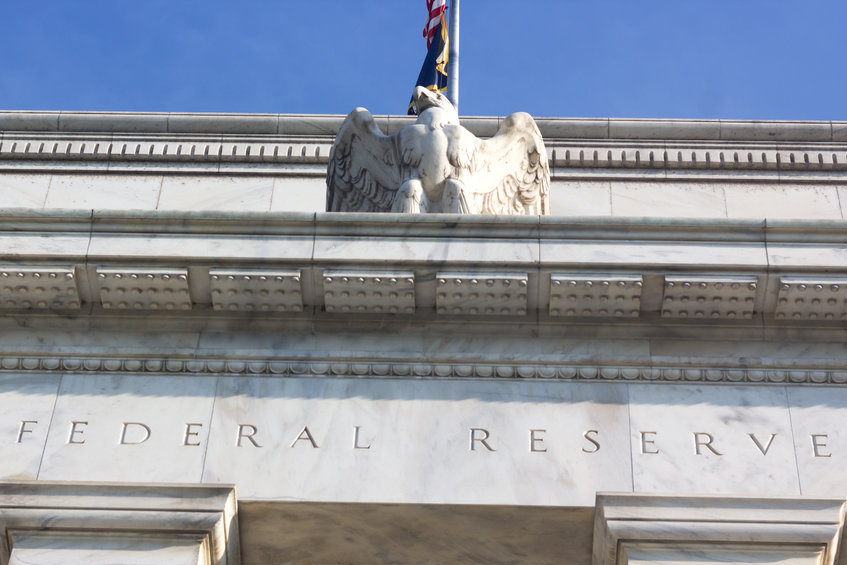
The US Federal Reserve has officially prohibited Federal Open Market Committee (FOMC) members, senior staff and other employees from engaging in trading stocks, bonds and cryptocurrencies.

The move follows an earlier announcement released in October 2021, and which the central bank formally adopted on Friday, February 18, 2022.

The restrictions are set to take effect on 1st May and will see senior Federal Reserve officials barred from acquiring individual stocks or sector funds. The ban extends to individual bonds, commodities, agency securities, cryptocurrencies, and foreign currencies, the press release added.

Among other requirements, senior central bank officials will from 1 July, be expected to give 45-day advance notice before they undertake any trades involving securities. The purchase or sale will only proceed after the officials receive prior approval, and investments must be held for at least a year.

No purchases or sales will be allowed for Fed officials in “periods of heightened financial market stress.”

All officials listed in the notice have 12 months from 1st May “to dispose of all impermissible holdings,” while those to come under the restrictions at a later date will only have six months to dispose of such holdings.

Who else is prohibited?

Apart from FOMC members and regional Fed presidents, the restrictions affect research directors, FOMC staff officers, managers, and a cadre of other employees, their spouses and minor children.

Other staff will be added to this list after further review, the notice clarified.

Why the restrictions?

According to the release, the Fed seeks to inculcate “confidence” in the public regarding the impartiality and integrity of its officials.

The ban is also meant to guard “against even the appearance of any conflict of interest,” which has certainly been the view of many after several high-profile cases of alleged insider trading activity touching on Fed officials.

The post Fed adopts new rules barring officials from trading stocks, bonds and crypto appeared first on Coin Journal.

SEC chair says concerns about lack of spot Bitcoin ETF under ‘careful consideration’

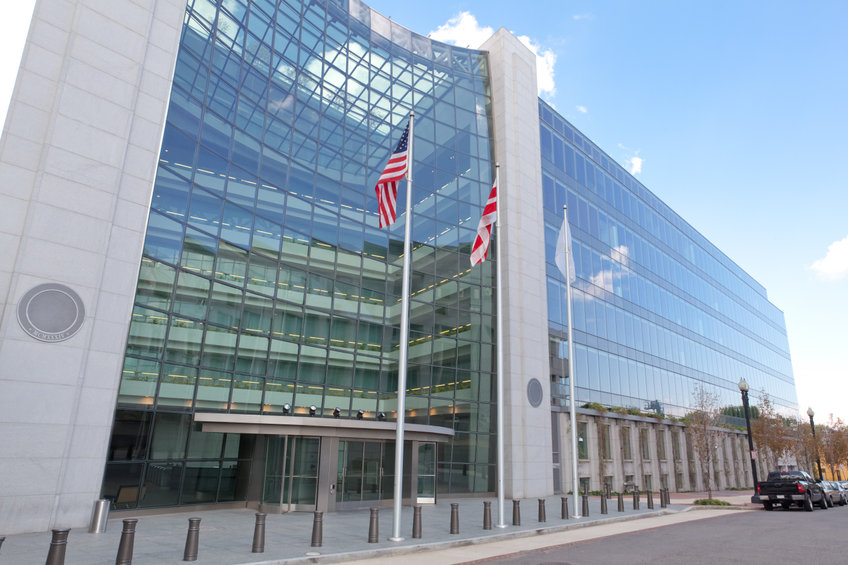
SEC building in Washington DC, USA

Gary Gensler said the US Securities and Exchange Commission (SEC) considers every proposal seeking the listing of spot Bitcoin exchange-traded products (ETPs)“under the appropriate regulatory framework.”

US Securities and Exchange Commission (SEC) chair Gary Gensler has hinted in a letter to US lawmaker Tom Emmer that the commission may not be any closer to approving a Bitcoin spot exchange-traded fund (ETF).

In a response to the lawmaker’s letter sent to the SEC last November, Gensler says that the agency’s handling of all the Bitcoin (BTC) spot ETFs to come before it has been in accordance with the Exchange Act.

The SEC chair, who pointed out that he remains technology-neutral, said the regulator is tasked with ensuring the proposed spot ETP is “designed to prevent fraudulent and manipulative acts and practices.”

Emmer, acknowledging receipt of Gensler’s letter, noted that lawmakers would continue to oversee the regulator towards its mission of maintaining “fair and orderly markets.”

The SEC has approved a number of Bitcoin futures ETFs, with the first coming in early November as Bitcoin price rallied to its all-time high of $69,000. But while spot ETPs have been launched in Canada for instance, the US market still awaits its first spot-based fund.

Gensler, in this latest view of the matter, only appears to suggest the waiting might yet be further off. His remark about a possible approval is that the commission will give “careful consideration” to all proposals seeking the listing and trading of Bitcoin spot ETFs.

As it stands, the US has approved Bitcoin (BTC) futures ETFs by ProShares, Valkyrie, and VanEck. Of the recent spot ETF applications to come before it, the SEC has rejected proposals from SkyBridge, Fidelity and WisdomTree.

The post SEC chair says concerns about lack of spot Bitcoin ETF under ‘careful consideration’ appeared first on Coin Journal.

UAE to issue crypto licenses as it pushes to become a fintech hub

The UAE is eyeing companies and other providers within the growing crypto industry with a licensing framework that makes the country a crypto-friendly jurisdiction.

 The United Arab Emirates is reportedly eyeing the global crypto and fintech space with plans for licensing framework set to attract the world’s leading virtual asset service providers, a report published by Bloomberg on Thursday says.

According to the report, the crypto licenses are meant to make it easy for major digital asset firms and other financial technology providers to set up in the country, with the goal being to make the UAE a global hub.

The Securities and Commodities Authority, UAE’s securities regulator, is said to be working on the final outlook of the proposed licensing regime.

When unveiled, sources closer to the matter told Bloomberg, the framework will provide a seamless licensing route meant to see crypto exchanges and other VASPs want to set up their offices and operations in the country.

The national crypto licensing program is reportedly developed in accordance with guidelines provided by the Financial Action Task Force (FATF). Per the global regulator, countries need to ensure stringent registration protocols are followed when allowing crypto-related companies to set up operations, the key being to ensure anti-money laundering (AML) compliance.

In UAE’s case, the securities regulator (SCA) will work alongside the central bank to oversee the national regulation of crypto companies. Meanwhile, local financial regulators will have the mandate to handle licensing processes specific to their region and in line with the crypto company in question.

In offering a crypto-friendly environment, the UAE is likely targeting a huge part of the crypto market that could be looking at destinations such as Hong Kong and Singapore.

As well as the crypto licenses, the country wants to attract miners via key regulations that support the industry while promoting the use of green energy.

The post UAE to issue crypto licenses as it pushes to become a fintech hub appeared first on Coin Journal.

RCMP orders blacklist of 34 crypto wallets: report

2 RCMP on horse back

The police order, Counter Signal reports,  is part of the government’s “emergency” measures and puts over 25 Bitcoin, or roughly $1.4 million at risk of being blocked to the truckers’ access.

Canada’s Royal Canadian Mounted Police (RCMP) has reportedly ordered all FINTRAC regulated companies in the country to cease all business transactions with 34 cryptocurrency wallets, following an order from the government.

According to a report covered by the media platform The Counter Signal, the blacklisted crypto wallets are allegedly linked to the Freedom Convoy in Ottawa.

“The Ontario Provincial Police and Royal Canadian Mounted Police are currently investigating cryptocurrency donations being collected in relation to illegal acts falling under the scope of the Emergency Measures Act,” Counter Signal quotes the RCMP order.

The order then mentions the Emergency Economic Measures Order and states that 29 Bitcoin addresses, 2 Ethereum addresses and one each involving Cardano, Monero, and Litecoin should cease all transactions as stipulated Emergency Act, subsection 19(1).

 “Any information about a transaction or proposed transaction in respect of these address (es), is to be disclosed immediately to the Commissioner of the Royal Canadian Mounted Police, at CryptocurrencyNHQ-CryptomonnaieDG@rcmp-grc.gc.ca,” the RCMP order continued.

As noted by Counter Signal, the listed wallets have accounted for transactions ranging from $0 to $1.1 million. Around 25 bitcoins worth $1.4 million are likely to be affected if the order is effective, said the report.

The Freedom Convoy’s protests have stretched the past 18 days, with truckers blocking highways in Ottawa amid a tough stance from Canada’s Prime Minister Justin Trudeau.

According to local news, the Ottawa Police Service has spent more than $14.1 million on efforts to bring the protests to an end.

The post RCMP orders blacklist of 34 crypto wallets: report appeared first on Coin Journal.