India’s crypto tax policy takes effect on 1 April: Here’s a brief recap

In February, India’s Finance Ministry introduced new tax proposals on cryptocurrency, with the effective date of the capital gains tax set for 1 April 2022.

That has been clear since. But what else might crypto holders need to keep tabs on?

What the Taxation of Virtual Digital Assets says

As part of her budget speech then, Finance Minister Nirmala Sitharaman announced a 30% capital gains tax on all Virtual Digital Assets (VDAs). She also introduced a 1% TDS levy on all transactions involving crypto.

The crypto community has also known since a clarification was announced two weeks ago, that there would be offsetting of losses in one asset with the income from another.

Also key is the clarification that costs of mining would not apply in tax calculations as cost of acquisition. More than that, using VDAs for gifts would also constitute a taxable event.

Note that non-fungible tokens (NFTs) also fall into the category of virtual digital assets.

Key dates

  • 1 April 2022 – the effective date for the 30% capital gains tax on VDAs.

  • 1 July 2022 – the 1% TDS levy on all cryptocurrency transactions.

The government needs to rethink this policy, crypto exec says

“Tomorrow, new crypto tax comes into effect. The Indian Government needs to rethink this tax policy,” Nischal Shetty, the CEO of crypto exchange WazirX tweeted on Thursday.

According to him, the taxes could force people to find ways to trade on foreign exchanges, trade without KYC or use grey markets. There could also be large tax defaulters, not to mention the potential for large claims of TDS refunds.

“The flat 30% tax rate may not prove the best outcome since it does not consider aspects of long and short term gains calculated in line with the holding period of VDAs,” Rishi Anand, Partner at DSK Legal told The Times of India.

“Gifting VDAs may not become mainstream due to this tax regime,” he added.

The post India’s crypto tax policy takes effect on 1 April: Here’s a brief recap appeared first on Coin Journal.

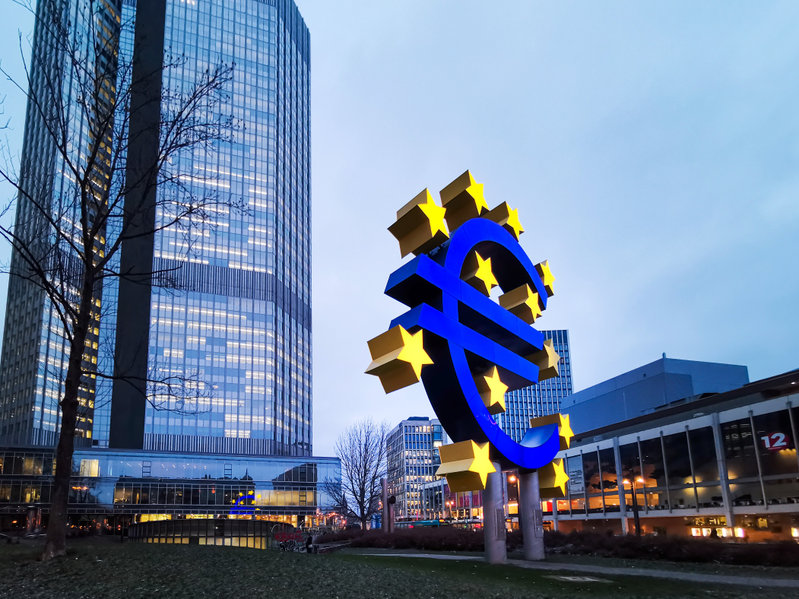
ECB is open to ‘simplified AML/CFT checks’ for small digital euro payments, official says

ECB Executive Board Member Fabio Panetta’s remarks come just a day to an EU vote likely to introduce KYC/AML checks for all crypto transactions.

The European Central Bank is still considering a central bank digital currency (CBDC) – a digital euro. There has been progress in the project, with consultations taking place since 2020 and gathering speed in recent months.

One of the key concerns remains the “trade-offs” between the need for privacy and adherence to EU financial regulations and policies. While the ECB wants to see greater regulatory compliance, an official has told lawmakers that the rollout of the proposed digital euro could allow for “some degree of privacy” for users.

Still no ‘full anonymity’

Digital euro users will need to comply with know-your-customer (KYC) checks as well adhere to anti-money laundering (AML) regulations. 

However, these requirements might not be cast in stone when it comes to small payments, ECB Executive Board Member Fabio Panetta said on Wednesday.

“Full anonymity is not a viable option from a public policy perspective,” Panetta told the EU parliament’s Economic and Monetary Affairs Committee.

According to Panetta, allowing for complete privacy using the central bank’s digital currency would open the system risks of illicit transactions.

“In addition, it would make it virtually impossible to limit the use of the digital euro as a form of investment,” he added.

‘Simplified AML/CFT’ for small payments

To safeguard financial stability, prohibiting anonymous transactions is essential, the ECB exec explained. But there could yet be a slight ‘break’ from the anti-money laundering and combating of terrorism financing (CFT) norms- if the amounts involved were low value.

“A greater degree of privacy could be considered for lower-value online and offline payments,” Panetta said in a speech he delivered on Wednesday. “These payments could be subject to simplified AML/CFT checks, while higher-value transactions would remain subject to the standard controls,” he added.

The ECB official’s remarks come just a day before EU lawmakers vote on a proposal seeking to remove anonymous crypto payments- even for small transactions. The vote is expected on Thursday. 

If passed, it would mean every crypto transaction would have to adhere to KYC, AML and CFT checks.

The post ECB is open to ‘simplified AML/CFT checks’ for small digital euro payments, official says appeared first on Coin Journal.

America’s Top 5 Pro-Crypto Politicians, Revealed

Last year, Elizabeth Warren described cryptocurrencies as the refuge of  „shadowy super coders“, leading commentators to criticise the ignorance of US politicians towards an increasingly important aspect of modern financial life. 

Warren isn’t a fair representation of Washington as a whole, though, and there’s no shortage of politicians in local offices who have demonstrated clear crypto credentials. 

To help separate the blockchainers from the blockheads, we’ve put together a list of the five most pro-crypto voices in American politics.

1. Sen. Cynthia Lummis (R – WY)
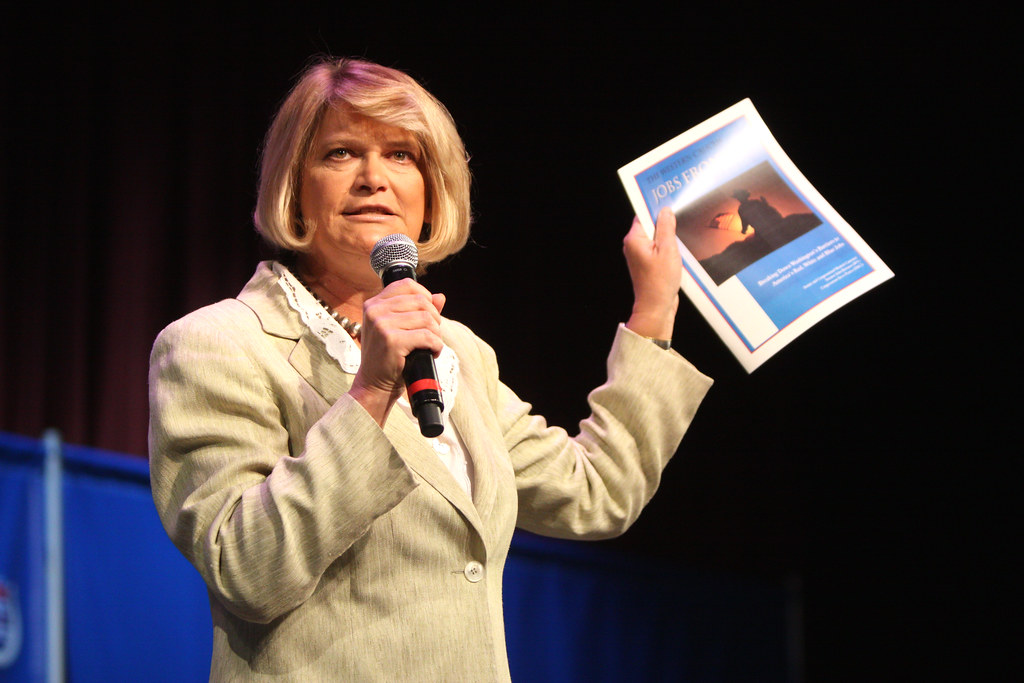
Cynthia Lummis speaking on stage

Lummis could make Wyoming crypto’s American home. Photo by Gage Skidmore, licensed under CC BY.

Cynthia Lummis has been a Bitcoiner since 2013 and became the first US Senator to hold cryptocurrency after her election victory in 2020 secured her place in the upper chamber of Congress.

Crypto Profile

Lummis has pushed for clarity on crypto taxation in the US and spoken in favour of creating a new regulatory body to monitor the crypto market that is independent of the SEC. She has particularly called for legislation that would preclude staking and mining from capital gains taxes. 

Wyoming

Lummis’ home state, Wyoming, permits a number of crypto institutions to process transactions, has legalised DAOs, and has put forward proposals to allow residents to pay part of their taxes in virtual currencies. 

One Wyoming to Rule them All? 

The “Cowboy State” is attempting to reinvent itself as the crypto capital of the world. The progress Wyoming has made so far can largely be credited to Cynthia Lummis, one of the loudest supporters of crypto in national politics. But further headway rests on her ability to gather bi-partisan support for bills in favour of virtual currencies in Congress. 

2. Mayor Francis Suarez (R – Miami)

Francis Suarez speaking at an eventSuarez is one of several local politicians in the US with a crypto-friendly stance. Photo by MDC-EPC, licensed under CC BY.

Francis Suarez took office as the mayor of Miami in 2017 and soon became the first American politician to take 100% of their salary in Bitcoin. He has also been hailed as one of the “World’s 50 Greatest Leaders” by Fortune Magazine. 

Crypto Profile 

Suarez is a firm believer in the capacity of peer-to-peer currencies to promote financial inclusion in Miami. He wants to let residents buy groceries and other goods with crypto and also aims to invest some of the city’s treasury in Bitcoin so he can tackle poverty with the profits.

Miami

Under Suarez’s stewardship, “The Magic City” has become a sanctuary for crypto enthusiasts, executives, and firms. Last summer, Miami even launched its own token called MiamiCoin (MIA), which is powered by the Stacks blockchain. 

Year of the Underdog? 

Suarez is fielding a serious challenge to New York’s status as America’s eminent financial centre with his plans to turn Miami into one of the “most innovative cities” on the planet through its adoption of blockchain technology.

3. Mayor Eric Adams (D – New York City)
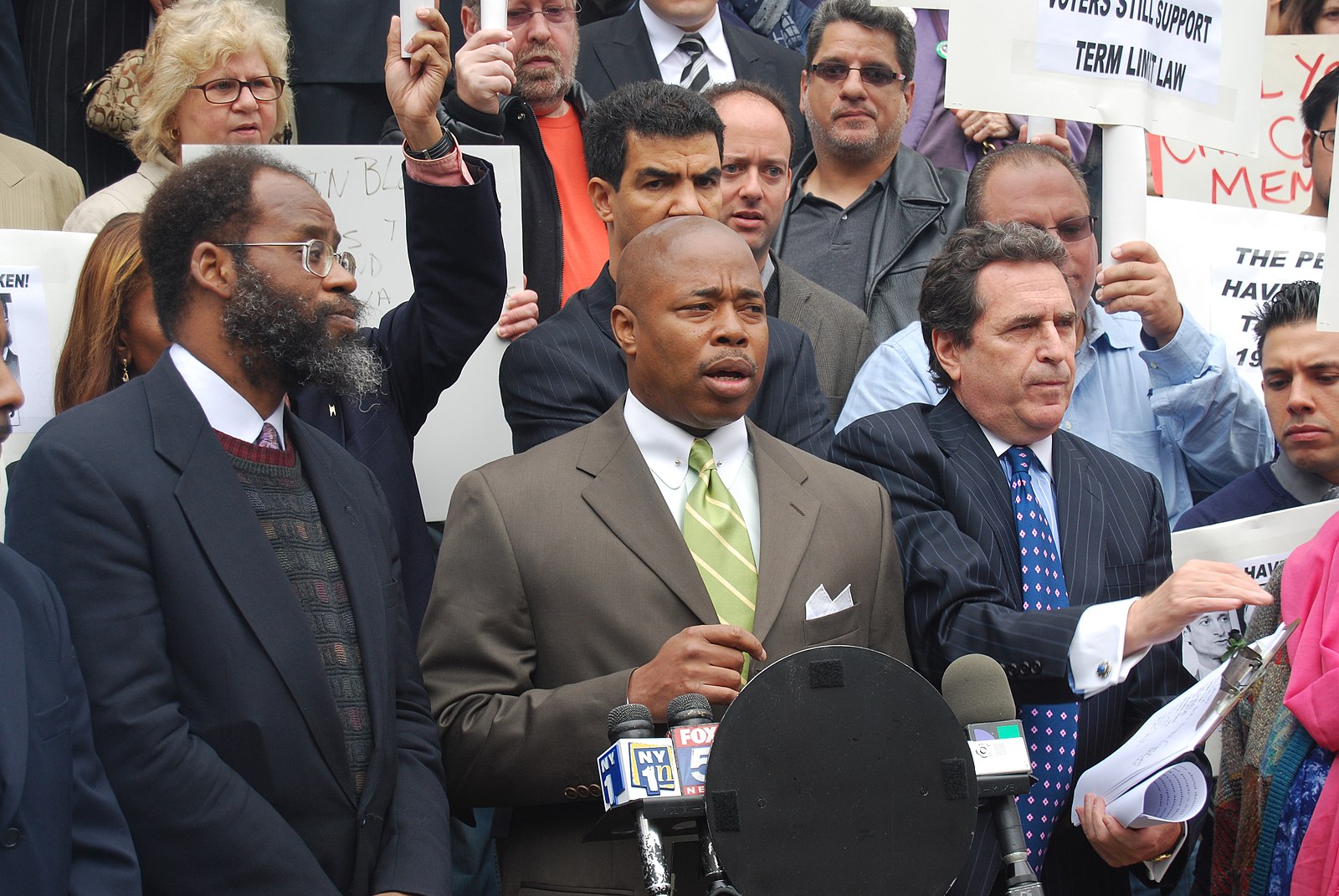
Mayor Eric Adams speaking at a rally

Mayor Adams had planned to take his paycheck in Bitcoin. Photo by Thomas Good, licensed under CC BY-SA 4.0.

Eric Adams is a former NYPD police officer and was elected as mayor of New York in November 2021, after counting on campaign donations from a number of pro-crypto businessmen.

Crypto Profile

Adams’ crypto promises got off to a rocky start. Shortly after he was elected, he declared that he’d be taking his first three paychecks in Bitcoin. It then came to light that the city of New York only pays its employees in fiat. 

Despite this, Adams has floated a number of ideas aimed at mainstreaming crypto, like expanding the ability of merchants to accept it as a form of payment and incorporating blockchain education into school curriculums.

New York

New York has tried to keep pace with its southern neighbour Miami by releasing its own crypto, NYCOIN (NYC), which is also built on Stacks. It has also loosened local regulations so it can entice some of the crypto industry’s biggest names into setting up their headquarters in the city. 

Welcome to Crypto: The Grind Begins 

It’s probably too soon to judge Adams when it comes to his record on delivering crypto promises. One thing is for sure, though: Adams has his work cut out for him over the next few years if he wants to live up to the expectations of the crypto community that backed his election campaign. 

4. Sen. Ted Cruz (R – TX)
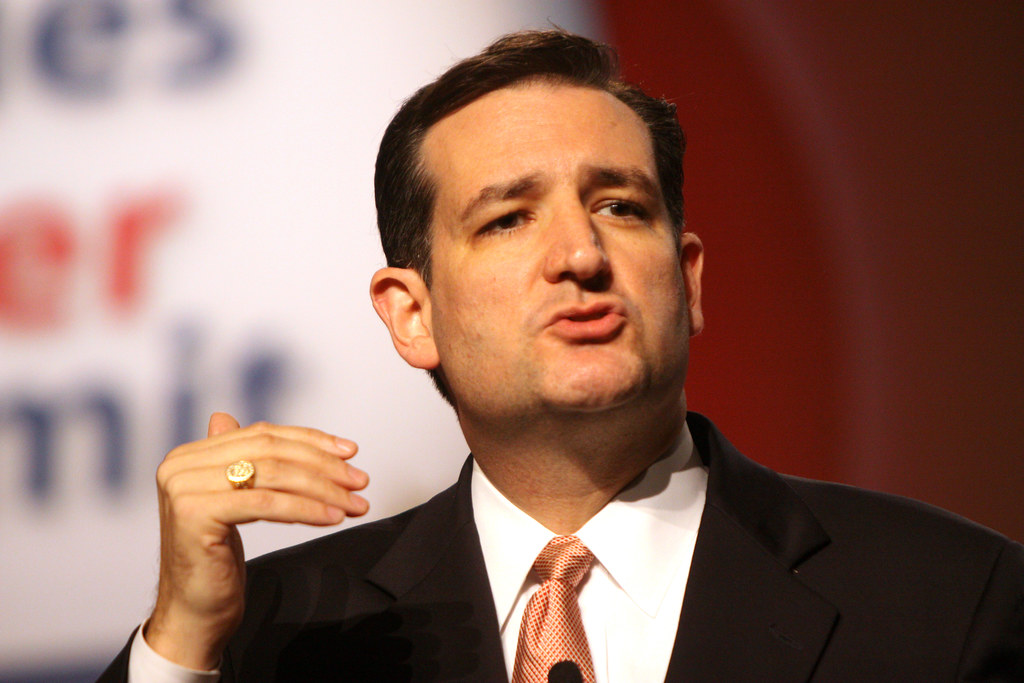
Ted Cruz speaking at a fundraiser event

Cruz wants to make mining a major industry in Texas. Photo by Gage Skidmore, licensed under CC BY.

The firebrand senator from Texas needs no introduction. Cruz has long been a defender of Bitcoin and spent up to $50,000 in January “buying the dip”. 

Crypto Profile

Cruz has publicly expressed his desire to turn Texas into a crypto mining hub by making it easier for miners to relocate to the state. In the Senate, he has condemned draft bills targeting crypto exchanges and pledged to limit Bitcoin’s environmental impact. 

Texas

Local lawmakers in Texas are also hopeful that they can tempt a great migration of Bitcoin miners to the “Lone Star State”. The idea is that if miners ramp up their activities, it will attract more energy companies to set up shop in Texas. 

Policymakers believe that the surplus energy being produced for mining companies could be diverted to residential areas in the event of emergencies. This comes off the back of last year’s winter storm that left millions of Texans without electricity for days. 

Ted Cruz: The First Bitcoin President? 

Ted Cruz is tipped to throw his hat in the race for the 2024 Republican presidential nominee contest. He knows that delivering on pro-crypto legislation will play a large part in his bid to triumph in a presidential election where crypto looks set to be a flagship issue for the first time according to most polls. 

Texas’ ability to transform itself into a crypto hub over the next couple of years will also go a long way in establishing Cruz’s credentials among America’s politically conscious crypto voter base. 

5. Sen. Ron Wyden (D – OR)

Ron Wyden is one of the most pro-crypto Democrats. Photo by jdlasica, licensed under CC BY.

Ron Wyden has been Senator for Oregon since 1996 and chairs the powerful Senate Finance Committee. He has been known to break party ranks on crypto policy by acting as one of the few high-ranking voices in the Democrat party to embrace crypto. 

Crypto Promises

Wyden has joined hands with Republican Cynthia Lummis in the Senate on a number of occasions to bring forward crypto regulation that is acceptable to all stakeholders. He is one of very few Democrats to argue strongly for favourable crypto regulation. 

Wyden also actively uses his social media presence to raise awareness around the universal benefits of cryptocurrency among his followers.

Oregon 

Oregon has taken a lukewarm approach toward blockchain adoption compared to many other US states trying to establish themselves as crypto meccas. For the most part, Oregon is yet to explore the utility of peer-to-peer currencies and has shaped its crypto policy around the hawkish regulations set out by federal authorities like the SEC. 

The Crypto Election

Wyden is up for re-election in November and has already amassed hundreds of thousands of dollars in campaign donations from crypto super PACs (Political Action Committees) as well as financial organisations tied to the sector. With Wyden’s fate ostensibly dependent on his ability to mobilise a voter base of crypto enthusiasts, his ability to funnel pro-crypto bills into Congress will likely be a major theme in his re-election campaign.

The post America’s Top 5 Pro-Crypto Politicians, Revealed appeared first on Coin Journal.

US recognises crypto’s role in financial innovation, Treasury secretary Yellen says

  • Crypto has grown in ‚leaps and bounds,‘  says US Treasury secretary Janet Yellen.
  • She adds that crypto innovation in the financial system can be a “healthy thing.”
  • The US will look to provide a regulatory environment that supports the innovation in the industry, Yellen told CNBC in an interview.

US Treasury secretary Janet Yellen says the United States recognises cryptocurrency’s role in the country’s financial system.

According to Yellen, crypto has seen significant growth over the past few years- in what she said was in “leaps and bounds.” 

She added that most Americans now use crypto not just for transactions but increasingly as investment assets.

Crypto innovation can be a ‘healthy thing’

Despite acknowledging her own skepticism about crypto, she noted crypto has benefits and was a critical player in the innovations seen across America’s financial system.

“There have been benefits from crypto and we recognise that innovation in the payment system can be a healthy thing,” the former US Federal Reserve Chair told CNBC.

She referenced the recently signed “Executive Order on Crypto” and said Treasury and other government agencies have the task of giving regulatory recommendations that support innovation in the sector.

Regulators continue to examine the crypto space in a bid to provide the right regulatory guidelines, she noted. The end result, she opined, is the need to have “recommendations that will create a regulatory environment” that supports innovation.

Regulations around cryptocurrency have mainly been around concerns about potential risks to financial stability and illicit activities such as money laundering and tax evasion. 

There have also been concerns about consumer protection, which remains the case even as regulators seek to ensure they don’t stifle beneficial innovations with bad regulations.

Bitcoin sees upside to $45k

Yellen’s comments come just a day after Russia had signaled the possibility of accepting Bitcoin for its oil and gas amid sanctions.  

Russia’s move combined with other macro factors to help drive positivity in the market, with Bitcoin rallying to above $45,000.

The post US recognises crypto’s role in financial innovation, Treasury secretary Yellen says appeared first on Coin Journal.

Crypto exchange founder asks EU to investigate if Binance is ‘helping’ Russia

European Central Bank president Christine Lagarde also said this week that Russians were using digital assets to shirk sanctions.

The founder of Ukraine-based crypto exchange Kuna, and the manager of Crypto Fund of Ukraine Michael Chobanian is suggesting Binance needs to be investigated for potential collusion with Russia over sanctions.

In comments reported by CoinDesk on Thursday, Chobanian asked the European Union to take that step to determine whether indeed the leading crypto exchange had “cooperated” with Russia to help Putin’s government evade sanctions.

Chobanian, also the head of Blockchain Association of Ukraine, told the publication that he would apologise if investigations proved Binance had done no wrong. But he added that if it’s confirmed, then the EU would need to handle it.

The accusations surfaced last week, with Binance moving to refute the Kuna crypto exchange founder’s allegations.  

It’s like a „big bank“

Although Chobanian says there is no proof of anything yet, this is what might be happening. He opined that it’s likely Russia is using Binance as a “bank.” 

Instead of buying Bitcoin or crypto, those seeking to evade sanctions can just “top up” their accounts using rubles, convert that into US dollars and comfortably withdraw the money in a different country.

It could happen even without crypto changing hands, he said. “It is fiat transaction in, fiat transaction out,” he told CoinDesk.

The allegations are in line with some concerns from authorities that Russian oligarchs could turn to crypto to circumvent sanctions. Many industry experts and lawmakers see crypto as being of little help to sanctioned individuals and the Russian government.

However, some regulators and leaders say it’s possible. This week, the European Central Bank (ECB) president Christine Lagarde warned that Russia was using crypto to dodge sanctions.

The post Crypto exchange founder asks EU to investigate if Binance is ‘helping’ Russia appeared first on Coin Journal.