Bitcoin drops to $76k after Trump fails to rule out a recession

  • Ether dropped 9%, XRP fell 2%, and Dogecoin lost over 8% in 24 hours
  • Investors react to Trump’s comments about a possible recession
  • The US stock market lost more than $1.7 trillion in value

Crypto prices have fallen across the board, with Bitcoin dropping below $77,000 as investors continued to react to US President Donald Trump’s tariff policies and the Bitcoin reserve plan.
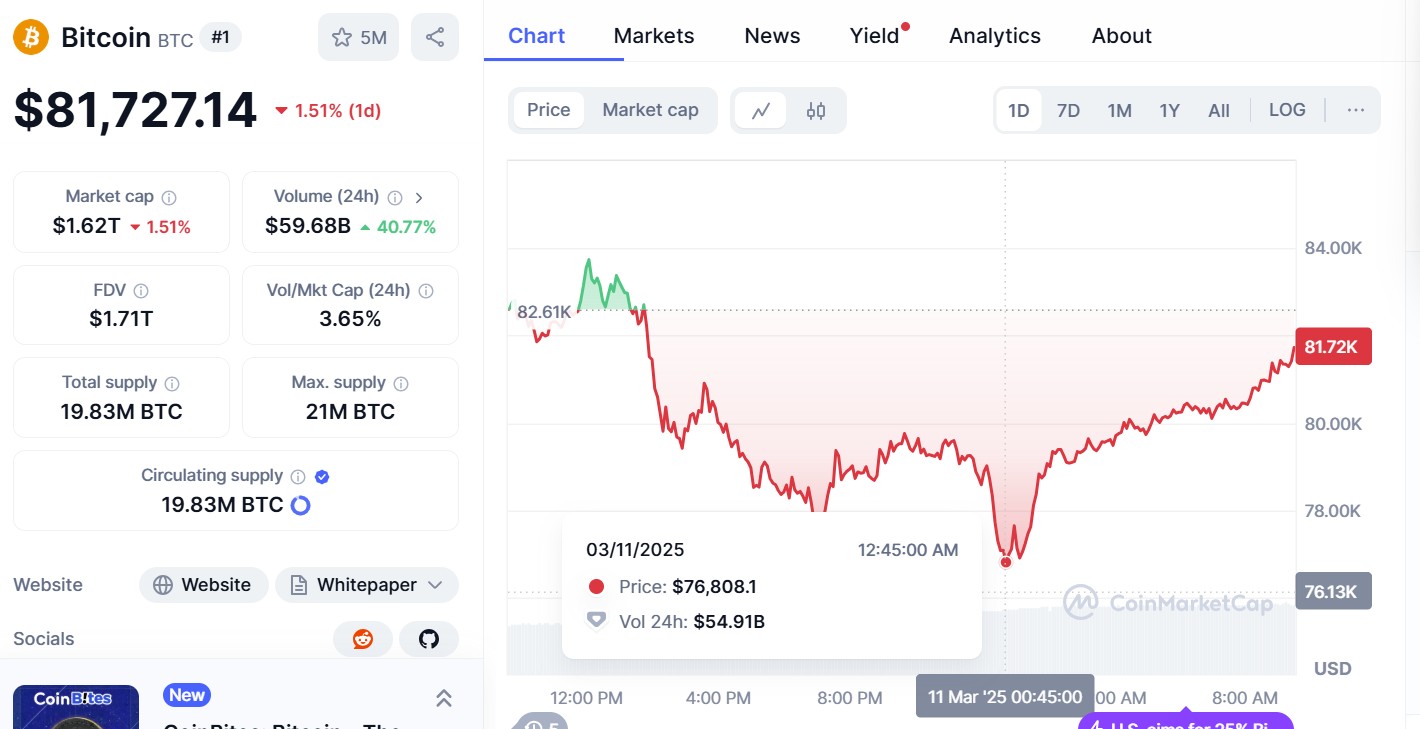
Bitcoin’s price at $76,000. Source: CoinMarketCap

In the early hours of Tuesday, March 11, Bitcoin fell to $76,000, a figure not seen since last September. In a post on X, crypto trader Ali said:

“If #Bitcoin $BTC holds $80,000, the bull case remains strong. Losing this level, however, could put $69,000 in play as the next key support!”

Bitcoin has risen slightly and is back up around $81,600 at the time of publishing, according to CoinMarketCap. Ether, on the other hand, was down over 9% in 24 hours to $1,920, XRP had fallen more than 2%, at $2.13, and Dogecoin was down over 8.81% to $0.1607.

The market reacts

News of the continued market sell-off comes as investors react to Trump’s trade tariffs, the announcement of the US Strategic Bitcoin Reserve, and the possibility of a recession.

Following Trump’s remarks, the US stock market lost more than $1.7 trillion in value yesterday. Elon Musk’s Tesla saw its shares drop by at least 15% to $222, losing over half its value from its December peak at $479.86. In a post on X, Musk said: “it will be fine long-term.”

Market conditions haven’t been helped by Trump’s trade tariffs on Canada, China, and Mexico. Last month, it was confirmed that Trump was imposing a 25% trade tariff on Canada and Mexico; however, this has been delayed until April 2. China had a 20% tariff levied against it.

BitMEX co-founder Arthur Hayes took to X to ask people to be “patient.”

“$BTC likely bottoms around $70k. 36% correction from $110k ATH, v normal for a bull market,” adding:

“Traders will try to buy the dip, if you are more risk averse wait for the central banks to ease then deploy more capital. You might not catch the bottom but you also won’t have to mentally suffer through a long period of sideways and potential unrealised losses.”

The post Bitcoin drops to $76k after Trump fails to rule out a recession appeared first on CoinJournal.
BBVA gets nod to offer Bitcoin and Ethereum trading services in Spain

  • BBVA customers in Spain will soon be able to trade Bitcoin (BTC) and Ethereum (ETH)
  • The bank will roll out the crypto trading services in phases
  • First, the bank will allow a select group of customers to test the services before expanding it to retail customers

Spain’s Banco Bilbao Vizcaya Argentaria (BBVA), the country’s second-largest bank, has received regulatory approval from the Comisión Nacional del Mercado de Valores (CNMV) to offer Bitcoin (BTC) and Ethereum (ETH) trading services.

Following the approval by the securities regulator, BBVA announced that its clients will soon be able to buy, sell, and manage BTC and ETH directly through its mobile banking app, a move that underscores the growing convergence of legacy banking and digital assets.

This development positions BBVA as a trailblazer among European banks, capitalizing on the increasing demand for crypto-related services. With Bitcoin (BTC) trading at approximately $82,808 and Ethereum (ETH) at $2,118, the bank aims to tap into a market that has seen explosive growth and institutional interest.

Notably, BBVA’s decision reflects a broader trend of traditional financial institutions adapting to the evolving preferences of tech-savvy customers, many of whom view cryptocurrencies as both an investment opportunity and a hedge against economic uncertainty.

A phased rollout approach

BBVA will roll out its crypto trading in phases. Initially, the service will be available to a select group of users, allowing the bank to test and refine its platform before a wider rollout.

Afterwards, the lender will gradually expand access to all private banking customers across Spain.

This cautious yet deliberate strategy highlights BBVA’s commitment to ensuring a seamless and secure experience for its clients, leveraging its own cryptographic key custody platform to maintain full control over digital asset holdings without relying on third-party providers.

The bank’s proprietary custody solution is a key differentiator. By keeping customer assets in-house, BBVA aims to enhance security and trust—crucial factors in a sector often plagued by concerns over hacks and mismanagement.

This move also aligns with the bank’s long-standing emphasis on technological innovation, positioning it as a leader in the digital transformation of finance.

Building on the rising crypto adoption trends

BBVA’s crypto journey is not a sudden leap, but a calculated expansion of efforts that began years ago. In June 2021, the bank launched Bitcoin custody and trading services for private banking clients in Switzerland, where regulatory clarity provided an early foothold.

Since then, BBVA’s Swiss branch has broadened its offerings to include ETH and the USDC stablecoin after partnering with Ripple’s Metaco, catering to a sophisticated clientele comfortable with digital assets.

More recently, in January 2025, BBVA’s Turkish subsidiary, Garanti BBVA Kripto, introduced crypto trading services to the public, further solidifying the bank’s global footprint in this space.

The approval in Spain builds on these successes, adapting lessons learned from Switzerland and Turkey to meet the unique needs of the Spanish market.

With each step, BBVA is demonstrating a strategic vision to integrate cryptocurrencies into its core offerings, aligning with shifting regulatory and consumer landscapes.

Notably, the timing of BBVA’s Spanish rollout coincides with the full implementation of the European Union’s Markets in Crypto-Assets Regulation (MiCA), which took effect at the end of 2024. MiCA establishes a harmonized framework for crypto services across the EU, providing banks and firms with the legal clarity needed to operate confidently.

Under this regulation, companies have until July 2026 to achieve full compliance during an 18-month transitional phase, giving BBVA ample time to refine its operations.

The post BBVA gets nod to offer Bitcoin and Ethereum trading services in Spain appeared first on CoinJournal.
Bybit CEO confirms that $280M of the stolen $1.4B is no longer traceable

  • Bybit CEO has said that 20% of the $1.4 billion stolen from the exchange is untraceable
  • Hackers converted $1 billion in ETH to BTC via THORChain and spread it
  • So far, 11 bounty hunters have assisted in freezing $42 million of the stolen funds

In a stunning update, Bybit CEO Ben Zhou has revealed that $280 million of the $1.4 billion stolen from the cryptocurrency exchange in the February hack has vanished into untraceable channels.

The security breach, attributed to the North Korean hacking group Lazarus, saw approximately 500,000 Ether (ETH) pilfered from Bybit’s reserves. While the majority of the funds remains visible on the blockchain, Zhou’s announcement underscores the challenges facing investigators as they race against time to freeze the assets before the hackers fully cash out.

The attack exploited vulnerabilities in SafeWallet, a third-party wallet platform used by Bybit. Lazarus hackers compromised a developer’s device, injecting malicious code that allowed them to siphon off nearly $1.5 billion in ETH during a routine transfer.

Despite Bybit’s swift action to restore 1:1 backing of client assets within days, the hackers have been relentlessly moving the stolen funds across multiple platforms, complicating recovery efforts.

Hackers leveraged THORChain to fragment funds

A significant portion of the stolen Ether—417,348 ETH valued at around $1 billion—has been converted into Bitcoin (BTC) and scattered across 6,954 wallets, each holding an average of 1.71 BTC.

Zhou noted that 72% of the haul, or 361,255 ETH worth $900 million, was funneled through THORChain, a decentralized exchange known for its privacy features.

THORChain alone processed a record $4.66 billion in swaps in the week ending March 2, raking in over $5.5 million in fees from these illicit transactions. This fragmentation and conversion strategy has made tracking the funds increasingly difficult for blockchain forensic teams.

Meanwhile, 20% of the stolen assets—approximately 79,655 ETH—have “gone dark,” meaning they’ve been laundered through platforms like ExCH and rendered untraceable.

Zhou highlighted that an additional 40,233 ETH, worth $100 million, passed through OKX’s Web3 Proxy. Of this, 23,553 ETH ($65 million) remains untraceable without further cooperation from the OKX Wallet team, while 16,680 ETH is still within reach of investigators.

The CEO stressed that the next one to two weeks are pivotal as the hackers prepare to offload their haul via exchanges, over-the-counter (OTC) trading desks, and peer-to-peer (P2P) networks.

Bybit has enlisted bounty hunters amid freezing efforts

In a bid to thwart the hackers, Bybit has enlisted the help of bounty hunters and security firms.

Zhou reported that 11 parties—including prominent players like Mantle, Paraswap, and blockchain sleuth ZachXBT—have assisted in freezing $42 million, or 3% of the stolen funds.

So far, Bybit has paid out $2.178 million in USDT to these contributors as part of its recovery efforts, with more details available at Lazarusbounty.com. The exchange also partnered with Web3 security firm ZeroShadow on February 25 to enhance its blockchain forensics and maximize asset recovery.

Despite these efforts, the hackers show no signs of slowing down. Blockchain analytics firm Elliptic has identified over 11,000 wallets linked to the Lazarus group, suggesting a sprawling network designed to obscure their tracks.

Zhou indicated that an additional $65 million in ETH could be salvaged with OKX’s support, but time is running out as the attackers continue laundering operations through platforms like ExCH and OKX Web3 Proxy.

The post Bybit CEO confirms that $280M of the stolen $1.4B is no longer traceable appeared first on CoinJournal.
Bitcoin Pepe emerges as a possible go to altcoin as crypto market bleeds

  • The crypto market has crashed, losing $1.01 billion in liquidations.
  • Bitcoin (BTC) has plunged below $84k while altcoins like ETH and SOL have slumped 15-20%
  • Bitcoin Pepe’s presale offers a compelling alternative with the price set to rise from $0.0255 to $0.0268 in next presale stage.

The crypto market is reeling from a brutal wave of liquidations. Over $1 billion in leveraged positions have vanished in the last 24 hours, according to Coinglass data.

The liquidations have hit traders hard across major exchanges. Bitcoin alone accounted for $396.16 million in wiped-out positions. Ethereum saw $209.58 million evaporate, and Solana’s liquidations reached $70.55 million. Even meme coins weren’t spared—Dogecoin saw over $20 million in liquidations.

The crypto market erased gains made earlier this week

Bitcoin (BTC) has plummeted below $84,000 gain, shedding nearly 10% of its value in a single day. The tumble has reversed its rally past $95,000 earlier this week. It has hit an intraday low of $82,467.24 before stabilizing slightly above $83k.

Ethereum (ETH) followed suit, diving 15% to $2,089, while altcoins like Solana (SOL) and XRP cratered by 20% and 18%, respectively. Cardano (ADA) also plunged 25% to $0.7998 as a majority of the other altcoins bore the blunt of the bloodbath.

Meme coins were not spared either. Shiba Inu (SHIB) and Pepe Coin (PEPE) have dropped 13% and 18%, respectively, while Sonic (S) and Trump-backed tokens have shed 23% to 25,% respectively. It seems the high-risk corner of the market faced unrelenting exits as fear gripped traders.

Notably, the crypto market carnage mirrors a broader market slump, with the global crypto market cap tumbling 10% to $2.76 trillion.

What is causing the crypto market to drop?

Investors blame CME futures gaps and thinning liquidity for the sudden crypto market drop. Analysts point to liquidity gaps and leveraged bets gone wrong as the culprits.

Trump’s talk of a strategic crypto reserve couldn’t shield the market from broader economic tremors; the selloff has erased gains sparked by optimism over President Donald Trump’s pro-crypto moves.

Besides the liquidity gaps, economic factors are also to blame for the crypto crash. Trump’s new 25% tariffs on imports from Canada and Mexico have sparked trade tensions.

Canada and Mexico supply a third of US goods, and the tariffs threaten growth and stoke inflation fears.

Following the introduction of the tariffs, American stocks also tanked alongside crypto, with the Dow Jones falling 650 points. The VIX index also jumped to 22, signaling rising market panic.

Historically, cryptocurrencies falter when fear dominates, pushing investors to the sidelines.

Bitcoin Pepe emerges as a haven for crypto investors

Amid this chaos, Bitcoin Pepe stands out as a bold contender. Pitched as the “World’s Only Bitcoin Meme ICO,” blending Bitcoin’s durability with meme coin flair, the project aims to build a Meme Layer-2 for Bitcoin, promising instant transactions and ultra-low fees. Its PEP-20 standard lets users launch memecoins on Bitcoin’s blockchain.

Unlike the currently bleeding altcoins and memecoins, Bitcoin Pepe is currently in its presale stages, which are structured to ensure the price rises with each presale stage progression.

The presale is gaining traction despite the market rout. Currently in stage 5 of 30, the presale has raised $3,690,133. The current price sits at $0.0255 and is set to rise to $0.0268 in the next stage.

The project’s smart contract has already been audited by SolidProof, offering a glimmer of credibility in a sea of uncertainty.

Interested investors can connect wallets and buy in, betting on its vision of “Solana on Bitcoin” as a lifeline. The project’s whitepaper and roadmap pitch a future where meme coins thrive on the “only chain that will live forever.”

The post Bitcoin Pepe emerges as a possible go to altcoin as crypto market bleeds appeared first on CoinJournal.
Weekly price analysis: prices range on uncertain economic outlook

  • Crypto prices traded within a range last week as crypto takes is relegated to the back burner in the wake of economic uncertainties
  • Exchange-traded fund (ETF) inflows were negative as Bitcoin ETFs logged net outflows of $62.9 million while Ethereum ETFs logged $8.9 million in outflows

Bitcoin

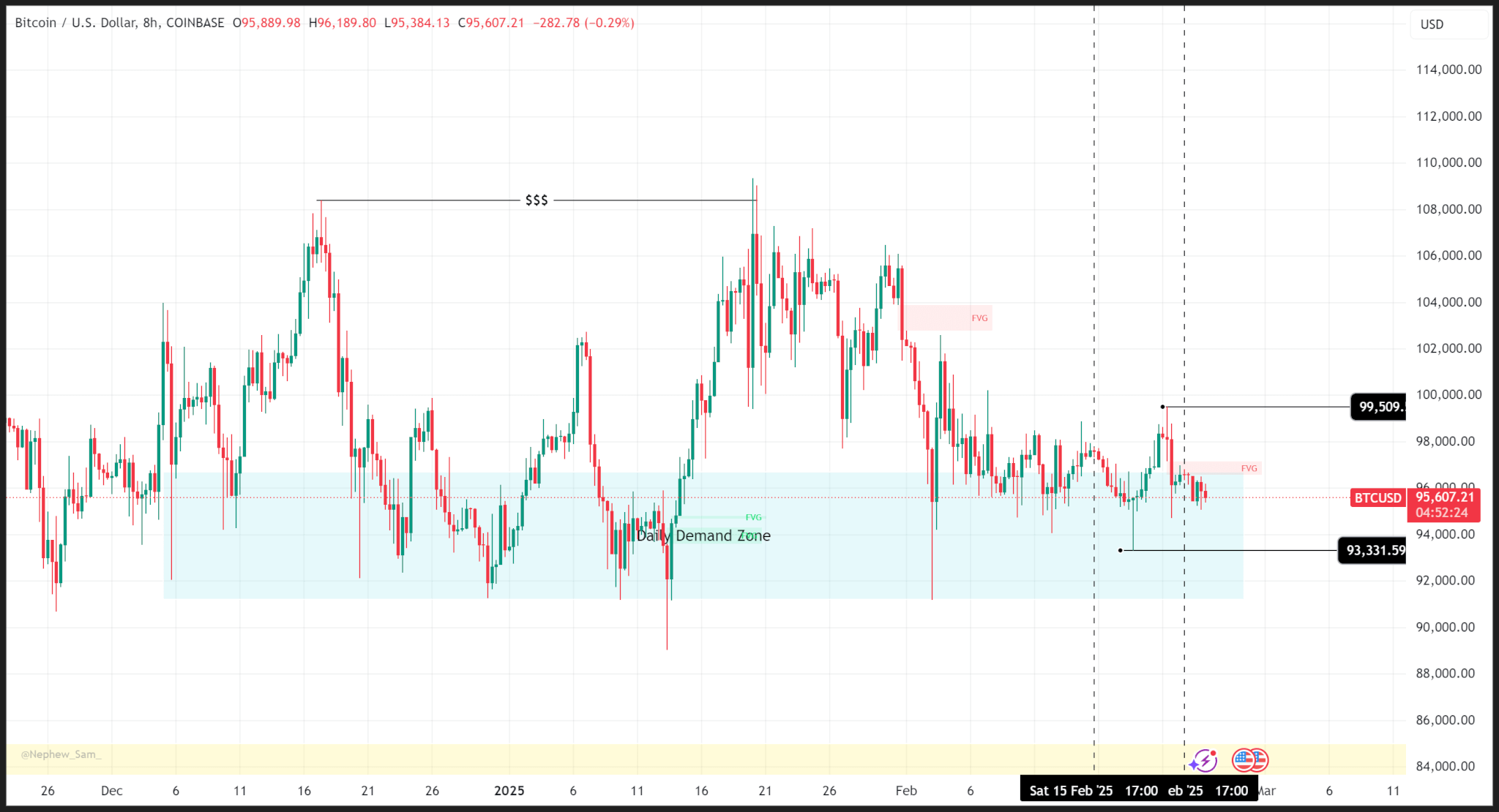
Bitcoin’s price action continued trading rangebound, with weekly highs and lows of $99,509 and $93,331, as uncertainty looms around inflation, US President Donald Trump’s policies, and geopolitical events.

Zooming out, we see that price action has ranged at the daily support level for the last three weeks as current market conditions lack sufficient catalyst to push prices to new highs.

BTC/USD chart by TradingView

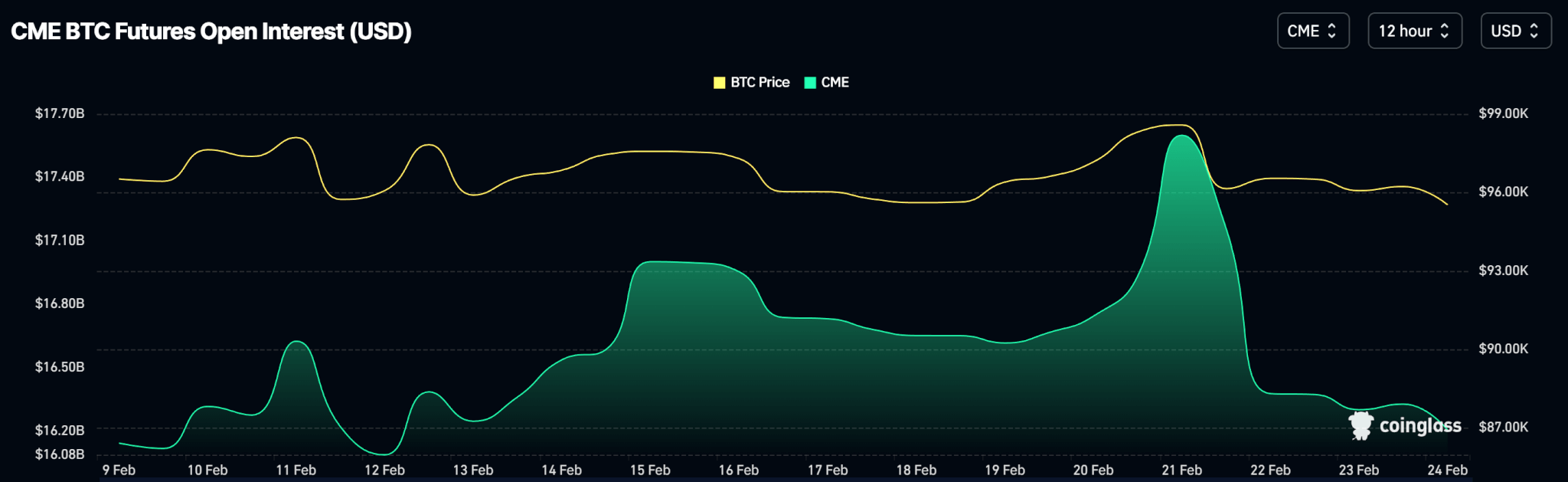
Open interest mimics price action as the week began with a reduction in the volume of open contracts which picked up on Wednesday, February 19, congruent with price action.

CME BTC Futures Open Interest (USD) chart by Coinglass

Outlook

Bitcoin must remain above the daily support of $90,673 to remain in bullish territory. A close below this level on the daily time frame could trigger a fall to the $84,000 level.

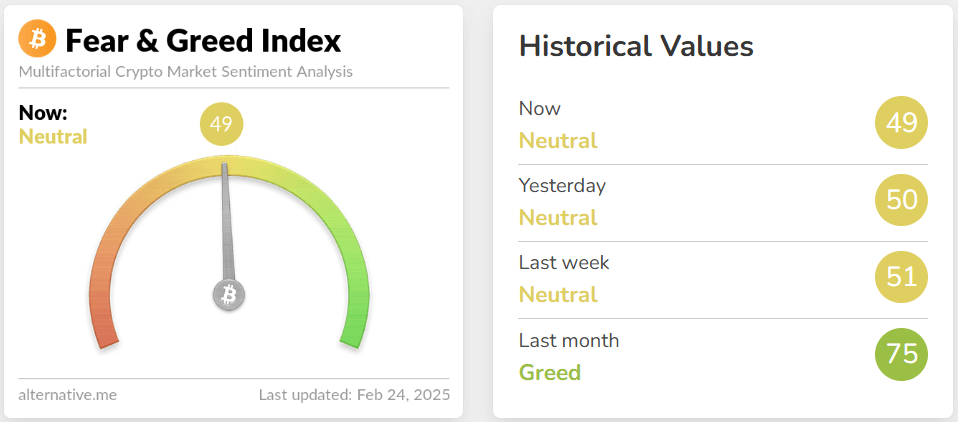
Meanwhile, market sentiment has cooled significantly over the last month and is in neutral territory.

Bitcoin trades at $87,900 as of publishing.

Ethereum

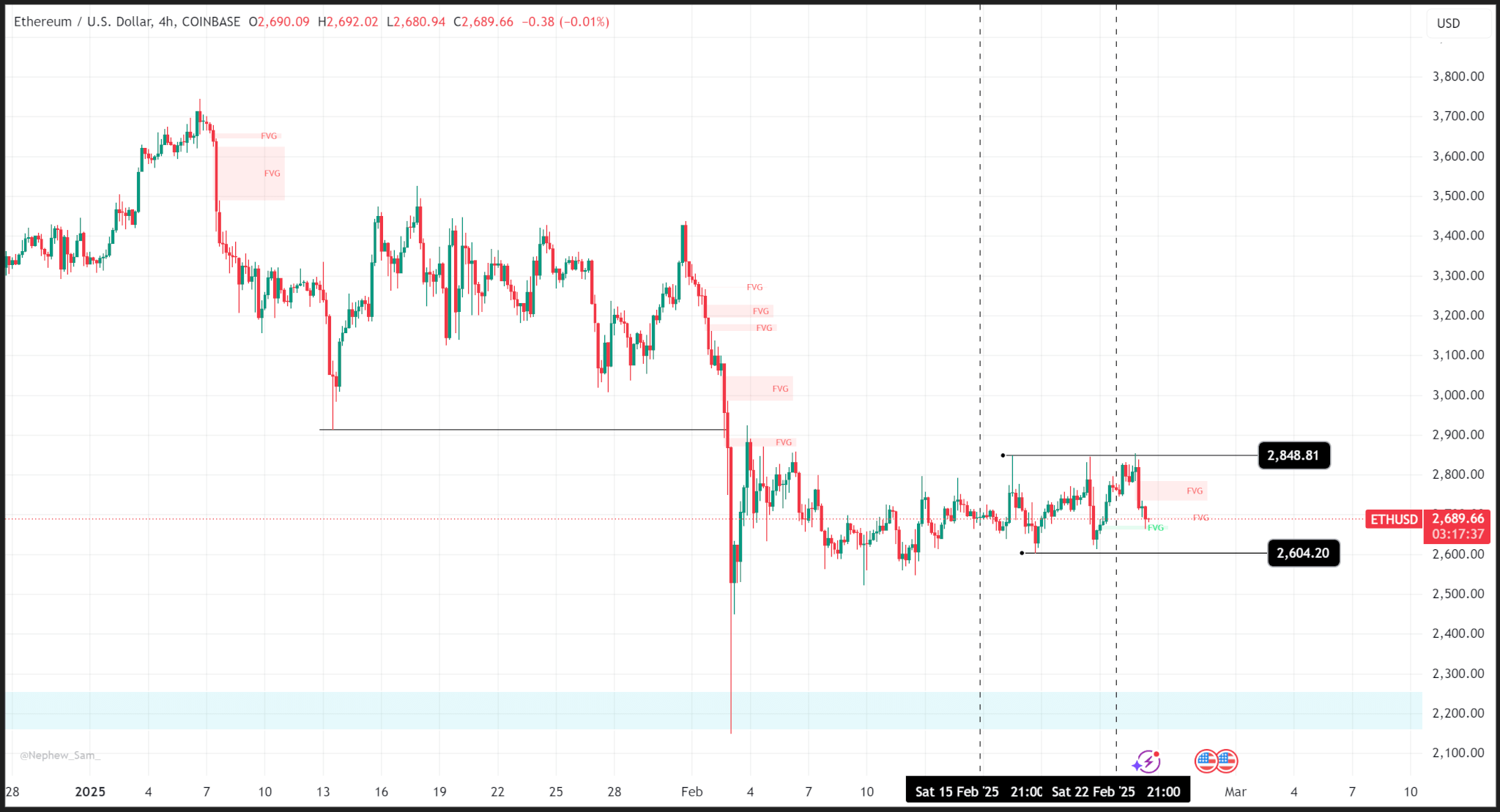
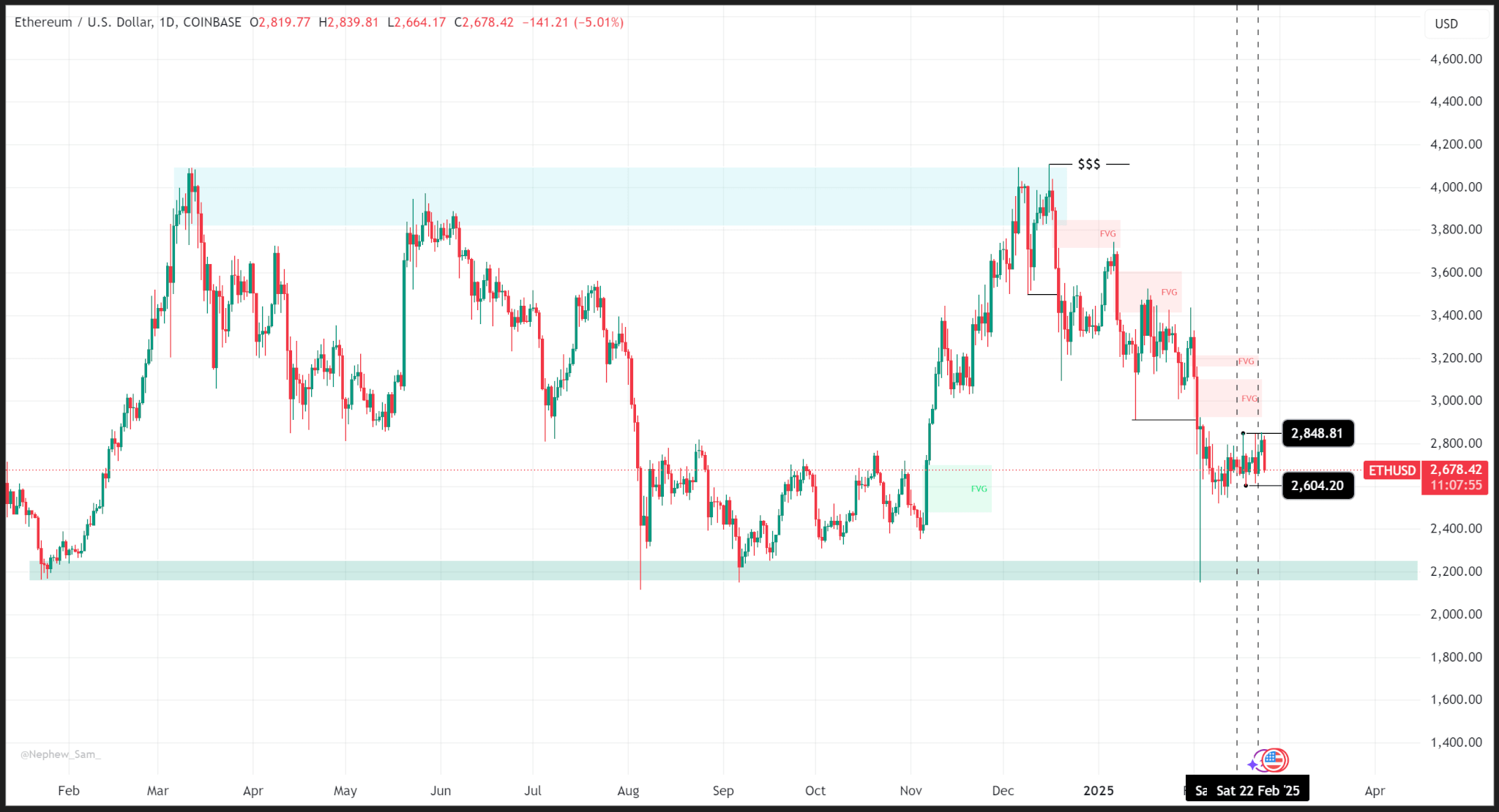
Ethereum’s price action ranged last week logging a weekly high and low of $2,848 and $2,604 despite last week’s news of the Bybit hack.

ETH/USD chart by TradingView

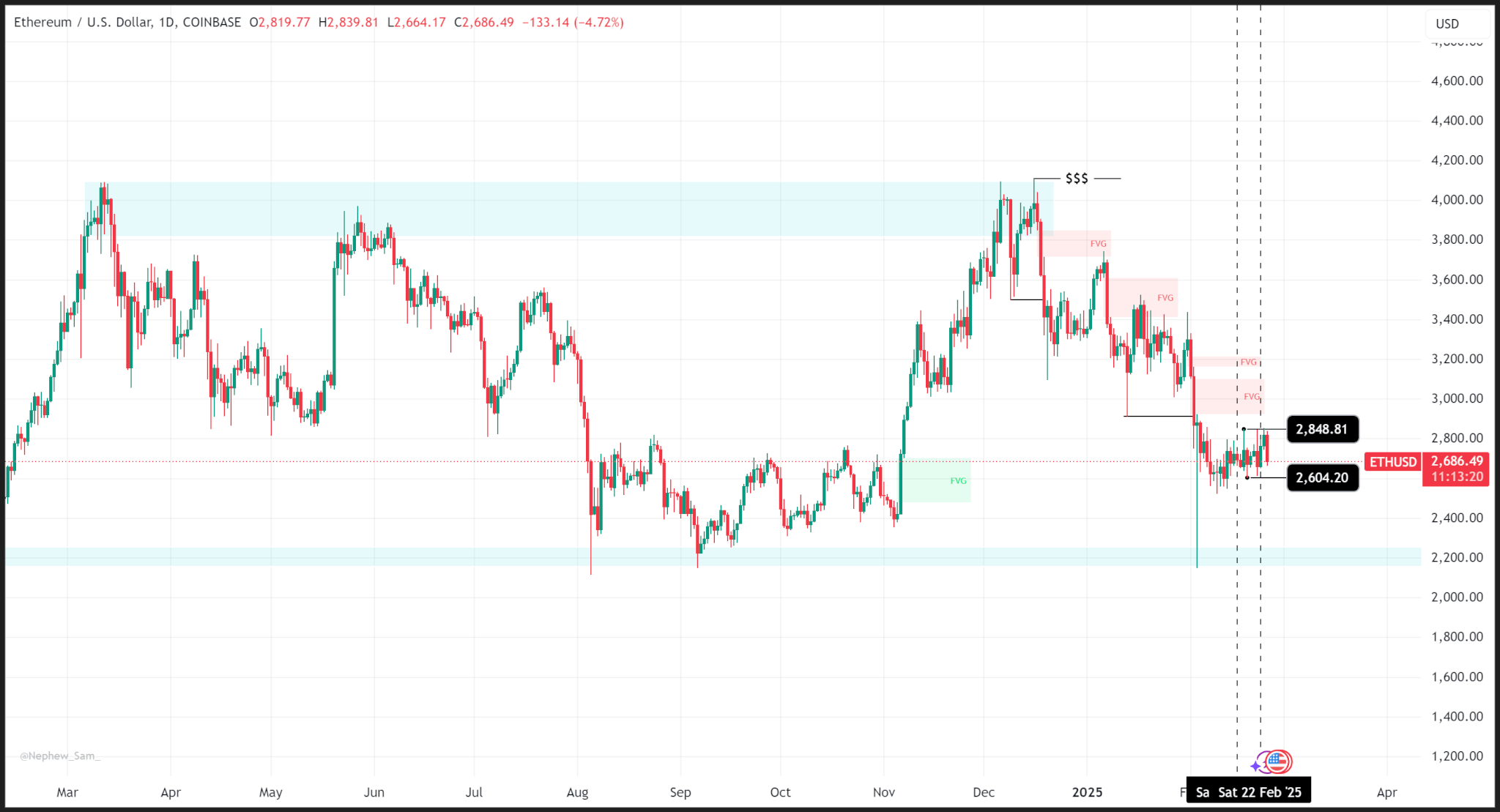
Zooming out, we see a bleaker picture as ETH has been trending lower since December 09 after failing to break above its March 2024 high.

ETH/USD chart by TradingView

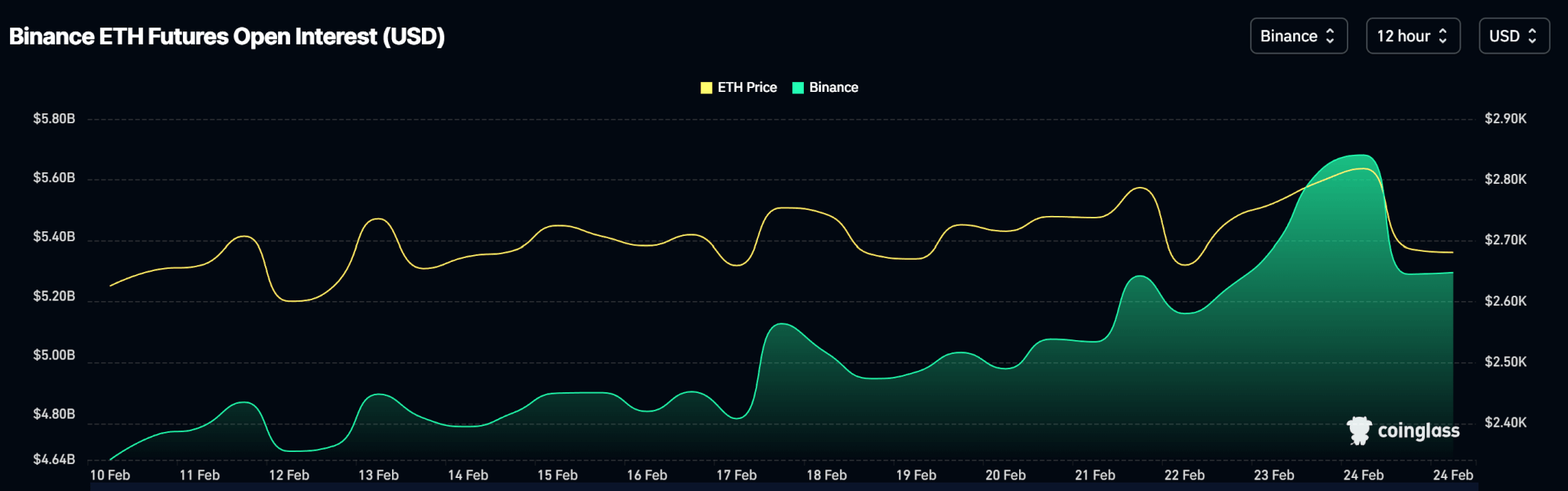
Open interest data shows a steady rise in contract volume throughout the week though price traded rangebound.

Binance ETH Futures Open Interest (USD) chart by Coinglass

Outlook

We reckon the next major support zone for ETH is the $2,500 level which has proven to be a strong liquidity level in the past.

ETH/USD chart by TradingView

ETH trades at $2,384 as of publishing.

Solana

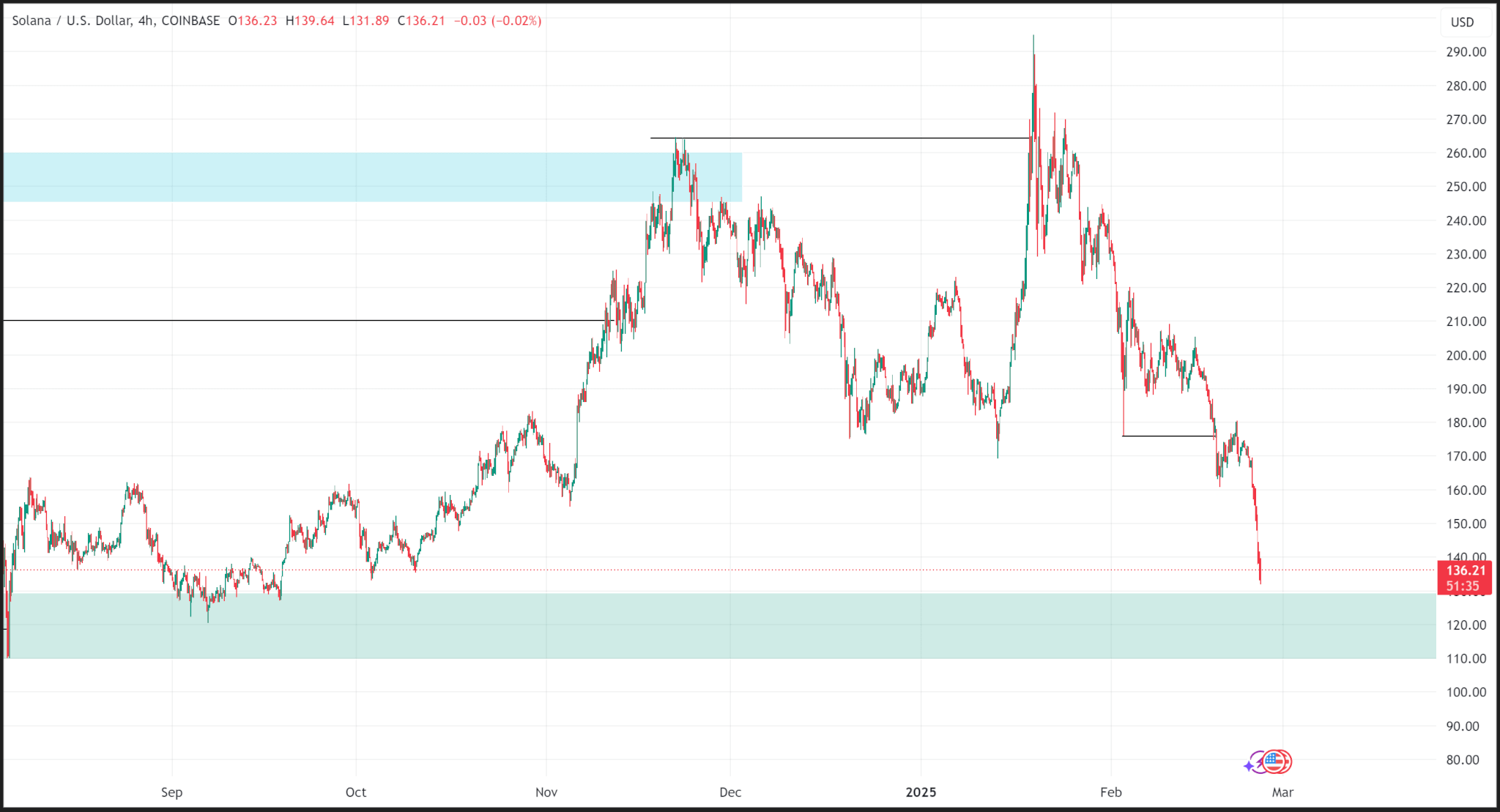
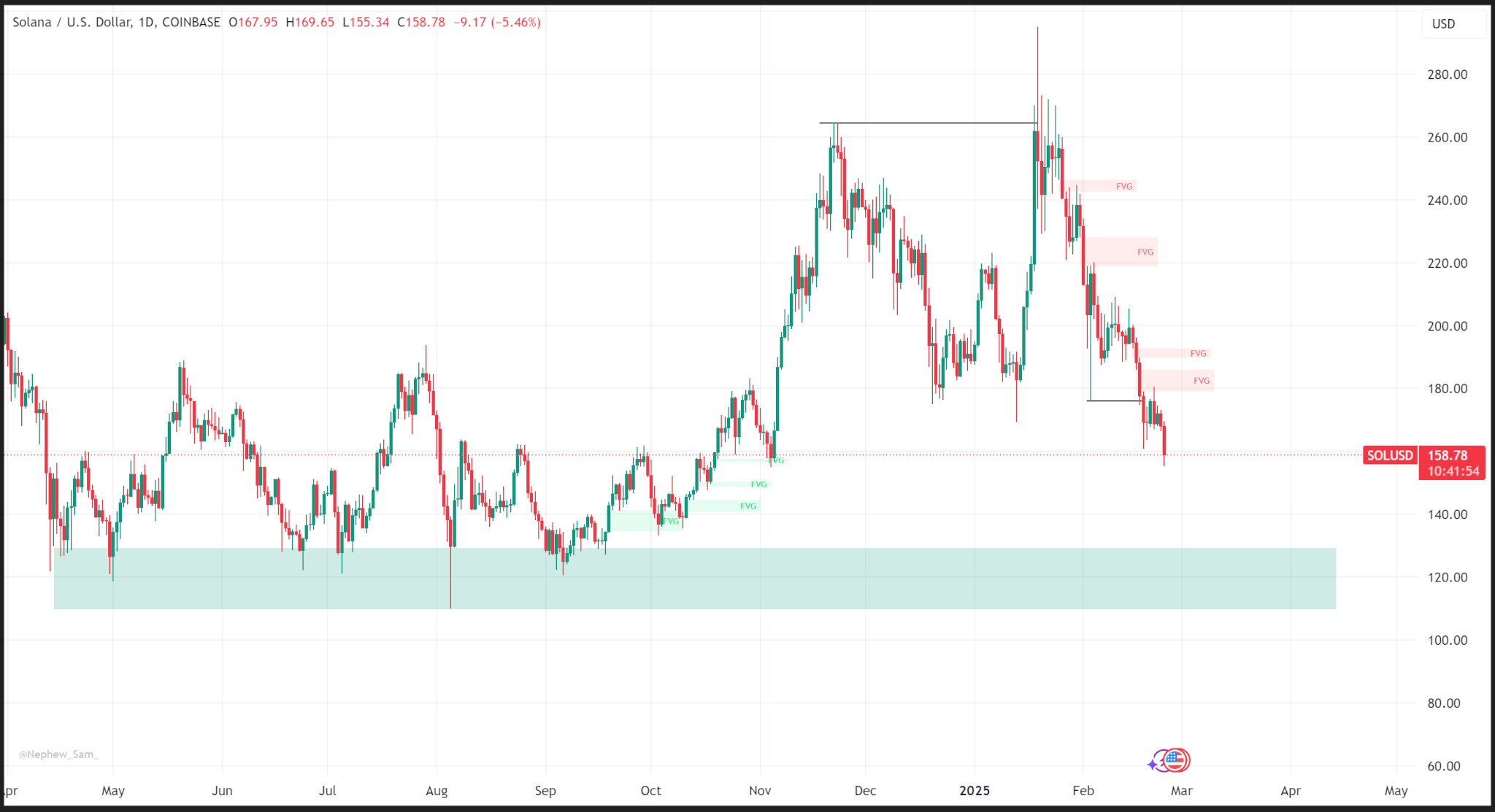
Like Ethereum, Solana’s price has been declining since it failed to swing higher and form new candles above the last all-time high on the daily time frame.

SOL/USD chart by TradingView

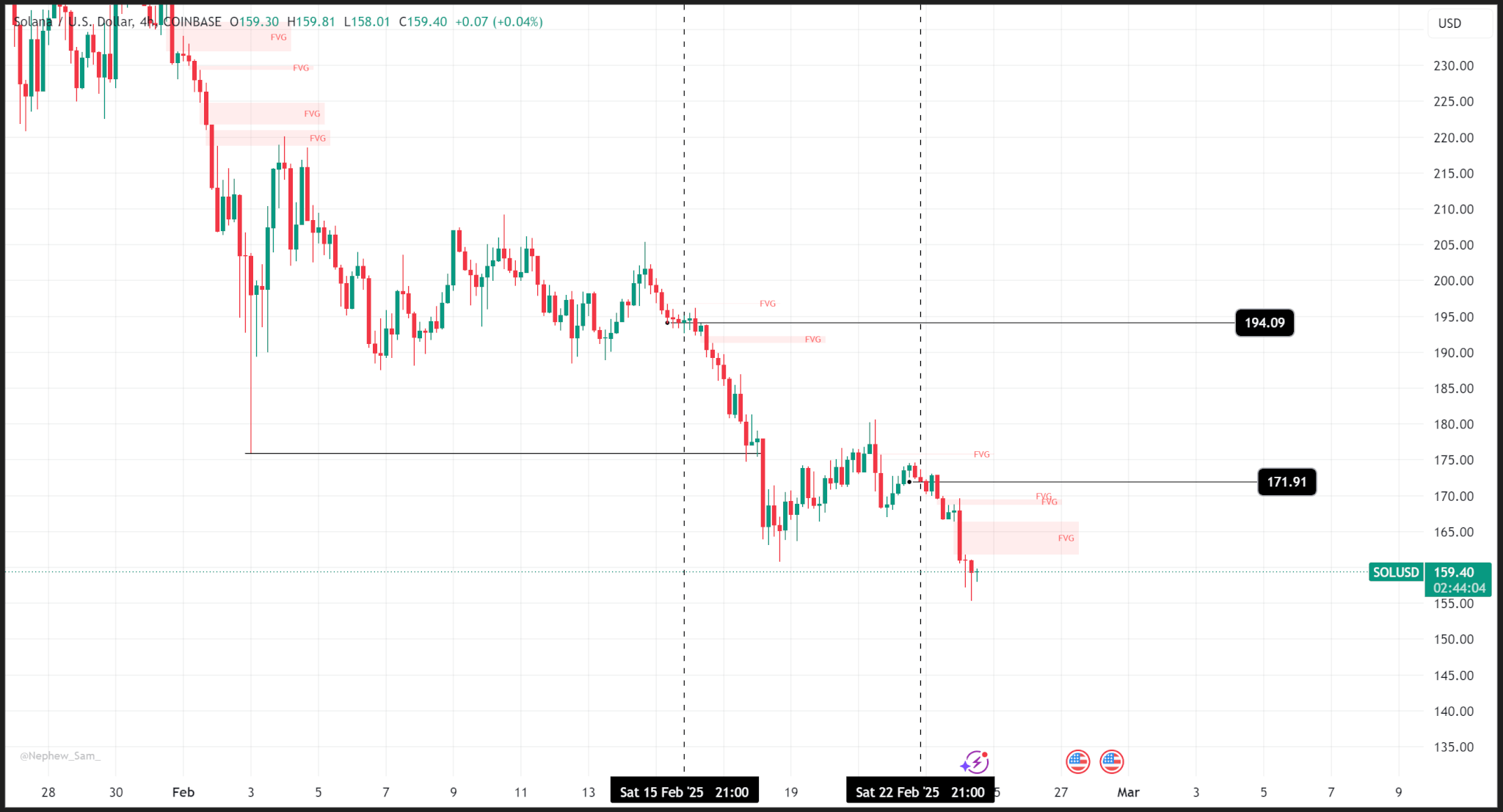
Unlike Ethereum, last week’s price action was bearish as the price fell from a weekly open around $194 to a close around $171.

SOL/USD chart by TradingView

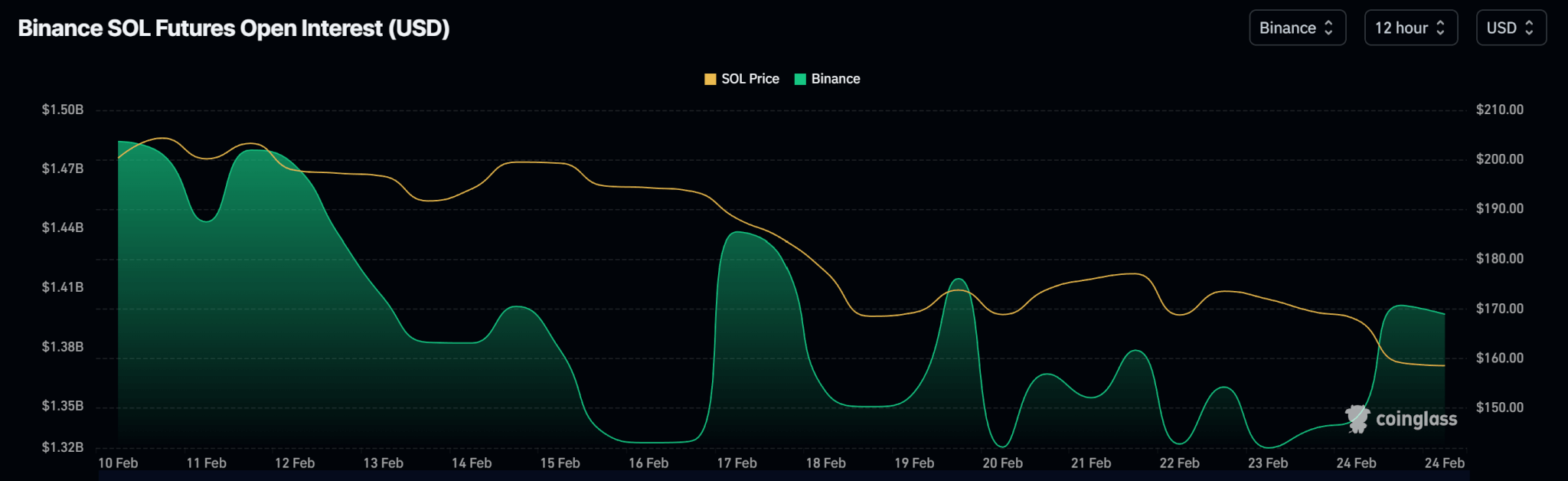
Open interest charts show topsy-turvy movement in open contract volumes as the price falls.

Binance SOL Futures Open Interest (USD) chart by Coinglass

Outlook

The next major support zone for Solana is at the $129 level. However, we may see smaller rallies as price trends lower overall.

SOL/USD chart by TradingView

The post Weekly price analysis: prices range on uncertain economic outlook appeared first on CoinJournal.