SkyBridge Capital suspends funds withdrawal amid liquidation fears

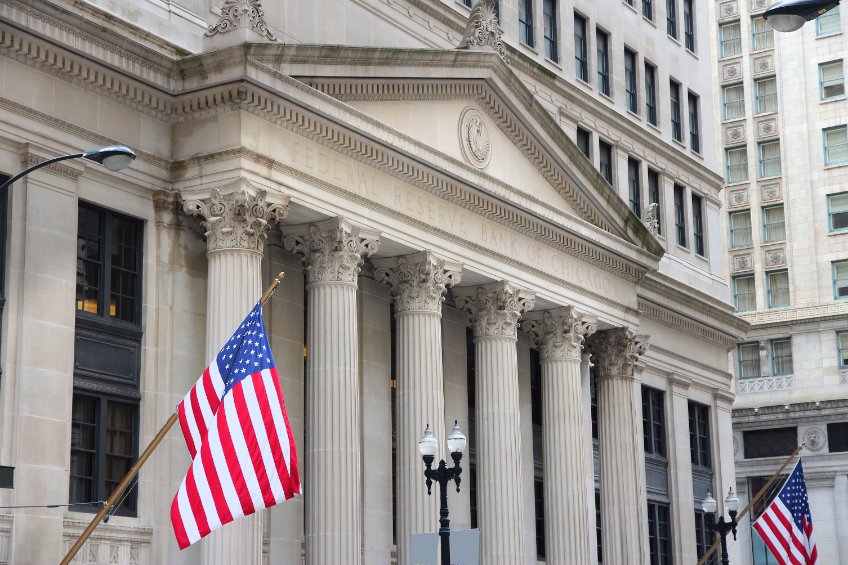
The cryptocurrency and stock market had had a meltdown as the Federal Reserve raises interest rates to combat the rising inflation. As a result, several companies/firms have experienced financial instability with SkyBridge Capital being the most recent victim; something that has forced it to suspend the withdrawals.

The current situation within the financial market has destabilized the operations of many companies, especially those dealing with cryptocurrencies. Some like Voyager and Celsius have already filed for Chapter 11 bankruptcy as they seek to restructure their financial income methods to remain afloat. Others especially capital funds and crypto exchanges like CoinFLEX have resulted in suspending withdrawals.

On their part, SkyBridge has chosen to restrict its customers from withdrawing from one of its funds. The fund is following right in the steps of Celsius which started by suspending withdrawals as it sought to tidy out its financial mess. The main reason for suspending withdrawals is because of the prolonged decline of the cryptocurrency and stock markets.

SkyBridge liquidation fears

SkyBridge Capital is one of Anthony Scaramucci’s funds established in the United States. Anthony Scaramucci once worked as the White House Communication Director in 2017 although his tenure only lasted 10 days before being fired by Donald Trump.

When SkyBridge ventured into crypto, Peter Schiff, a well-known opponent of cryptocurrencies warned that “SkyBridge Capital’s foray into the bitcoin market will occur at its height.” Afterward, major players were allowed to sell their interests to SkyBridge for cash, and Legion Strategies is one of the funds that grabbed the opportunity.

One-fifth of the Legion Strategies fund is however made up of private enterprises and they are challenging to sell. But about a quarter of Legion Strategies’ net assets are already invested in additional funds containing cryptocurrencies and other digital assets that are managed by SkyBridge Capital.

SkyBridge Capital is also said to have taken part in an investment round conducted by FTX, which is one of the leading cryptocurrency exchanges.

But despite all the negative sentiments within the cryptocurrency market, SkyBridge has assured its clients (investors) that there is no need to worry about liquidation since it is unleveled.

The post SkyBridge Capital suspends funds withdrawal amid liquidation fears appeared first on CoinJournal.


Dubai regulator licenses OKX to extend certain products and services in the UAE

OKX, a Seychelles-based crypto exchange, is the latest digital asset service provider to get a provisional license to operate in the United Arab Emirates (UAE).

The provisional license issued by the recently formed Virtual Assets Regulatory Authority (VARA), which is the digital assets regulator in Dubai, allows OKX to provide certain crypto exchange products and services to a select group of investors and financial service providers.

According to a statement released by OKX after getting the provisional license, OKX stated that the license ““allows it to extend certain exchange products and services to pre-qualified investors and financial service providers.”

The general manager at OKX for Dubai, Lennix Lai, while commenting on the development said:

“The MENA region is one of the fastest-growing markets for our industry, and we are very excited to be at the heart of this thriving ecosystem. OKX looks forward to contributing meaningfully to the free exchange of ideas that is going to be so important to the development of this space while innovating for the future in a regulated framework.”

Dubai slowly becoming a top crypto destination

Since it was established at the beginning of this year, the Virtual Assets Regulatory Authority (VARA) has issued provisional licenses and approvals to several cryptocurrency exchanges. Besides OKX, the other exchanges that have received provisional licenses and approvals include Binance and Coinmena.

The rush by crypto exchanges and other crypto service providers to set up base in Dubai is proving that UAE and specifically Dubai is one of the top global hubs for the cryptocurrency industry.

The post Dubai regulator licenses OKX to extend certain products and services in the UAE appeared first on CoinJournal.

Crypto mining stocks see massive gains amid Bitcoin rebound

Marathon Digital Holdings and Hut 8 Mining were among the biggest daily gainers after double-digit rallies on Monday.

Bitcoin mining firms saw their stocks make huge moves on Monday following Bitcoin’s breakout to prices above $22,000.

The stocks of top Bitcoin (BTC) mining firms jumped as positivity around the crypto industry seeped into the sector. As BCT/USD rose to retest price levels above $22,200, the shares of top miners opened higher and ripped.

MARA leads gainers

Marathon Digital Holdings Inc. (MARA) rose to intraday highs of $10.97, outperforming Bitcoin as gains amounted to close to 36%. The stock however hit resistance and slipped below $10.00, although it still closed more than 21% higher at $9.76.

Another stock to see massive gains was Riot Blockchain Inc. (RIOT), which surged to intraday highs of $6.88 to accumulate over 23% in gains at the intraday peak. Despite cooling off into the close, RIOT stock still closed double digits in the green at $6.23 (+11.85%).

Shares of Bitfarms, Core Scientific Inc. and Hut 8 Mining Corp. also registered impressive gains at the start of the week. Hut 8 ended Monday’s session nearly 8.7% up, Core Scientific was 8.3% higher and Bitfarms managed +4%.

Coinbase (COIN) and MicroStrategy (MSTR) also registered significant gains, with the Coinbase stock closing more than 9% higher and MicroStrategy at +5%.

The post Crypto mining stocks see massive gains amid Bitcoin rebound appeared first on CoinJournal.

Harvard professor says central banks are ‘behind the curve’ on crypto regulation

Kenneth Rogoff, a Harvard University professor of economics and public policy, says central banks are “way behind the curve” in the push to regulate cryptocurrencies.

The former International Monetary Fund (IMF) economist said this during an interview with Bloomberg Surveillance on Monday.

Rogoff wondered why the US central bank – the Federal Reserve – was pursuing a central bank digital currency (CBDC). He contends that whatever the government may want to achieve with the digital currency can “accomplish” these same things by tweaking the current monetary system.

A crypto skeptic, including of CBDCs, the economist says having a successful retail rollout by the central bank would result in “massive disintermediation” that the government is “probably not ready to handle.”

For him, the motivation for some of the “smaller central banks” in wanting a CBDC is the hope that they can eat into some of the transactions that are currently being seen on crypto platforms.

Crypto ‘doesn’t want to be regulated’

In a comment that reflects the overall misunderstanding of cryptocurrencies, Rogoff notes digital currencies “general idea” revolves around making it difficult for one to be tracked. He added:

I think central banks are way behind the curve, and governments in general, in regulating cryptocurrencies. They throw out the idea of having CBDCs to distract the conversation.”

Despite there being numerous calls from the crypto industry for regulatory clarity, and government’s recognition of the same, Rogoff thinks the crypto industry is pushing back against regulation.

Comparing the crypto industry today to the financial technology pioneers of the 90s and early 2000s, the Harvard professor says the mantra of “catch me if you can, regulate me if you can” is wrong. He also says crypto is lobbying and pushing back against regulation by throwing around money – the Super Bowl ads is an example.

He also appeared to criticise states like Florida and Colorado for their warm crypto regulatory environment, saying it’s like such states want to be the next El Salvaldor.

The post Harvard professor says central banks are ‘behind the curve’ on crypto regulation appeared first on CoinJournal.

Coinbase secures approval from financial regulators in Italy

Coinbase can keep serving Italian customers after securing approval from Italian financial regulators, CoinDesk reported. The San Francisco-based exchange wrote on its website that the Organismo Agenti e Mediatori (OAM) had included a new requirement. 

All custodians or crypto exchanges had to fulfill the criteria if they wanted to continue offering services in Italy. Coinbase Vice President of International and Business Development Nana Murugesan commented: 

It’s critical to build a constructive relationship with regulators in every region where we operate. Obtaining this regulatory approval is proof of our cooperation and positive working relationship with the Italian financial regulators.

Growing presence across the Atlantic 

Coinbase has customers throughout Europe through dedicated hubs in Germany, the UK, and Ireland. The biggest US crypto exchange is in the process of augmenting its presence across Europe.

It has license applications or registrations in progress in a number of leading markets in compliance with local regulations. Its goal is to attract more customers in each of these markets by launching the Coinbase suite of the ecosystem, institutional, and retail products. 

Binance also obtained OAM approval 

Binance also obtained regulatory approval in Italy last month. Its CEO Changpeng Zhao said in a statement at the time:

Clear and effective regulation is key to the broad market adoption of crypto. We thank the OAM and the Ministry of Economy and Finance for their efforts in defining the requirements to do business transparently in Italy.

Binance had been banned in Italy

Less than a year ago, financial watchdog CONSOB termed Binance unauthorized. The world’s biggest exchange was also banned from offering Italian citizens derivatives. 

A few weeks ago, Binance obtained licenses in Dubai and Bahrain and secured regulatory approval in France. 

The post Coinbase secures approval from financial regulators in Italy appeared first on CoinJournal.