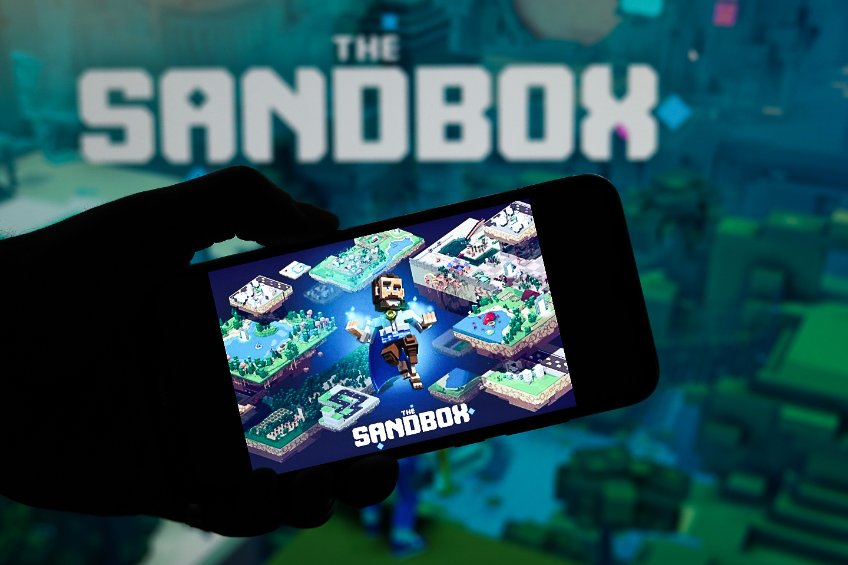
Moonbirds and Bored Apes to feature in The Sandbox’s Alpha Season 3

Holders of non-fungible tokens (NFTs) from thirteen popular collections including Moonbirds, Bored Apes, and World of Women will be playable as avatars in The Sandbox’s Alpha Season 3 that launched today (Wednesday).

During a walkthrough of the platform, the co-founder and COO of The Sandbox Sébastien Borget explained:

“If you own those NFTs, those 2D images, you will be able to see them become a 3D character on the avatar creator and immediately interact with them.”

Boget went ahead to add:

“We are excited to develop new use cases for the owners of these collections, starting with digital identity and the ability to create the worlds for these NFTs to be played with and evolve.”

The Sandbox’s commitment to interoperability

The sandbox said that the decision to roll out this option was part of its commitment to interoperability. As a subsidiary of Animoca Brands, The Sandbox was a founding member of the Open Metaverse Alliance for Web3 (OMA3) DAO.

The first Alpha season, Season 1, was released in late 2021 while the second season, Season 2, was released in March 2022 and it has attracted 350,000 players.

In Alpha Season 3, The Sandbox will feature about 100 experiences in a period of ten weeks. This will include collaborations with popular brands like Ubisoft’s Rabbids, Snoop Dogg, Atari, and Care Bears. It will also feature user-generated content and twenty experiences on the Sandbox Game Maker Fund.

The post Moonbirds and Bored Apes to feature in The Sandbox’s Alpha Season 3 appeared first on CoinJournal.
On-chain data suggests further accumulation for Bitcoin

  • Bitcoin trades around $21,500, about 2.5% up in the past 24 hours.
  • Staying below the realized price of $21,700 or if bulls fail to hold above in case of a breakout will result in further accumulation.
  • BTC fell to lows of $20,700 after a swift rejection above $25,000 last week.

Bitcoin has moved above $21,500 on Tuesday, seeing some upside after hitting intraday lows of $20,700 on Monday. 

However, despite the uptick, the cryptocurrency remains vulnerable to a downside flip with BTC/USD currently snuggled below the Realized Price.

Glassnode alerts data showed more Bitcoin wallets were in profit is at new lows, owing to BTC price selling off this past few days.

So while BTC price could scrap some upward moves and see a break above the $22k level and bring some relief likely to push prices even higher, buyers might struggle to push past key resistance in the $25k region.

Why Bitcoin might see further accumulation this week

According to on-chain data analysis platform Glassnode, BTC/USD is below the realized price after 23 consecutive days above it. The sell-off seen this past week underpins the weakness across the markets, with risk-on appetite also off in equities.

Also noticeable has been the lack of new money coming into the sector, with the recent upside not attracting a new wave of retail investors. These factors point to ranged movement for Bitcoin.

“The recent price uptrend also failed to attract a significant wave of new active users, which is particularly noticeable amongst retail investors and speculators. The monthly momentum of exchange flows is also not suggesting a new wave of investors entering the market, implying a relatively lackluster influx of capital,” the firm noted in its latest weekly update.

If price remains below the cost basis, Glassnode says we could see more accumulation.

During the 2018-2019 bear market, prices fluctuated below the Realized Price for 140 days, making the prevailing bear market duration of 36 days relatively brief, and thus indicating more accumulation time may be required,” analysts at the firm wrote in the newsletter.

The post On-chain data suggests further accumulation for Bitcoin appeared first on CoinJournal.

NFT lending protocol Bend DAO proposes emergency actions to stabilize ecosystem

NFTs borrowing and lending protocol Bend DAO is staring at a credit crisis after it was revealed on Monday that the protocol only had about 15 wrapped Ether (wETH) worth about $23,715 for paying back its lenders.  The protocol has so far lent out 15,000 ETH.

To avert the crisis, the project’s developers have proposed new emergency measures aimed at stabilizing Bend DAO’s ecosystem.

The proposed emergency measures 

To start with the development team suggested constraining the liquidation threshold for collateral at 70% of the loan value; cutting it down from 85%.

Secondly, the auction period for NFTs would be reduced from 48 hours to four hours and the requirement for the minimum bid price of NFTs to be pegged to 95% of the floor price on OpenSea would be scrapped.

Thirdly, interest rates on loans shall rest from the current 100% to 20%.

Lastly, the Bend DAO treasury shall be empowered to cover all the bad debts using revenue.

What led to the current Bend DAO situation?

Generally, the declining floor prices of NFTs in the market even among popular NFT collections is placing many NFTs in danger of being liquidated. The interest rates on “debt-secured” NFTs are skyrocketing and it has almost hit 100% making some users prefer letting go of their NFTs rather than paying back the debt and this is resulting in a lot of bad loans. Also, the NFT markets are not as liquid as coin markets meaning there may not be a single bid at the time of an NFT liquidation; something that further complicates the scenario.

The proposal by Bend DAO is currently being voted for by the community. The voting process is expected to last 24 hours although it has already passed the required 47 million veBend with 99.23% of voters in favour of the proposal.

The post NFT lending protocol Bend DAO proposes emergency actions to stabilize ecosystem appeared first on CoinJournal.

Telegram founder proposes NFT marketplace for auctioning popular usernames

Telegram founder Pavel Durov is proposing the creation of an NFT marketplace that can use “NFT-like smart contracts” to facilitate auctioning of popular usernames.

Durov’s proposal comes after the success of domain name auctions on The Open Network (TON), which is a layer-1 blockchain designed by the Telegram team. The Open Network launched the TON DNS Service in mid-July allowing users to assign human-readable names to crypto wallets, websites, and smart contracts.

Durov through a message shared on his personal Telegram group, Durov’s Channel, on Tuesday said that he was impressed by the success of the domain auctions on TON. He said that Telegram could tap into the same technology and launch a new marketplace that would be used to buy and sell “catchy t.me addresses like @storm or @royal, and all four-letter user names.”

Durov said:

“Imagine how successful Telegram with its 700 million users could be it we put reserved @ usernames, group and channel links for auction… This would create a new platform where username holders could transfer them to interested parties in protected deals – with ownership secured on the blockchain via NFT-like smart contracts.”

Auctions on TON DNS Service

The first auction on TON DNS was conducted on July 30 and just like the Ethereum Name Service (ENS) “.eth” domains, the “.ton” domains allow users to access decentralized applications in a simpler way without needing to write the long crypto wallet addresses.

The Open Network uses FunC programming language for the TON Virtual Machine and to launch specific smart contracts on the blockchain. If Telegram was to launch NFTs, it would most likely use the same standard.

Durov said:

“Our team can write bullet-proof smart contracts for TON (since it was us who invented its smart contract language), so we are inclined to try out TON as the underlying blockchain for our future marketplace.” 

The post Telegram founder proposes NFT marketplace for auctioning popular usernames appeared first on CoinJournal.

Acala community okays burning billions of erroneously minted aUSD stablecoin

According to a news post by the co-founder of Acala Network, Bette Chen, the Acala community has voted to burn 2.97 billion Acala USD (aUSD) stablecoins.

Acala is a scalable and Ethereum-compatible layer-1 smart contract platform built on Polkadot blockchain and it is the blockchain network that powers the aUSD stablecoin.

The aUSD stablecoin

aUSD is over-collateralized by several digital assets from the Kusama network and Polkadot ecosystem, with a deposit rate of 195% per every minted aUSD.

aUSD de-pegging

Last week, the price of aUSD de-pegged from its US dollar peg and dropped to below $0.01. The cause for the de-pegging was later found to be a sudden influx of the aUSD stablecoin supply caused by an erroneous minting.

3.022 billion aUSD stablecoins were erroneously minted after the iBTC/aUSD liquidity pool that went live on August 14 was misconfigured.

The misconfiguration has however since been rectified and the wallet addresses that benefited from the erroneously minted aUSD identified through on-chain tracing. Thirty-five accounts were found to have received 12.38 million aUSD.

More than 99% of the erroneously minted aUSD were then transferred to the Acala parachain. But some, approximately worth $9.69 million, had been swapped to DOT and moved to centralized crypto exchanges.

The aUSD is currently trading at about $0.84 which is still below its dollar parity; meaning the erroneous minting is still affecting the system’s equilibrium.

The post Acala community okays burning billions of erroneously minted aUSD stablecoin appeared first on CoinJournal.